

"A Visible Decay of Godliness"
The Salem Witch Trials have begun, and no one in the community is safe. Today, we'll delve into New England's troubled circumstances, and how this strife amplified fears of malevolent magic.

This essay is part of a series on the Salem Witch Trials.
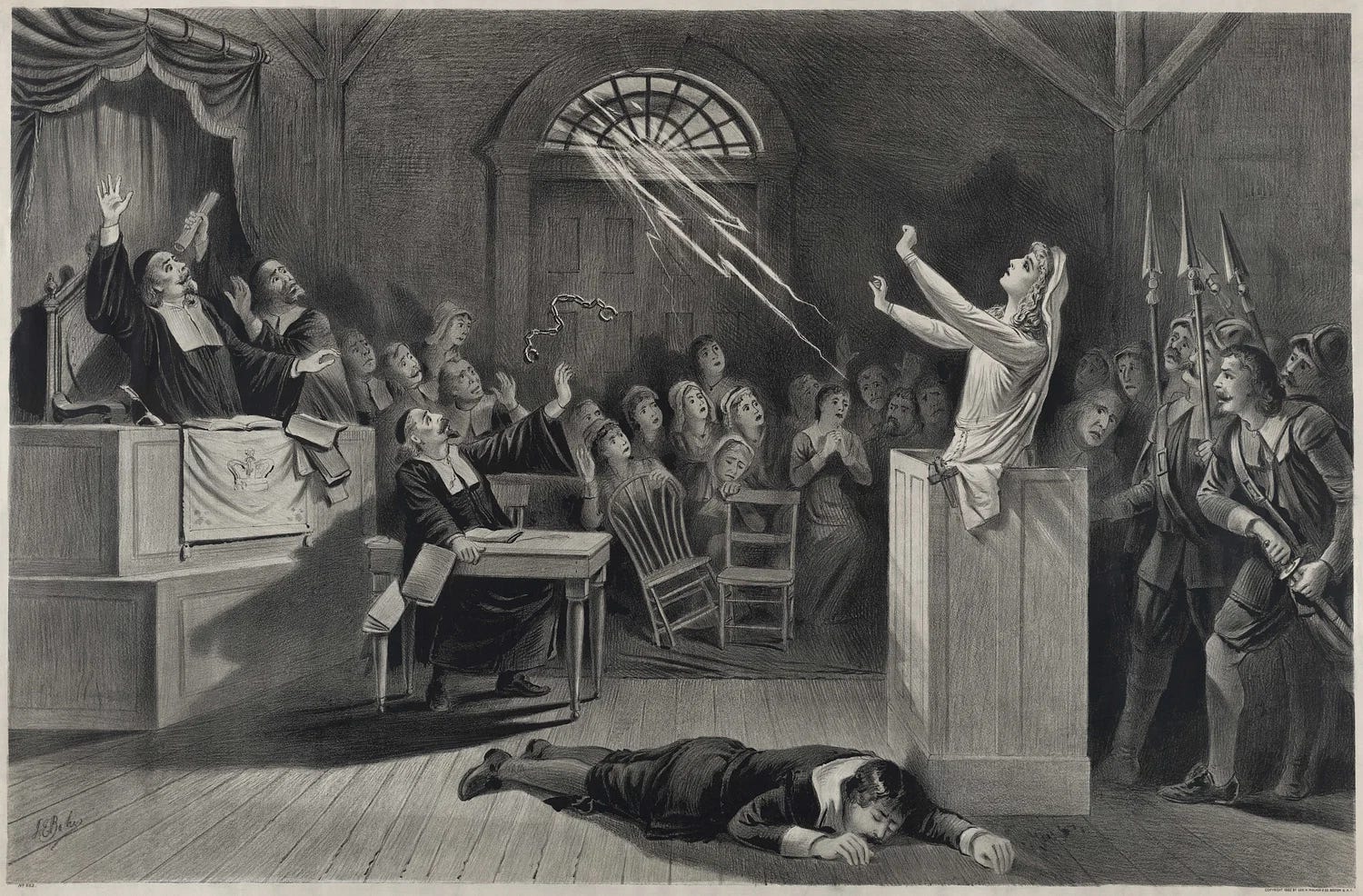
If you are accused of witchcraft in 17th-century New England, how do you escape with your life?
Protesting the charges or stating your innocence will surely end in execution. But if you give the bloodhounds their meal—if you confess to the charge of witchcraft, mold yourself into an expert witness, and claim that you were compelled by other witches living in your community—you can make yourself indispensable to the mob.
This is precisely what Tituba did after becoming the first person accused in the Salem Witch Trials. Can one blame her? Tituba and her husband were Native Americans who were enslaved in the West Indies and later sold to Reverend Parris’s family. These strange Englishmen saw the world as teeming with devils, and if they hungered for blood, then Tituba needed to ensure it was not hers that they spilled.
Her allegation that there were nine witches in total transformed the trials into a proper manhunt. Ann Putnam Jr., one of the afflicted girls, supplied the next few names: she accused Martha Cory, a member of Reverend Parris’s church in Salem Village, and Rebecca Nurse, a well-respected member of Salem Town’s church. Mary Warren, a servant of John Proctor and his wife Elizabeth, added her voice to the fray and claimed to be tormented by Cory’s specter.1
Accusations flourished. The original accusers were teenage girls, but middle-aged women now grew afflicted by the witches’ specters: Ann Putnam Sr., Sarah Bibber, and the Quaker Bathsheba Pope (who was an aunt of Benjamin Franklin) were now claiming to have been bewitched. John Proctor was a vocal critic of the trials, and his commentary would soon land him and his wife in the courtroom among the accused.
Soon, witches were being “discovered” throughout Massachusetts Bay. With stories of the witch craze spreading throughout the colonies, officials from Boston came to oversee the trials, including the Deputy Governor Thomas Danforth, who would work alongside Salem officials Jonathan Corwin and John Hathorne. (Hathorne is the ancestor of Nathaniel Hawthorne, author of The Scarlet Letter and The House of the Seven Gables, which was inspired by his family’s connection to the Salem Witch Trials. Hawthorne was so embarrassed by his ancestor that he added the letter “w” to his last name.)
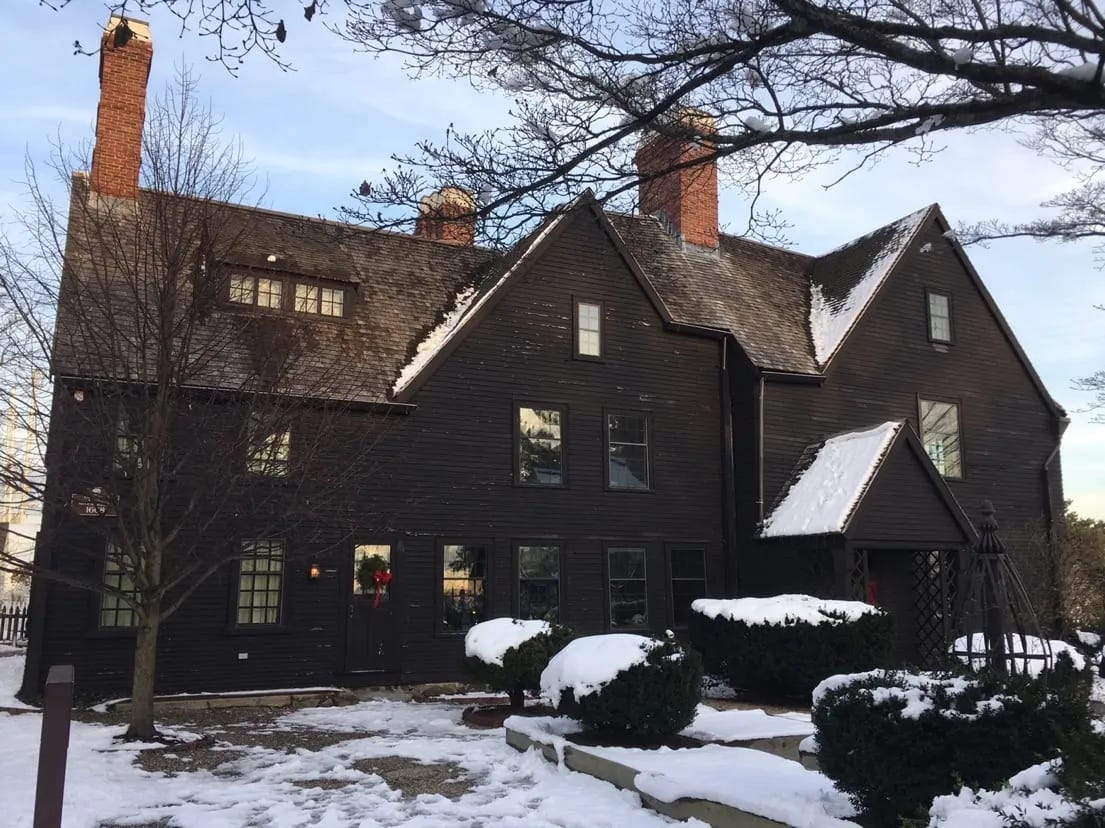
In the past, accusations of witchcraft followed a conventional pattern: victims were generally elderly, female, and social outcasts of some variety. The initial women accused in Salem fit neatly within this archetype. Sarah Good and Sarah Osbourne were both elderly women, and like Tituba, both were outcasts. But in just a few months, respectable members of society like Martha Cory and her husband Giles stood accused. A social inversion unfolded, in which teenage girls held the fate of prominent adults in their hands.
Admitting to the hoax was dangerous, too, as Mary Warren would soon discover. When she confessed to the magistrates that the accusers were making it all up, the girls turned on her, and Warren found herself in jail for witchcraft. But she and another victim, the fourteen-year-old Abigail Hobbs, deduced what Tituba already knew: in order to survive, one must confess that she is a witch, and accuse others of forcing her to join the Devil’s league.2
Others were not so lucky. Sarah Osbourne died in jail on May 10th. Prisons in this time were ghastly places riddled with disease. Sadly, it is unsurprising that a bedridden, elderly woman like Osbourne would not survive such conditions.
By mid-May, forty-eight people were accused of witchcraft. The new governor of the Massachusetts Bay Colony, Sir William Phips, had also just arrived from England. Originally from Maine, Phips returned to a New England consumed by the terror of witchcraft, and he was profoundly ill-prepared to deal with it. Phips would never have been made governor in the past, when Puritans held total control over the colony. Phips barely counted as a Puritan. After all, he was only baptized at Boston’s Second Church at the age of 39—just one day before he became the colony’s major general.3 Not only that, but his shady business dealings were what had compelled him to leave New England in the first place. When he returned a year later, he had to confront a populace that believed Satan wished to destroy the entire colony, and by extension, the Puritan way of life.
Readers may be wondering: what circumstances could have convinced not just the residents of Salem, but the entire Massachusetts Bay Colony, that Satan was at their doorstep?
At the core of Puritan ideology was the concept of predestination. Puritans took inspiration from the French Protestant reformer John Calvin, who broke from Catholicism in 1530 and settled in Switzerland. Calvin believed that because God was omnipotent, He already knew who would be going to Hell, and who would be among His “saintly elect.” This was a massive deviation from Catholic doctrine, which emphasized free will and the importance of good works. Puritans adopted Calvin’s beliefs, and it does explain the particular zeal and religious anxiety that consumed the group. Puritans lived in fear that they would not be saved, as Calvinist doctrine cultivated an external locus of control in its adherents.
I mentioned in the previous entry that the first Puritans to settle in New England were separatists. But as the New England colonies expanded throughout the 17th century, more unionists—or, those who felt they could purify the Anglican Church from within—decided to make their homes in Massachusetts Bay.
Initially, it seemed that God favored the Puritan cause. By the 1640s, Boston had grown into New England’s economic center. The fur trade with indigenous tribes, cod fishing, and lumber trade with the West Indies allowed the colonies to thrive. Even better for the Puritans, Charles I was executed in 1649, and the Puritan leader Oliver Cromwell now controlled England.
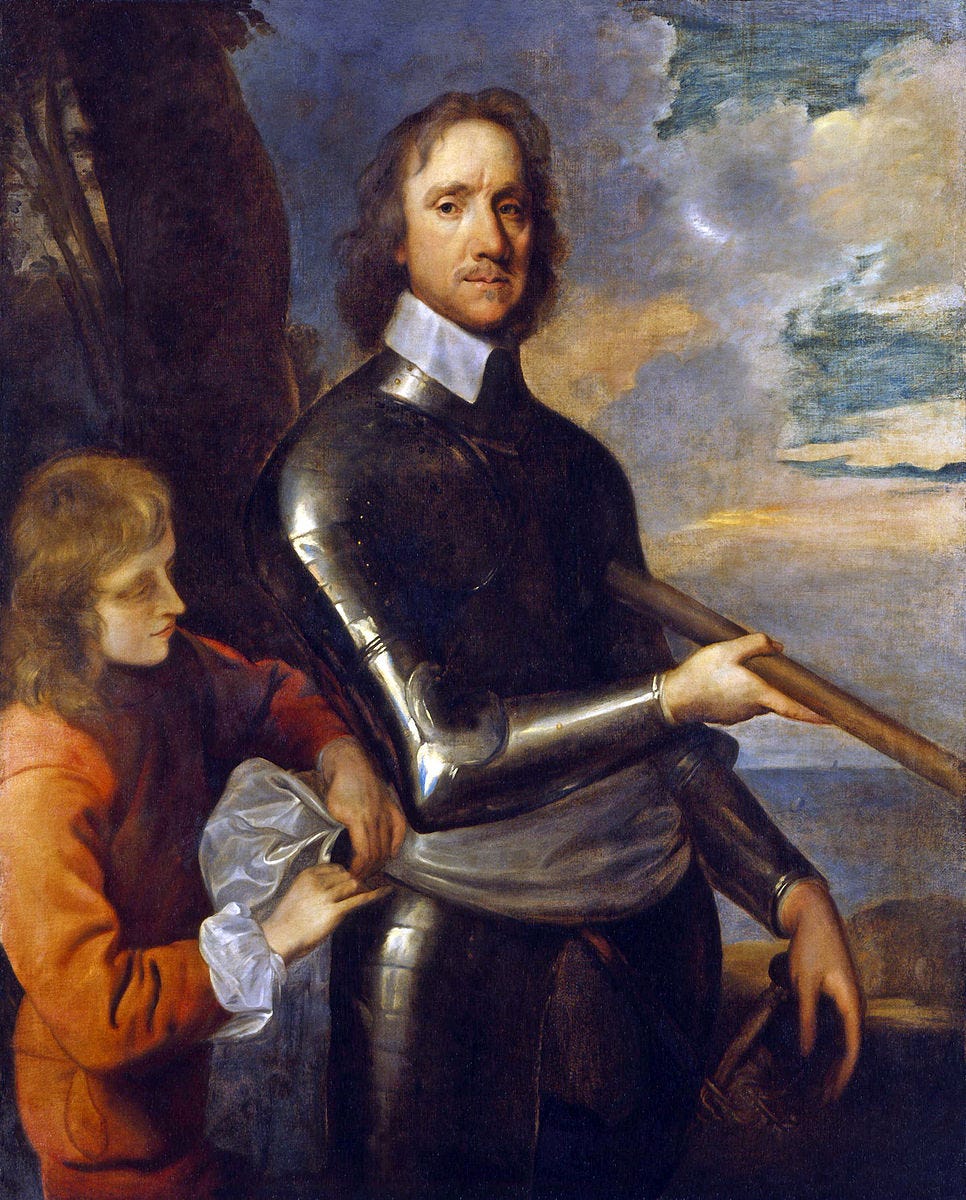

But the party wouldn’t last. In 1660, the English monarchy was restored, and Charles II ascended the throne. Meanwhile, the initial fervor of the first generation to settle Massachusetts seemed to fade with the next generation. Leadership in the colony was the domain of male members of the saintly elect: those who had received a sign from God that they had been chosen for salvation. These individuals, both male and female, were full “members” of their churches. By the 1660s, full church membership was declining (though attending services was still required). Even worse, the unionists were followed by mainstream Anglicans who came to the colony for economic opportunities.
Charles II wasn’t as patient with the Puritans as his predecessor. In his view, they were English subjects, and they needed to abide by English law, just like everyone else. The Massachusetts Bay Colony operated in a dangerously democratic fashion: freemen (white males who were full members of a Puritan church) voted for magistrates (the colony’s highest judges) and the governor. Deputies of the freemen were voted in by their towns, who largely governed themselves. Additionally, fathers were required to teach both male and female children to read, and New England soon led the world in literacy rates. Young people had to live in family households, which prevented criminality and premarital sex. There was no freedom of religion, and residents were obligated to attend Puritan church services.4
Spiritual declension and Charles II’s renewed interest in the colony were not the Puritans’ only problems. The Wampanoag and their allies were fed up with English expansion into their territories, and this brewing conflict led to the outbreak of King Philip’s War (1675-1678), named after the Wampanoag chief Metacom, whom the colonists called King Philip. Crucially for our tale, 375 men who fought in the 1675-76 campaigns came from Essex County, where Salem is located. Dozens of them died, and the loss impacted many Essex families. The costly war also necessitated higher taxes. Clearly, these events were a sign from God, and a heavenly rebuke of what the General Court called “a visible decay of Godliness.”5
Then, in 1684, the unthinkable happened: Charles II revoked the charter of the Massachusetts Bay Colony. When the king died just a year later, this left the colony, and the rights of its landowners, in legal limbo.
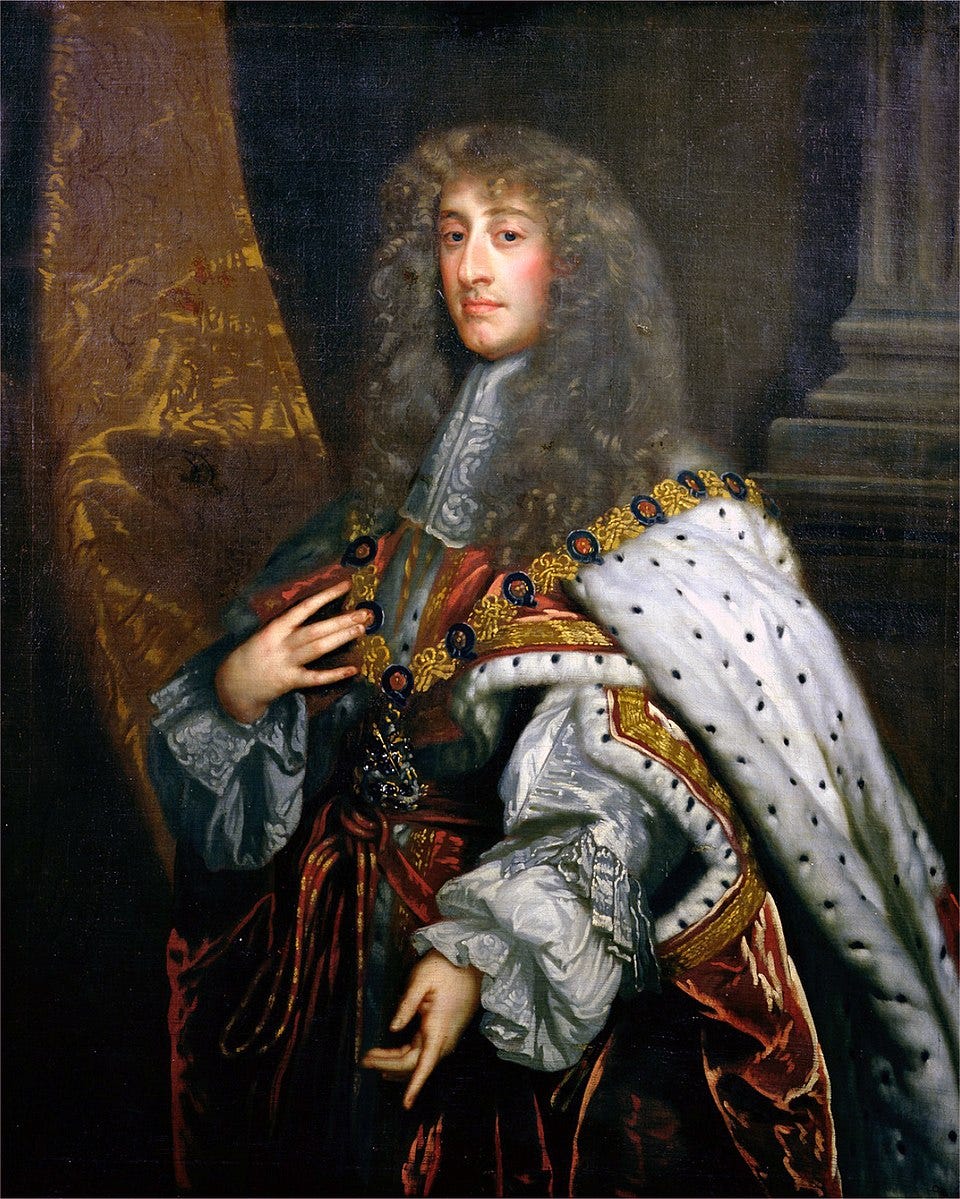

The newly-crowned James II decided to create the Dominion of New England, which grouped all of the New England colonies, including religious rebels like Rhode Island, and placed them under the authority of a new royal governor: Sir Edmund Andros. Andros posed the ultimate threat to Puritan rule. He rapidly extended religious freedom to all Protestants, abolished the Puritans’ representative government, and began levying taxes—a precursor to the revolutionary slogan, “No taxation without representation!” What’s more, Andros viciously punished dissent and jailed even prominent former-magistrates in his pursuit of total domination. As a final insult, Andros enforced the Navigation Acts, squashing free trade in New England and thereby tanking the already-fragile local economy. The brutal winters of the 1680s certainly didn’t help.
When James II was deposed during the Glorious Revolution of 1688, ushering the rule of William III and Mary II (and establishing constitutional monarchy), the Puritans of New England recognized their opportunity. They jailed the tyrannical Andros and shipped him back to England.
Even with this success, the colony’s woes weren’t over. A new frontier war, this time against the allied French and Native American tribes, would plunge the colonies into further financial disarray and inflation. The allied forces took back parts of Maine that had been settled by Puritans, and those who escaped with their lives returned to Essex County. Forty participants of the Salem Witch Trials, including the soon-to-be Governor Phips, were connected to the Maine exodus.6
Massachusetts Bay finally received a new royal charter in October 1691. Plymouth Colony would be incorporated into Massachusetts, and they would retain control of the remaining territory in Maine. But the charter confirmed what had been a long time coming: the Crown would appoint the governor, and property ownership, not church membership, would be required to vote for deputies to the General Court. Most ominously, the royal governor retained the power to veto any laws put forth.7
While the actual documents wouldn’t arrive for several months, news of the charter’s terms had spread by January, when the Salem Witch Trials were just beginning. In the next entry of this series, we will examine more closely the conditions in Salem, and how the turbulence of the prior decades impacted those at the center of the crisis. Witch hunts, as we’ll come to learn, don’t exist in a vacuum.
Emerson W. Baker, A Storm of Witchcraft: The Salem Trials and the American Experience (Oxford University Press, 2015), 21.
Baker, A Storm of Witchcraft, 23.
Michael P. Winship, Hot Protestants: A History of Puritanism in England and America (Yale University Press, 2018), 283.
Winship, Hot Protestants, 165-166.
Baker, A Storm of Witchcraft, 51-52.
Baker, A Storm of Witchcraft, 63.
Winship, Hot Protestants, 280.