

Crossroads Roundup: A Fake Da Vinci, a Major Stonehenge Discovery, and Yayoi Kusama
My favorite stories on art, archaeology, folklore, and more from this past week.

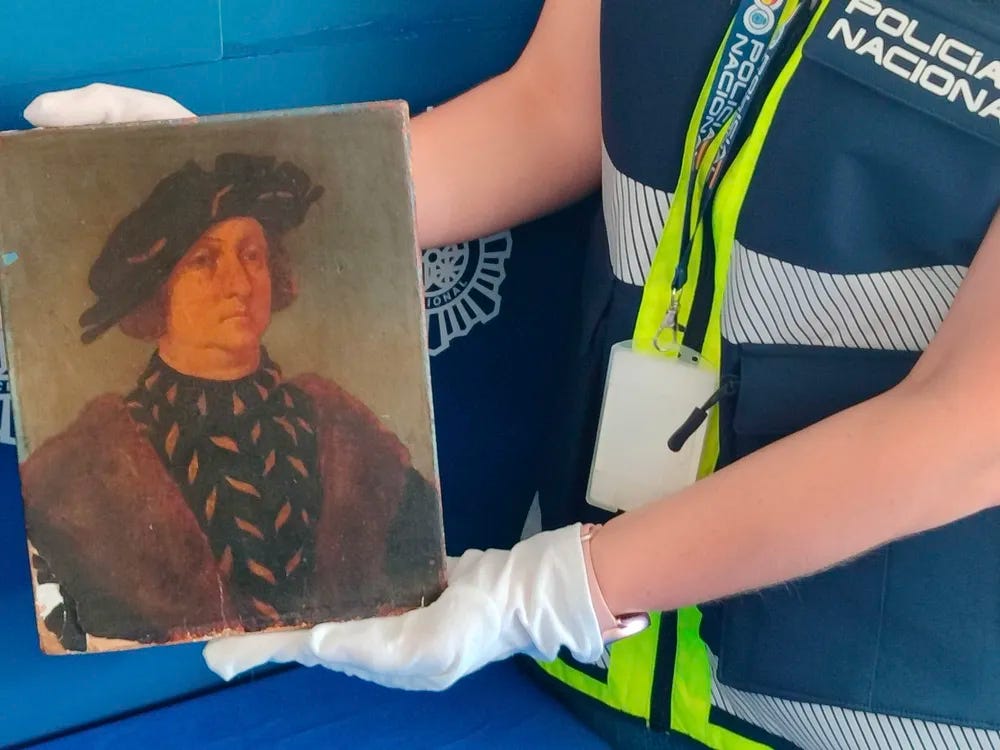
An art dealer tried to sell a fake Leonardo da Vinci for $1.4 million.
(The clue should have been that someone priced a “da Vinci” at that amount.)
After a two-year investigation, an unidentified Spanish art dealer in his forties has been arrested for trying to sell a fake Leonardo da Vinci painting to a buyer in Italy. French customs officers at the Modane border uncovered his plot after seizing the painting from his vehicle.
How did the story unravel?
In many countries, one needs special export licenses for older paintings, and Spain is no exception—any work over 100 years old requires additional certification for art dealers. As the man’s license was expired, this discrepancy led to the eventual discovery of the forged painting.
Interestingly, the painting above is not a modern forgery, but one created in the early 20th century in the style of 15th-16th century Milanese portraits. While not worthless, its value is nowhere near $1 million; rather, it could sell for $3,200 to $5,400.
I find it humorous that someone would think they could buy a da Vinci for “only” $1.4 million, as Salvator Mundi, his last painting to go to auction, sold for over $450 million. (And the authenticity of that work has been famously debated.)
Exciting discoveries from the world of ancient Rome:
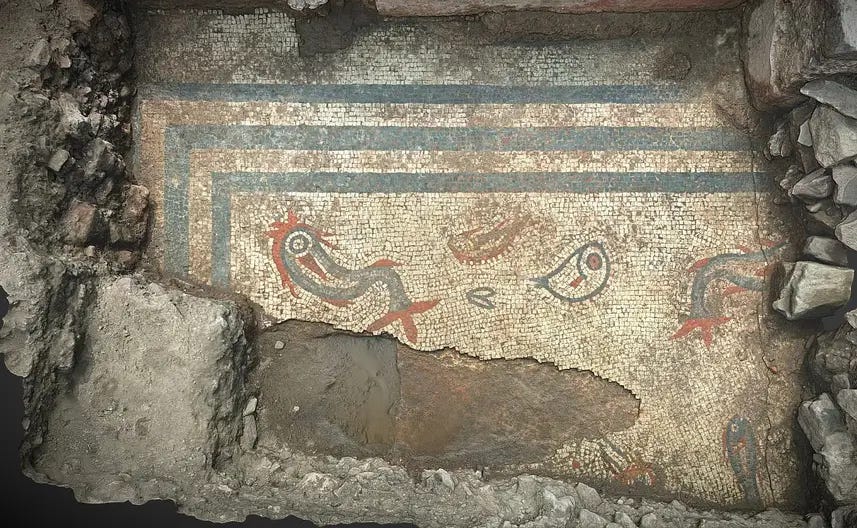
Two Roman discoveries caught my eye this past week. The first is the above 2nd century mosaic, which was found in what was the Roman city of Viroconium. (Viroconium is now in the village of Wroxeter in England.)
The city of Viroconium was established along the northernmost Roman frontier as a defensive location to protect the Severn Valley from Cambria (Wales). It became the fourth-largest city in Roman Britain, with a population of 15,000 people and a wealth of archaeological treasures left behind for today’s researchers.
The above mosaic, which features an aquatic motif, was discovered recently during a dig conducted by the English Heritage Trust, the University of Birmingham, Vianova Archaeology & Heritage Services, and Albion Archaeology. Among the finds were a prominent civic building and a shrine.
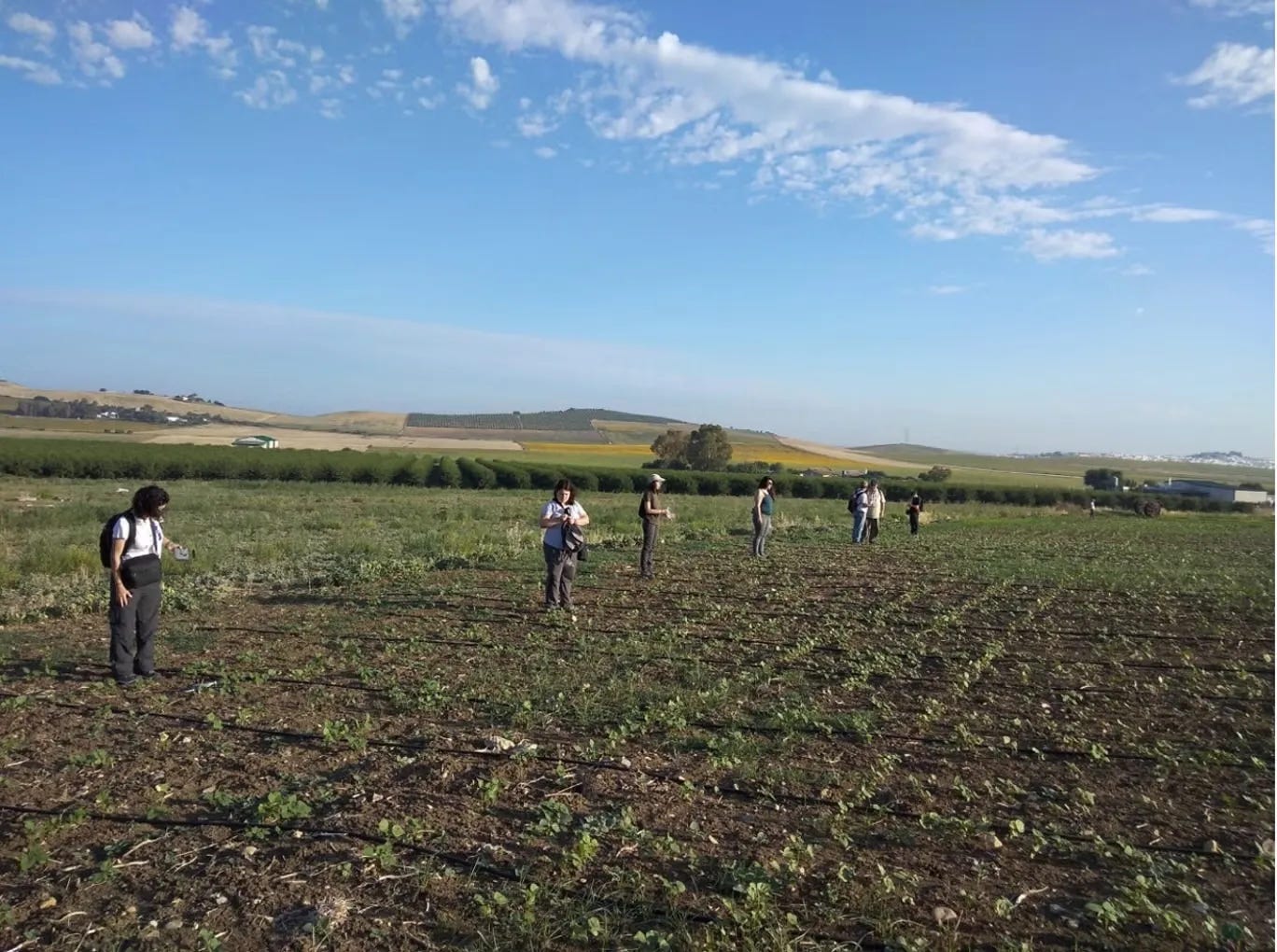
Another find from the edge of the Roman Empire was a vast network of 57 Roman sites in the Guadalete River region of Spain—some of which had never been excavated by archaeologists. The team at the University of Cádiz believes that this network of settlements could have been an important hub for merchants and traders.
Regarding the team’s future plans, lead researcher Macarena Lara said in a statement:
Our main objective is to continue carrying out excavations and surveys with non-traditional techniques and tools that will be completed with the study of the contexts found, as well as analyze techniques on the documented materials that will allow us to obtain a holistic vision of the Roman settlement and the territory in the area around the Bornos and Arcos de la Frontera reservoirs.
The altar stone of Stonehenge may have actually come from Scotland… over 450 miles away.
Yes, I audibly gasped when I learned this news.
Up until now, researchers believed that the main altar stone at Stonehenge, like the smaller bluestones, was sourced from the Preseli Hills of Wales. (The larger stones are from the local area.) But a new study published in the journal Nature has found that the main altar stone was actually transported from much further away: it may come from the Orcadian Basin in Northeast Scotland.
This find, as you can imagine, could have major implications on our understanding of Neolithic Britain and the intermingling of different communities in what is now England and Scotland. As Lynne McKeggie, the director of Highland Archaeology Services, told the Art Newspaper:
This is a really intriguing development that makes us think again about how connected people were in the Neolithic, and what feats they were capable of achieving. Research into Stonehenge is always evolving our understanding of the site. It’s very exciting to have a possible connection to the Highlands and Islands, where we also have incredible Neolithic monuments.
Yayoi Kusama’s pumpkin “infinity room” returns this spring to the Dallas Museum of Art after a massive tour.
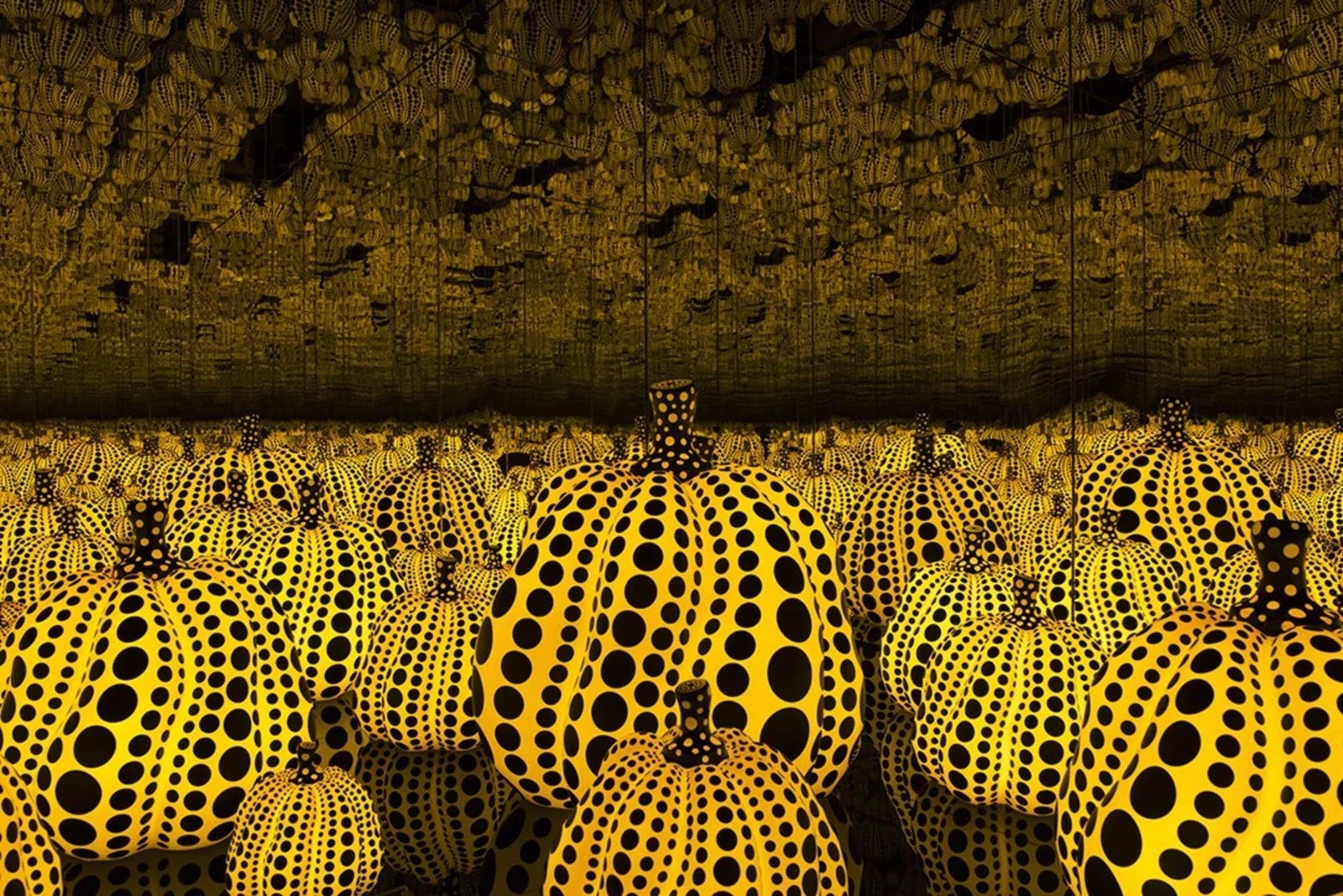
Thanks to Instagram, the 2010s saw the rise of museums hosting social media-friendly exhibits for patrons. (This peaked with the Museum of Ice Cream opening locations across the U.S.) I’m not particularly fond of this phenomenon, but I will admit, I do love Yayoi Kusama’s infinity rooms. I’ve had the chance to see two of her works—Infinity Mirrored Room—The Souls of Millions of Light Years Away (2013) and Longing for Eternity (2017), both at the Broad in Los Angeles.
One of Kusama’s best known infinity rooms, which use mirrors to create the illusion of infinite space, is Infinity Mirrored Room—All the Eternal Love I Have for the Pumpkins (2016). I can relate to this, as I too have an eternal love for pumpkins. Pumpkins enjoyed a significant tour around the U.S., and is now heading home to the Dallas Museum of Art. The institution purchased Pumpkins in a joint acquisition with the Rachofsky Collection in 2017.
Kusama, at the age of 95, is one of the most profitable contemporary artists in the world—grossing $80.9 million at auction just last year. After sharing my recent essay on Berthe Morisot, I have to wonder how the Impressionist would feel to see a female artist succeeding at this scale.
And finally, what was life like in the Roman army?
I thought I’d share this exhibition tour at the British Museum, led by curators Richard Abdy and Carolina Rangel de Lima. In “Legion: Life in the Roman Army,” visitors learn about the realities of being a Roman soldier through the life of Claudius Terentianus, a foreign soldier who accomplished his dream of becoming a legionary and enjoyed his retirement as a Roman citizen.