

Crossroads Roundup: Bronze Age Artifacts in the Mail, an Ancient Plague, and Mona Lisa’s Villa
My favorite stories on art, archaeology, folklore, and more from this past week.

A Bronze Age mystery in Ireland…
The National Museum of Ireland in Dublin made an intriguing announcement this past week:
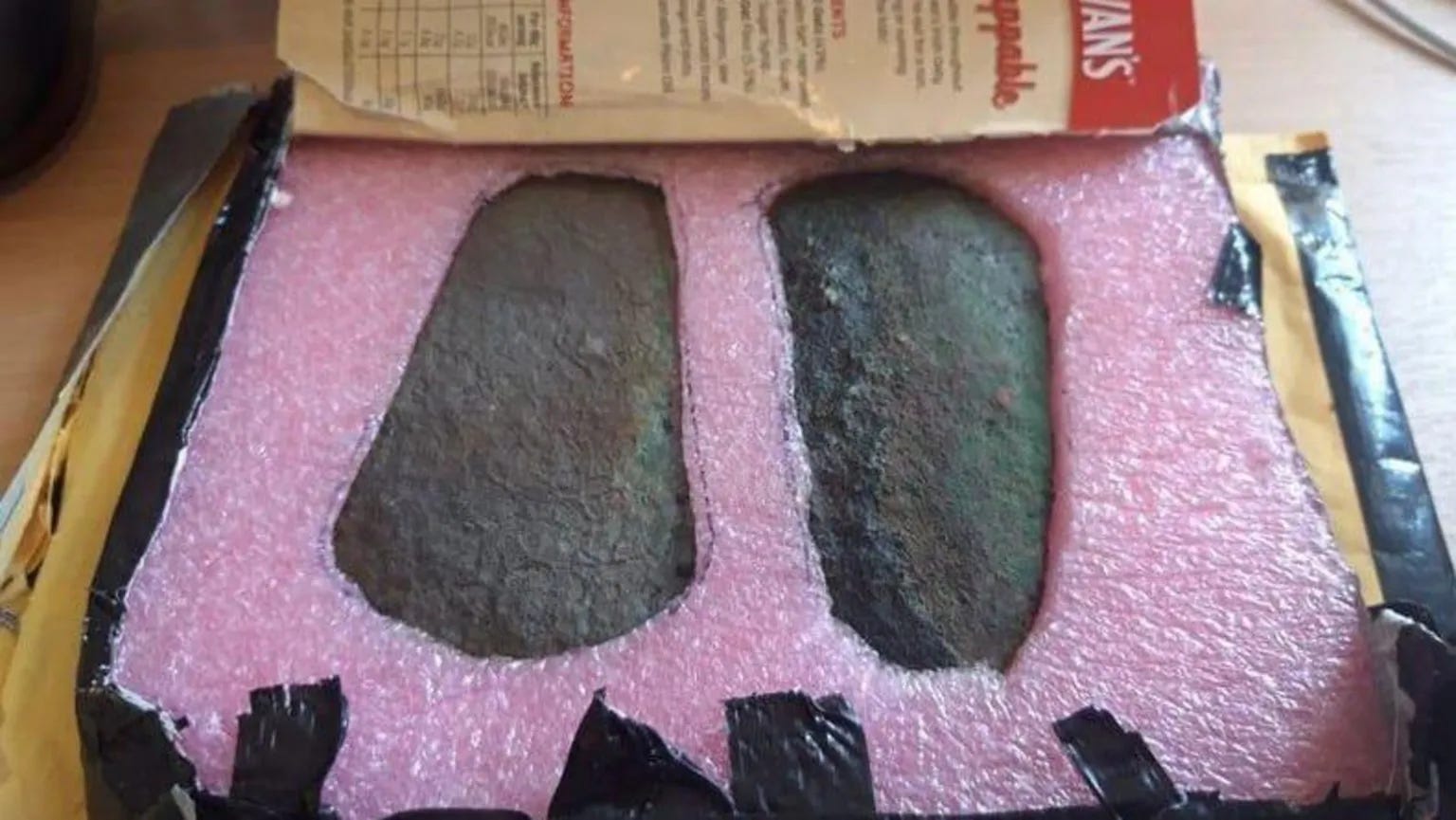
The Irish Antiquities Division of the National Museum of Ireland are reaching out to the public for information regarding two Early Bronze Age axeheads, dating from around 2150-2000 BC, which were sent anonymously to the museum at the end of June.
The anonymous donor mailed the axeheads to the museum in packing foam, and hilariously, you can see where they outlined the shape of the axes in the foam to secure them in the box. (See the above photo.) Amusement aside, the museum shared in the statement that the axes were thoughtfully packed and arrived safely to the museum; they are in excellent condition.
The accompanying note in the package claims that the donor found the axes using a metal detector in County Westmeath, and that he or she wished for them to be kept at NMI for future conservation and studies.
While this is an extraordinary discovery and a wonderful addition to the museum’s collection, there’s just one problem: in order to conduct a full study on the axes, researchers need to know the exact location where they were found. NMI asks that the donor or anyone with information regarding the find contact them at antiquitiesdo@museum.ie or call 01-6777444.
Could a plague be the reason behind Europe’s Neolithic population collapse?
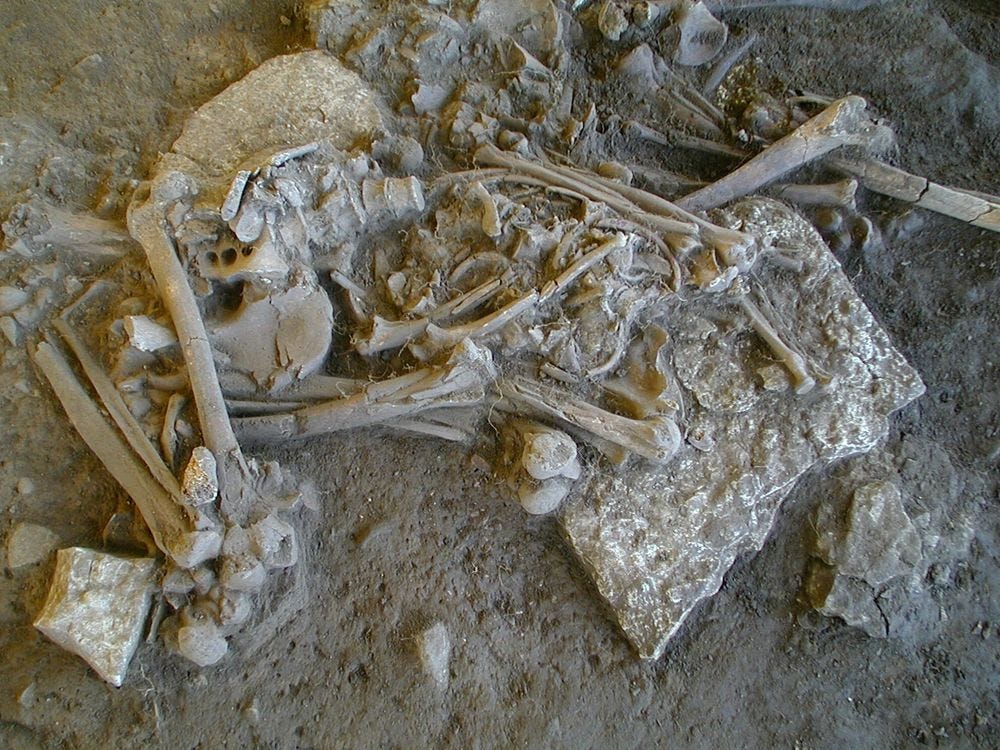
About 7,000 years ago, Europe’s hunter-gatherers found themselves displaced by farmers who migrated from the eastern Mediterranean and swept across the continent. But two thousand years later, the farmers’ population suddenly collapsed.
These Neolithic farmers raised livestock, established early agricultural communities, and constructed the megalithic monuments that can be found all across Europe (Stonehenge being a famous example). A new study from the journal Nature argues that an ancient strain of the Black Death could explain their rapid population decline around 3000 B.C.
The archaeologists behind the study analyzed the DNA of 100 skeletons buried in Neolithic monumental tombs across Scandinavia. According to the study’s lead author, geogeneticist Frederik Seersholm, “These plague cases, they are dated to exactly the time frame where we know the Neolithic decline happened, so this is very strong circumstantial evidence that the plague might have been involved in this population collapse.”
The Stanley Museum becomes the first American art museum to return Benin Bronzes, and the British Museum floats a possible agreement on the Parthenon Marbles.
This week, I spotted two stories regarding some of the biggest cases in art restitution.
The first was this announcement from the University of Iowa Stanley Museum of Art—the institution has pledged to return the Benin Bronzes in its collection to Nigeria, making it the first American museum to do so.
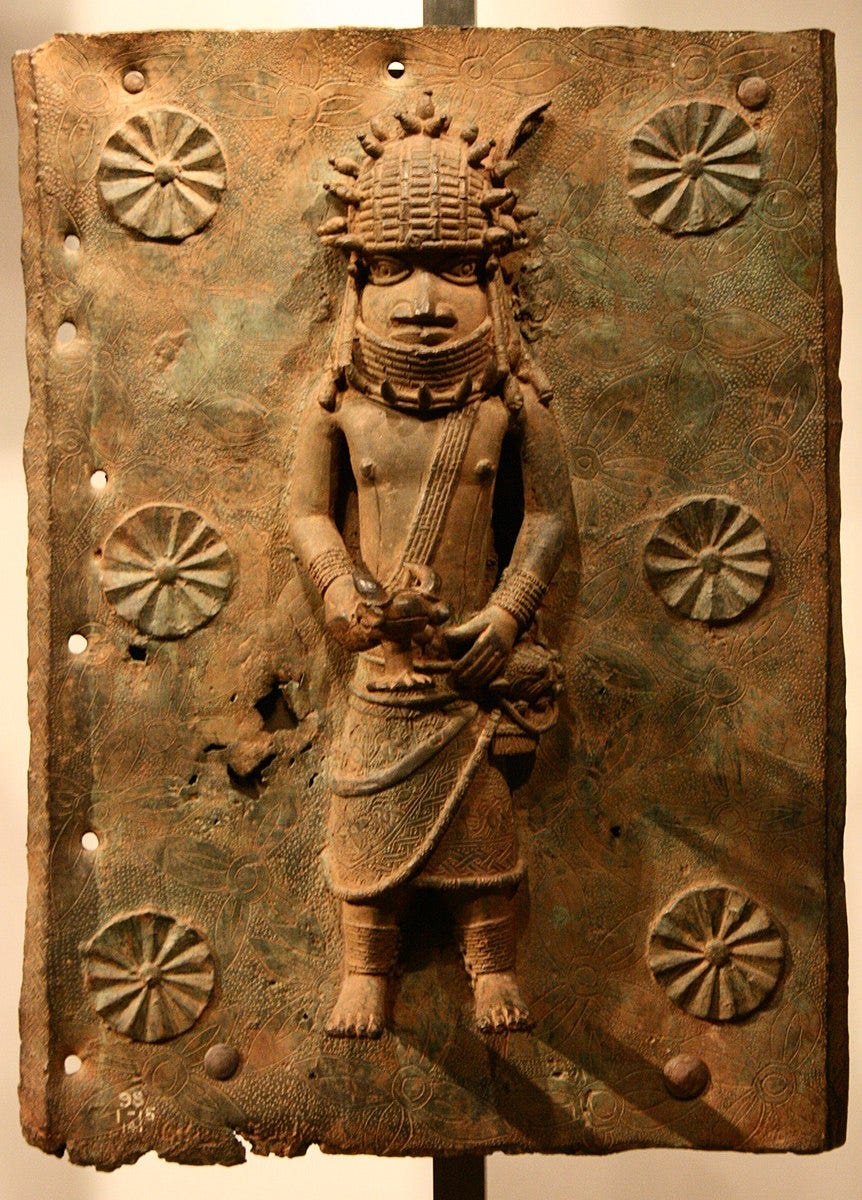
The Benin Bronzes, if you are unfamiliar, are the subject of a major controversy in the art world. The Bronzes are a collection of thousands of objects that were stolen by British troops from the Imperial Palace of the Kingdom of Benin, in what is now Nigeria. (The name is a bit misleading, as many of the pieces are not made of bronze.) Today, most of the Benin Bronzes are in the British Museum and the Ethnological Museum of Berlin, with another prominent collection in the Nigerian National Museum in Lagos and the rest scattered throughout the world.
.jpg)
During the late Victorian period, the British Empire was rapidly expanding its territorial reach, and they wished for greater control of trade in West Africa. In 1892, Benin’s ruler, Oba Ovonramwen, was pressured into signing a treaty with Britain. When it appeared that the Oba was not complying with the treaty, the British sent a group of nine ambassadors to negotiate with him in 1896. In response, the Kingdom’s chiefs organized an ambush that killed seven of the nine ambassadors and over 200 African servants and porters who accompanied them.
The British army retaliated in 1897 with a brutal conquest; they overthrew the Oba and raided the treasures of Benin. On one hand, British rule meant the abolishment of slavery and human sacrifice, both of which were still present in Benin. On the other hand, British colonization resulted in the profound economic plundering of what is now Nigeria, the impact of which is still felt today. The Benin Bronzes are a potent symbol of that plunder.
Restitution efforts have been stymied by disagreement within Nigeria regarding who has the right to the Bronzes. (The National Museum in Lagos? The current Oba of Benin?) The prevalent fear is that amidst this conflict, the objects won’t be properly preserved. But as Lauren Lessing, the director of the Stanley Museum of Art, told The Art Newspaper:
It is not my job to tell people what to do with their own possessions. The two works of art restituted were stolen from the Oba of Benin in 1897, and they belong to him.
The best way for museums to ensure that the public can see these works in the future is to approach the Oba, as they would any other potential lender, and ask. The Oba has said that he intends to lend these important works to museums around the world and I have no reason to doubt him. Ultimately, however, he has the right to say yes to loan requests and he also has the right to say no.
In other news, the new director of the British Museum, Nicholas Cullinan, signaled that the museum may be open to some kind of lending agreement with Greece regarding their dispute over the Parthenon Marbles. The British Museum has received a tremendous amount of bad press over the past year, after it was discovered that a senior curator had (allegedly) stolen over 1,800 ancient Greek and Roman artifacts, and no one knew about it for years. As a result, it seems they are more amenable to negotiations.
Other discoveries: a Roman circus and a British hillfort.
I came across this news that archaeologists found traces of a Roman circus in the Basque Country. Thanks to LiDAR (light detection and ranging) technology, researchers found the circus in the former Roman town of Iruña-Veleia, which served as an important transit center.
As we’ve discussed in previous Roundups, LiDAR has become an essential technology for archaeologists, as it allows for more precise aerial surveys and reveals ruins hidden beneath centuries of soil. This past week, I read about another research project that used LiDAR: a survey of Bodbury Ring, an Iron Age hillfort in Shropshire, England.
As it turns out, Bodbury is six times larger than historians originally thought. According to Time Team archaeologist and University of Chester Visiting Professor Stewart Ainsworth:
The earthworks of Bodbury Ring, it seems, were constructed to form a small, more easily defended fort at the southern tip of the original hillfort, possibly in the Middle Iron Age. This prehistoric ‘downsizing’ may have resulted from increased tension in the region, reflecting possible changes in the geopolitical landscape of the times. Close by, on the northern side of Bodbury Hill, the remains of a probable Roman Iron Age enclosed settlement have also been identified for the first time.
And finally, Mona Lisa’s house hits the market!
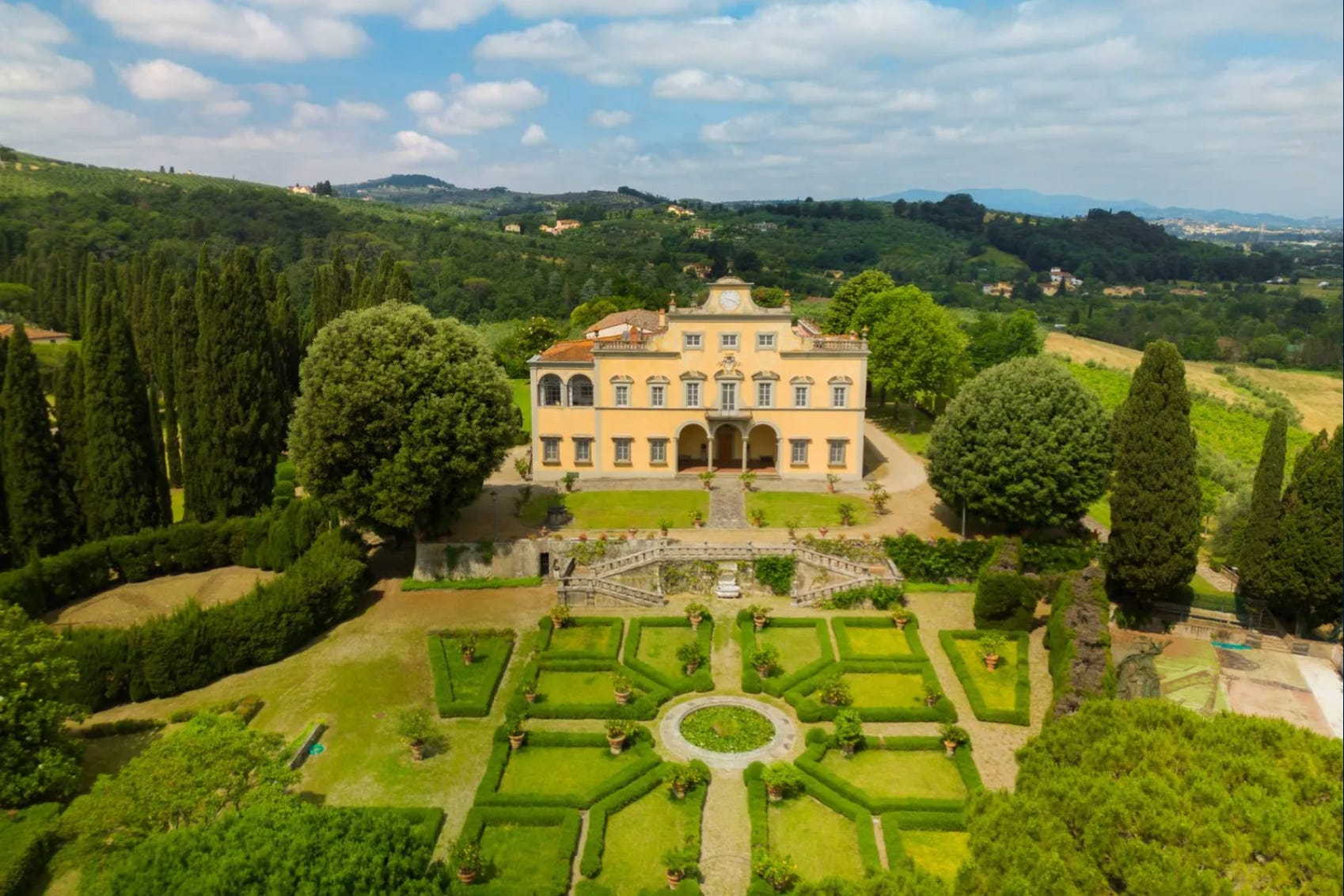
This gorgeous villa in Scanducci, Italy was constructed in the year 1300 and purchased by the Giocondo family in the late 1400s. As you may recall from past essays, Lisa del Giocondo was the model for Leonardo da Vinci’s Mona Lisa, and she would have already occupied this home by the time she sat for the portrait. At roughly 43,000 square feet with 66 acres of property, the villa is now available for purchase for $19.6 million. Click here to view photos of its interior.