

Crossroads Roundup: the Case of a Missing Botticelli, Bone Biographies, and Stubborn Fairies
Our favorite stories on art, archaeology, folklore, and more from this past week.

Welcome to the Crossroads Roundup! This is our weekly roundup of news related to history, art, archaeology, and anything else that our readers might enjoy. In the future, the Crossroads Roundup will be for paid subscribers only, so if you haven’t already, you can sign up by clicking below:

A Botticelli painting worth over $100 million was found in a family home outside of Naples.
The painting depicts the Virgin Mary and the Christ Child, and is dated to the 15th century. Sandro Botticelli’s lover, Simonetta Cattaneo Vespucci, sat in to model as the Virgin Mary. (She was also the model for his masterpiece, the Birth of Venus.)
But how did this painting, thought to be lost for 50 years, end up in someone’s house? I must confess, dear readers, that when I first came upon this headline, I conjured up images of a daring, Ocean’s Eleven-style heist. But it turns out that this was largely the result of a massive bureaucratic oversight.
The painting was displayed in a church in Santa Maria la Arita, a town outside of Naples, until an earthquake damaged the church in 1982. The painting was then given to a local family for safekeeping, and has hung in their house for the past fifty years. Local authorities sporadically checked on the painting in the early 80’s to ensure that it was being properly cared for, until they inexplicably stopped in the 1990’s. The Carabinieri for the Protection of Cultural Heritage subsequently listed the painting as missing.
Now that the painting has been “found” again, the family still holds the title to the work, but it will undergo a year’s worth of restoration before being displayed for the public.
Heritage Daily has released its Top 10 Archaeological Discoveries of 2023.
Heritage Daily has long been one of my favorite resources for archaeological discoveries, so I’d suggest checking them out if you haven’t already. Each December, they share a list of the top discoveries of the past year, some of which we’ve discussed on my Instagram page. Highlights include the discovery of Emperor Nero’s theater in Rome and a previously unknown Maya city found in Mexico’s Balamkú ecological reserve.
Speaking of top ten lists…
The New York Times released its Best Books of 2023, which includes Top Ten lists by genre. I know these awards are incredibly subjective, but I was happy to see that Emily Wilde’s Encyclopaedia of Faeries by Heather Fawcett was included on the list for Best Sci-Fi and Fantasy. Fans of fairy folklore and Susanna Clarke’s Jonathan Strange & Mr. Norrell will love this historical fantasy about a Cambridge scholar of fairies (or “dryadology”). It was certainly one of my favorite books that I read this past year, and I’ve already preordered the sequel.
Cambridge archaeologists have published “bone biographies” that illuminate the lives of ordinary people in medieval Cambridge.
The series of “bone biographies” are part of a larger project called After the Plague: Health and History in Medieval England. Thanks to technological advances, researchers can study the remains of Cambridge residents from the 11th to 15th centuries with far greater precision, thereby allowing us to learn intimate details about their physical appearance, whether or not they were a plague survivor, or even the kinds of shoes they may have worn.
I love projects like this. So much of historical education focuses on the lives of rulers and very little on the way that 99% of the population lived. To have a fully-formed understanding of a period, I feel it’s essential to have at least some idea of what ordinary people were like.
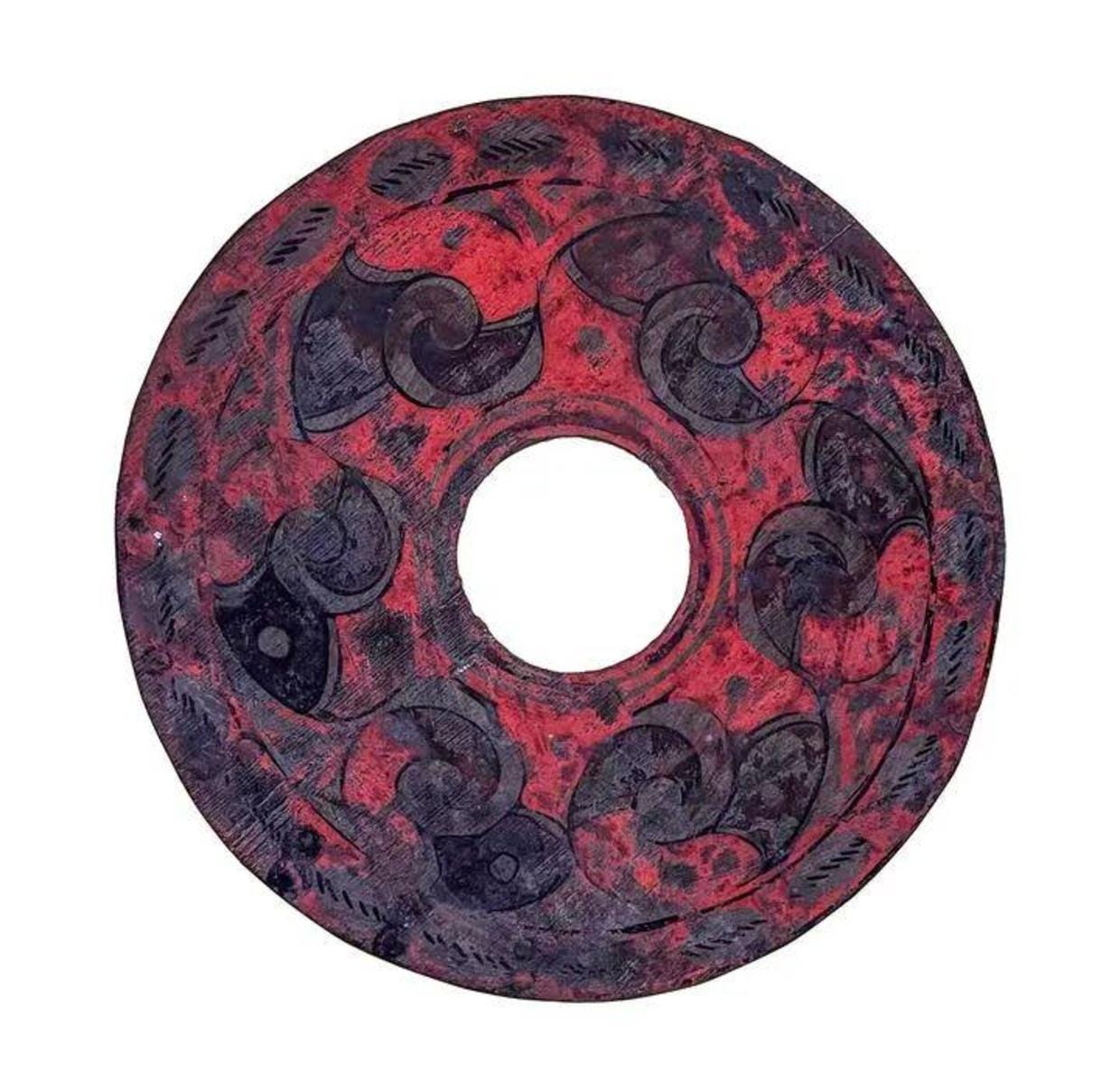
Archaeologists unearthed an extraordinary Han Dynasty tomb in Southwest China.
The tomb dates back to about 193 BC, and it’s the earliest tomb that researchers have found from the Western Han Dynasty. Other tombs ranging from 206 BC to 589 AD were also found on the site, which was uncovered by accident thanks to a construction project.
Researchers so far have uncovered over 600 artifacts, many in remarkable condition. They believe the tomb belonged to a high-ranking official, as evidenced by the tomb’s size and the luxuriousness of the objects. Hopefully more information will come as the archaeologists continue their investigation.
And finally, the case of local fairies who can’t be held down!
I hope you’ll indulge me—I know this story is a month old (while the ones above all broke in the past week). But I just couldn’t resist telling you about the fairy bridge in the English village of Stiffkey.
For fifty years, a small bridge allowed members of the local community to venture into the salt marshes without being stranded once the tides came in. Due to safety concerns regarding coastal erosion, the UK’s National Trust took down the bridge this past February…without consulting the community.
A few months later, a makeshift footbridge appeared in its place. No one in the village claimed to know who had built it, with local lore being that the fairies who lived on the marsh constructed the footbridge in anger. A few weeks later, the National Trust took it down. “But of course, the fairies were watching and they put another one up. A better one this time, which is much harder to take down,” said local resident Ian Curtis. Sure enough, a second footbridge materialized.
We all know how terribly dangerous it is to upset the fairies, so here’s hoping that a new, sturdier bridge will be erected for the community soon.