

Édouard Manet in the Shadow of War
All was well at the Café Guerbois, until Manet, Degas, and their friends heard the news: France had declared war on Prussia.

This essay is part of the series The Life of Édouard Manet.
On July 19th, 1870, France declared war on Prussia. It was a hastily, foolishly-executed decision: one that would have profound consequences for Paris, for the Empire, and for Édouard Manet’s circle of friends.
Only a year before, Manet could be found holding court at a new favorite establishment, the Café Guerbois. There, he debated everything from the rendering of light and shadow to the influx of Japanese prints after the 1867 World’s Fair; the Edo masters had thoroughly dazzled the painters who would become known as the Impressionists. Some were friendly debates, some were bitter arguments. (He and his friend Degas had frequent spats!) But the group stuck together. Manet was the core of a circle that included Félix Bracquemond, Bazille, Degas, and Renoir as near-daily patrons of the Café Guerbois. Whenever they were in Paris, Monet, Pissarro, Cézanne, and Sisley joined, too.
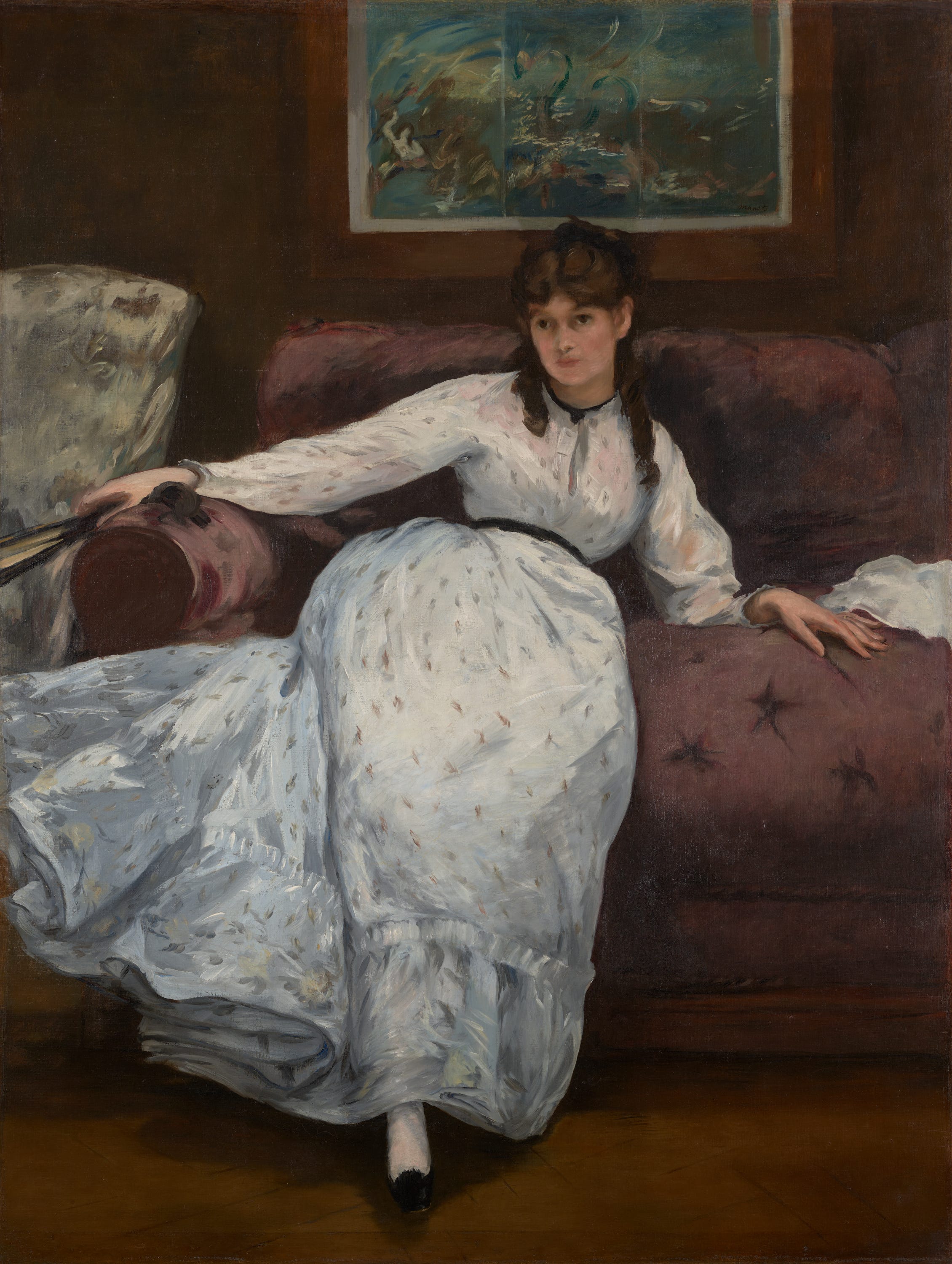
The friend of Manet who would not be found at Guerbois was Berthe Morisot. As an unmarried, upper-class woman, she could not be seen in the raucous environment of a bohemian café. Nevertheless, she remained an integral member of the group, and the Morisot and Manet families grew extremely close.
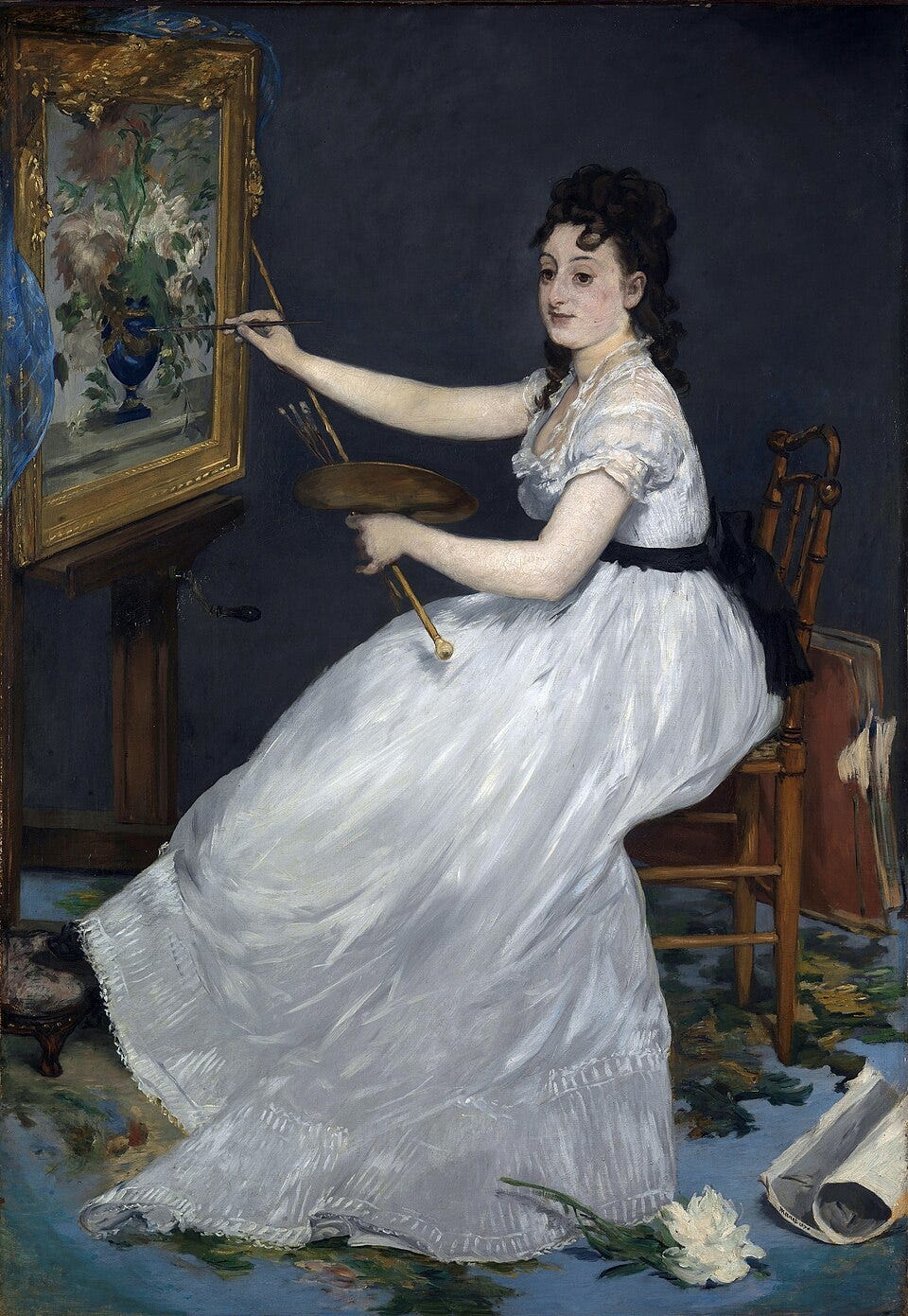
Édouard Manet was fascinated with Berthe Morisot, and they spent countless hours in the studio together (though before she was married, Morisot was expected to be accompanied by a chaperone). She was even quite resentful of his collaboration with Eva Gonzalès, another society darling whom he taught and painted. Morisot’s mother was growing concerned; though she supported her daughter’s painting, she worried that Berthe was being drawn into a world of eccentrics and bohemians, and would never marry. Little did Madame Morisot know, her daughter had caught the eye of Manet’s brother, Eugène.
_-_Edouard_Manet.jpg)
All the while, rumbles of discontent toward the Salon continued, and some members of the group were beginning to wonder if they should host their own exhibition. Manet was staunchly opposed to the idea. As we’ve explored throughout this series, Manet belonged to two worlds. While artists like Monet and Cézanne wanted to take a bat to the establishment, Manet had always belonged to the Parisian elite. He wanted awards. He wanted official praise. Most of all, he wanted to one day be awarded the Légion d’honneur, as his late father had before him. He reminded his friends, “[The] Salon is the real field of battle. It’s there one must take one’s measure.”1
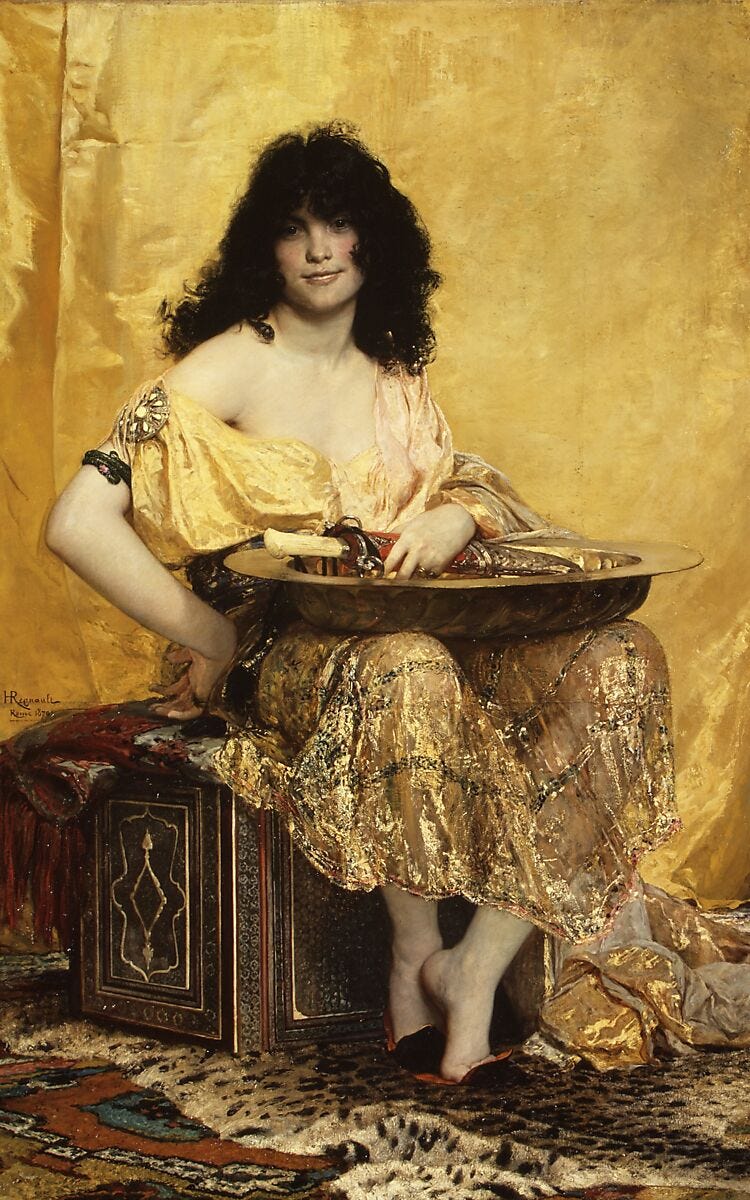
The Salon of 1870 brought more frustrations. Though Manet managed to place some paintings, his Portrait of Eva Gonzalès was savagely criticized. The star of that year’s Salon was Henri Regnault, whose sultry, gorgeous Salome (1870) enchanted viewers.
One year later, Regnault would die on the battlefield.
As is the way of war, the duels of the rich and powerful brought devastation upon ordinary people.
In 1858, Prince Wilhelm of Prussia became regent after his brother, King Frederick William IV, suffered a debilitating stroke. Prince Wilhelm quickly worked to shore up Prussia’s military. Wilhelm was an experienced soldier with a vision of making Prussia the dominant power in Europe. With that in mind, he appointed Otto von Bismarck to be Minister-President, since he knew that Bismarck would support his goals.
In the summer of 1870, Bismarck proposed a Prussian successor to the Spanish throne. Napoleon III of France could not allow this; with Prussian rulers to the East and South, France would be surrounded. Bismarck responded that it was never his intention to insult France, and he quickly withdrew the proposal. But Napoleon was spooked. He demanded Bismarck promise never to suggest such a thing ever again.
This, of course, revealed France’s weakness. Bismarck made the demand public. Humiliated, Napoleon III responded by declaring war.
The painters in Manet’s circle left Paris over the course of the war, either for the countryside or, in the case of Monet and Pissarro, for London. Prussia had a far superior military, and that September, Napoleon surrendered. Pro-democracy forces in Paris seized the opportunity and declared the Third Republic.
A republican himself, Manet eagerly enlisted in the National Guard; his brothers joined the Mobile Guard. Bazille also enlisted, and sadly, he was killed in action that November—a devastating blow to the group, especially for Renoir, with whom Bazille was especially close.
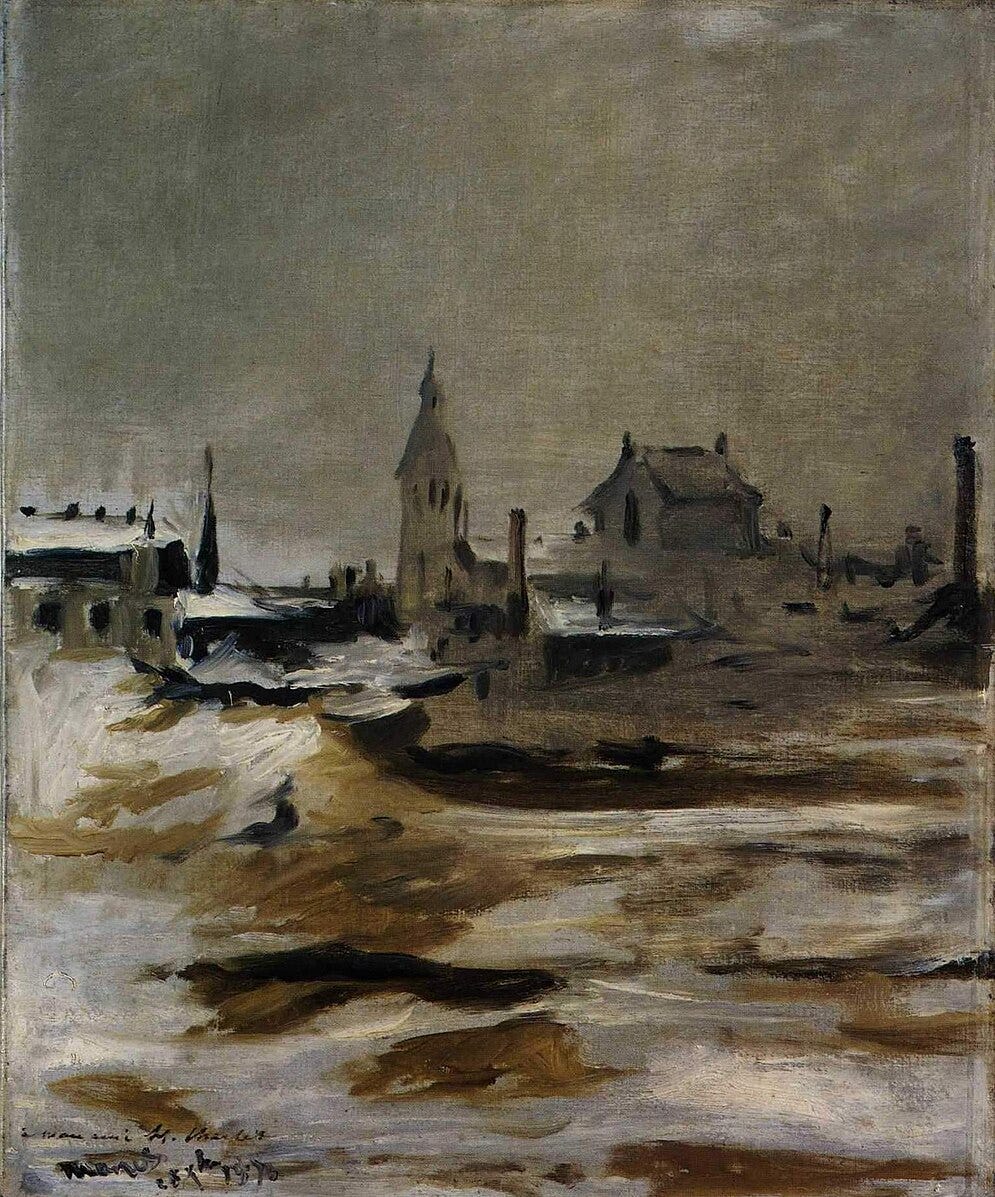
Manet wouldn’t hear of Bazille’s passing until later that year. In the meantime, he sent his wife and Léon to the south of France and pushed the Morisots to leave Paris. In his letters, he tells Suzanne that he initially regretted his decision to send his family away, but was soon grateful when the full horrors of the war revealed itself. His Effect of Snow on Petit-Montrouge (1870) demonstrates his fading enthusiasm for France’s military expedition. While initially full of patriotic vigor and optimism for the Third Republic, this painting forgoes any glorious battle scenes in favor of a melancholic, urban landscape. The fact that this was an early foray into the Impressionist style for Manet makes this work all the more poignant, as if Realism is insufficient in expressing the inner turmoil that faced Parisians during the war.

By January of 1871, the Prussians took the capitol, and the French were forced to surrender. The price of defeat was brutal. France ceded the territories of Alsace and Lorraine to Prussia, and the nation had to pay five billion francs to their enemy over the following three years. The new Assembly was packed with conservatives elected by the provinces; the now-alienated Parisians further suffered the spread of disease and hunger. By all accounts, it seemed as if the government had hung them out to dry. In Manet’s view, these politicians were “doddering old fools, not excepting that little twit Thiers who I hope will drop dead one day in the middle of a speech and rid us of his wizened little person.”2 (Adolphe Thiers was elected the Head of Executive Power; later that year, he would be made President of France.)


At this point, Manet left for the South of France to join his family. It was a good thing he did—those who read my Impressionism series may recall the working-class revolt known as the Paris Commune, which from March to May of 1871 seized control of Paris. Thousands died in the bloodshed between the Communards and the French army.
But the army prevailed. They defeated the Communards by summer, and the painters could return to Paris later that year.
When they did, they returned to a city in shambles. Life seemed inevitably altered—was it not time to strike out on their own?
John Rewald, The History of Impressionism: Fourth, Revised Edition (New York: Museum of Modern Art, 1973), 214.
Sue Roe, The Private Lives of the Impressionists (London: Vintage, 2006), 84.