

Flower Fairy Season
On the transformation of fairy folklore as seen through the art of Cicely Mary Barker (1895-1973), a pioneering illustrator who shaped the image of the flower fairy for the 20th century.

When I was little, my mother filled my childhood with fairies.
The tooth fairy left money, along with little notes and a shower of fairy dust (craft glitter) across the bedroom floor. On Saint Patrick’s Day, my sister and I woke up to find our toys strewn throughout the hall and down the stairs—we were told that leprechauns were quite mischievous. Christina and I would scurry down to the living room to check our “leprechaun traps,” which we would assemble from old shoe boxes and gingerly set out the night before. The leprechaun always seemed to outsmart us, but he left us chocolate coins and a little letter boasting of how we would never, ever catch him. Hilariously, there was even a “Las Vegas fairy” (no, I’m not kidding) who visited with sweets when my parents embarked on a weekend trip and left us in the care of our grandmother.
But most of all, there were the flower fairies. A ubiquitous presence, they had laid claim to the garden, and despite all of my best efforts, refused to reveal themselves.
Years later, as I write from my apartment in Nashville, fairy season has arrived. Daffodils, early buttercups, and spring beauties (sometimes called “fairy spuds”) have taken over our city parks. The saucer magnolias and cherry trees are blooming in glorious shades of pink. It’s not difficult to imagine a flower fairy—a dainty, winged creature, no more than a few inches tall—flitting about from flower to flower.
Back in January, when I was longing for warmer weather, I wrote an essay called “From Fairies to Aliens: Abductions, Changelings, and Ships in the Sky.” In it, I explored the darker side of fairy folklore, stories born of a pre-industrial world in which one never ventured into the woods alone at night. A world where the fae, armed with the uncanny power of nature, could ruin your fields and plunge your community into famine, steal your babies and replace them with their own, lure you into their revels and make you dance until your feet bled, until your lungs gave out. A world where nearly 50% of people did not make it to the age of five. Who can blame them for peering into the dark and seeing only monsters?
But the world did industrialize, medicine progressed, and today, infant mortality rates are a fraction of what they once were. In our world, fairytales are meant to instill hope, not fear.
While old-school fairies have made a comeback in adult literature, with notable examples including Susanna Clarke’s Jonathan Strange & Mr. Norrell and the more recent Emily Wilde series by Heather Fawcett, flower fairies have maintained their stronghold in books, movies, and art aimed at children. I thought that with the coming of spring, it was time to introduce the woman whose work cemented the image of the flower fairy for the 20th century.
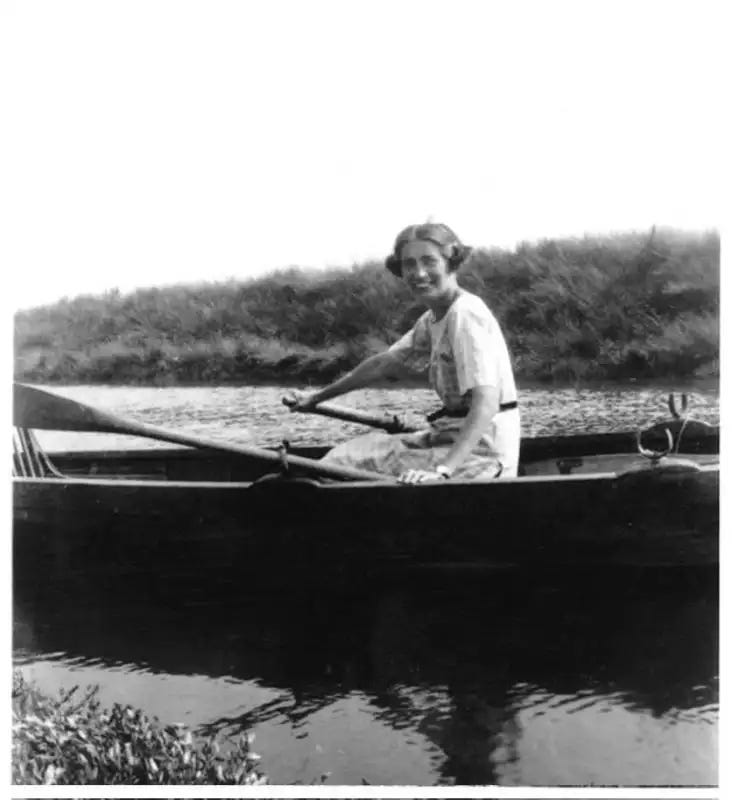
Cicely Mary Barker was born in 1895 in Croydon, England. She grew up in an upper-middle class household, and though she battled epilepsy throughout her childhood (and would struggle with her health for the rest of her life), she showed a talent for art at an early age. Her father Walter, himself a painter, strongly encouraged his daughter’s passion and enrolled her at the Croydon School of Art when she turned thirteen. By sixteen, Cicely became the youngest member to join the Croydon Art Society and embarked on her professional journey, starting with greeting cards and expanding into magazines and books. With her father passing away when she was only seventeen, Cicely’s professional success grew all the more essential for her family.
By the time she died in 1973 at the age of seventy-seven, Cicely Mary Barker had published thirty-five books and acquired legions of fans, including Queen Mary, wife of King George V and grandmother of Queen Elizabeth II. Today, Barker’s fairy books are still in print, along with interactive books, stickers, coloring books, and more from Penguin Random House. While Barker also produced a great deal of religious artwork and illustrated many books of poetry and hymns, it is her fairy art that continues to capture the public’s imagination.
Why the fairies?
During Barker’s childhood, the United Kingdom was in the midst of a fairy renaissance, though actual belief in fairies was waning. No longer a source of fear, fairies underwent a dainty makeover. In 1904, J. M. Barrie introduced the world to Peter Pan, first as a character in the 1902 novel The Little White Bird, then as the star of Peter Pan, or The Boy Who Wouldn’t Grow Up in the 1904 play, which debuted at the Duke of York’s Theatre in London. (Barrie would also adapt the play into a children’s novel called Peter and Wendy, published in 1911.)
As a reviewer wrote* after watching a 1909 production of Barrie’s play, “Either we are a nation of hypocrites, or we have a secret belief in the supernatural, for the torrent of hand-clapping which came to the rescue of Tinker Bell was so overwhelming that even Peter seemed surprised.”
In 1911, the American-born Oxford scholar Walter Yeeling Evans-Wentz published The Fairy-Faith in Celtic Countries, a fastidiously-assembled collection of fairy folklore from the rural communities of Ireland, Brittany, and the U.K. Evans-Wentz compiled the stories with some urgency, as the “fairy faith” was declining among younger generations, and the stories he recorded lived in the hearts and memories of community elders—many of whom were illiterate.
Then, there were the infamous Cottingley fairies of 1917: photos produced by cousins Elsie Wright and Frances Griffiths, who claimed to capture real fairies on film. The cousins later admitted to faking the images, but at the time, the photos were sensational. The Cottingley fairies would even receive an endorsement from Sir Arthur Conan Doyle of Sherlock Holmes fame in The Coming of Fairies, published in 1922.
Nevertheless, belief in the Fair Folk among adults would fade with a final twinkle of pixie dust. Fairies were officially the domain of children. It’s ironic, isn’t it? Fairies no longer had to kidnap babies from their cribs—they could conquer their hearts instead.
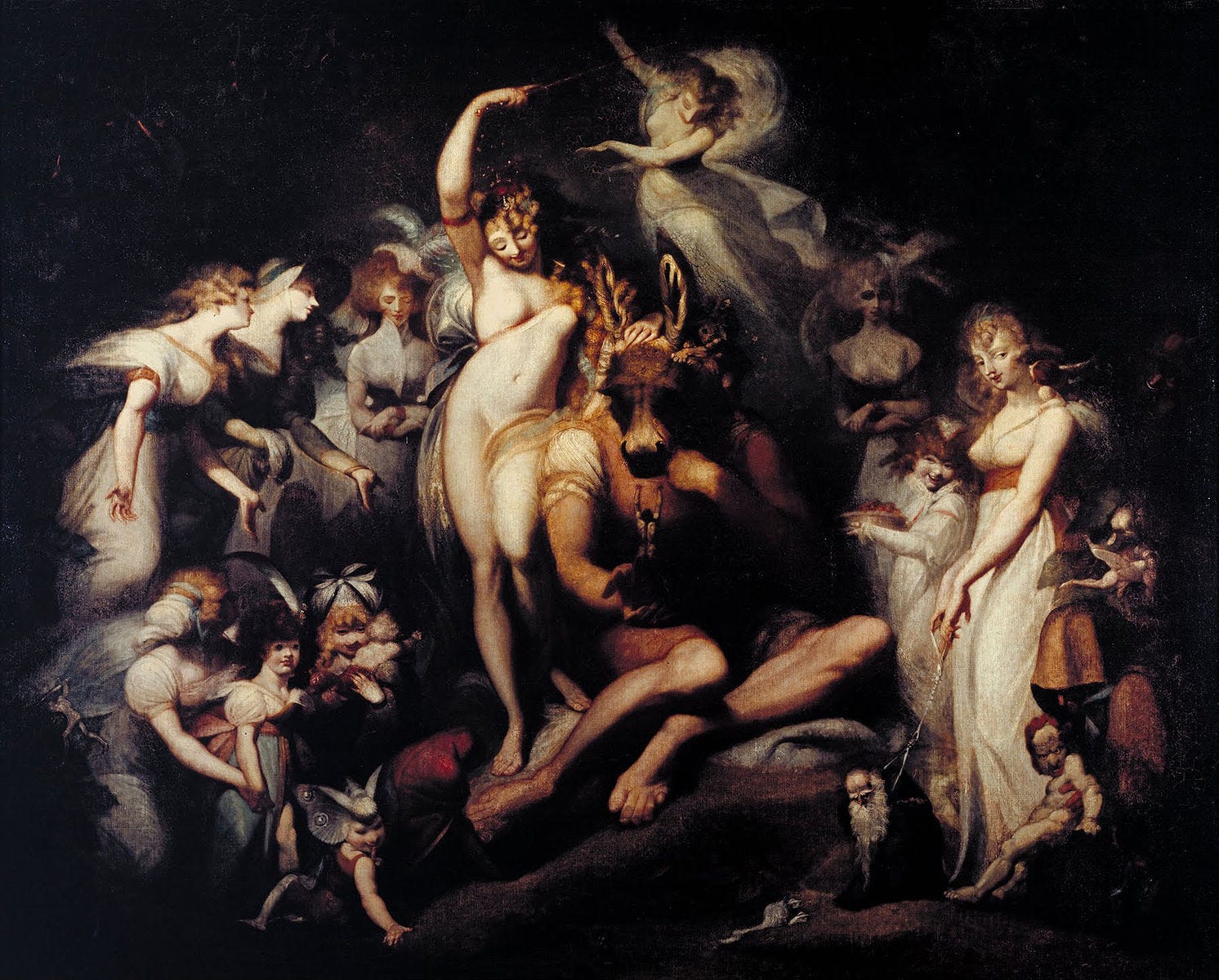
When Cicely Mary Barker began publishing her flower fairy illustrations, fairies had already shrunk down to butterfly-size. But they were generally depicted as adults. The fairy art from the previous centuries often involved scenes of Oberon, Titania, and Puck from Shakespeare’s A Midsummer Night’s Dream—some with an overtly sexual undertone, such as Henry Fuseli’s Titania and Bottom (1790).

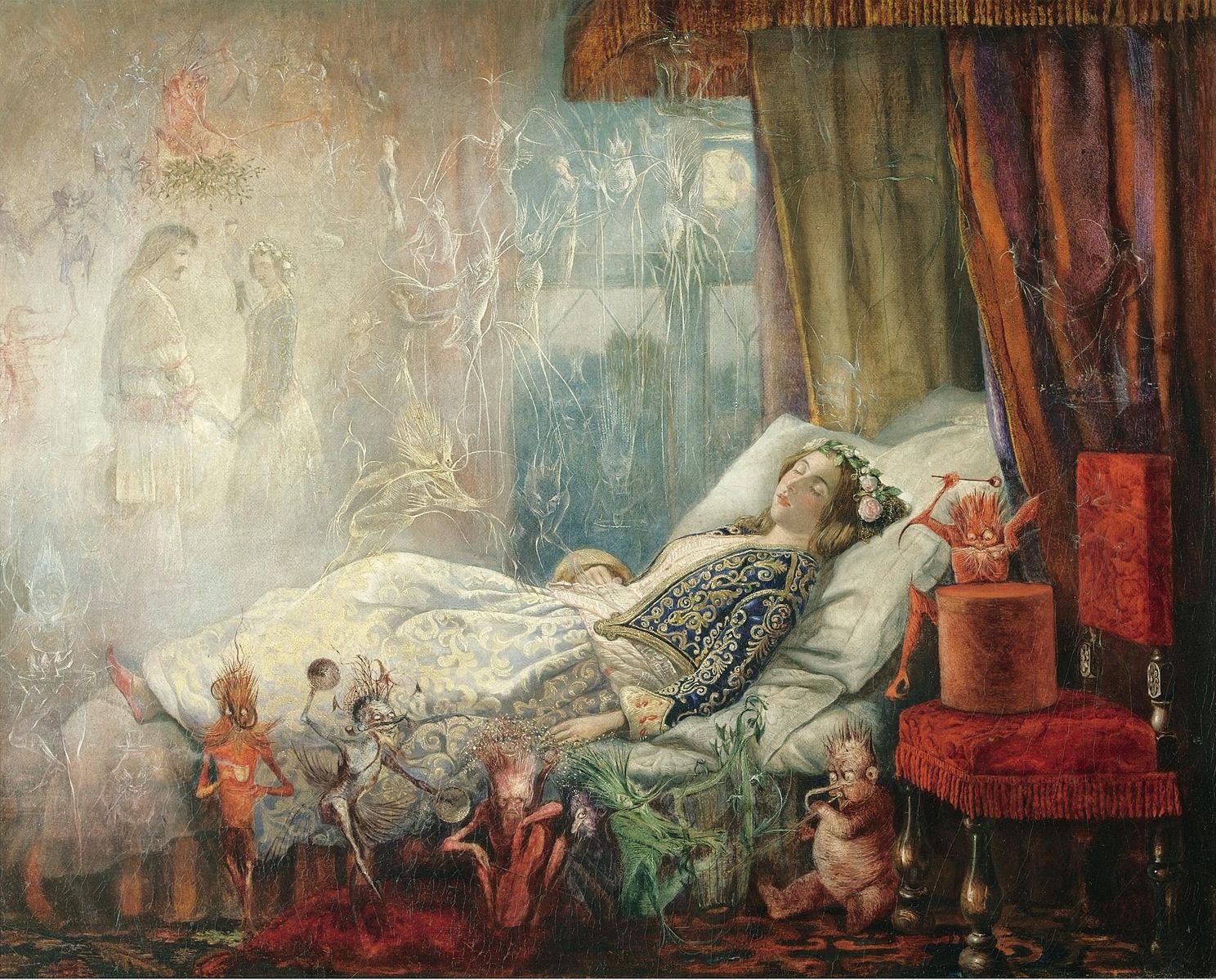
Others, like the Victorian works of Richard Dadd and John Anster Fitzgerald, possessed an uncanny, if not psychedelic character. As it turns out, Fitzgerald was using a lot of opium when he painted his fairies (see below).

Barker herself took great inspiration from the Pre-Raphaelites. The Pre-Raphaelite Brotherhood was a group of British artists who in 1848 rebelled against the Royal Academy’s promotion of Renaissance master Raphael (and the Mannerists who would follow him) as the artistic ideal. The Pre-Raphaelites turned to the artists who preceded Raphael (hence the term Pre-Raphaelite) and championed the rich, vibrant colors and lavish details of Quattrocento art, or Italian art from the 1400s. (Think Leonardo da Vinci, Sandro Botticelli, etc.) While the Brotherhood would only last from 1848 to 1853, the Pre-Raphaelite influence would stretch into the Late Victorian period, particularly their fascination with mythology and folklore.
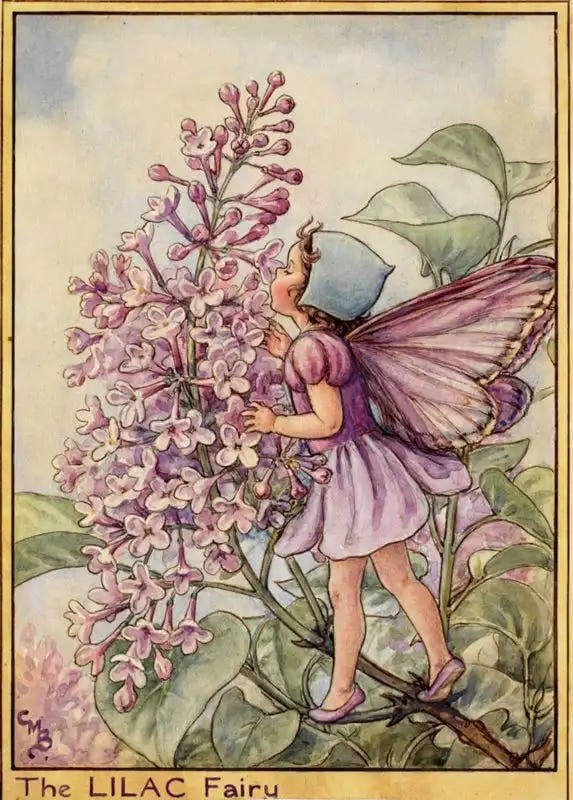
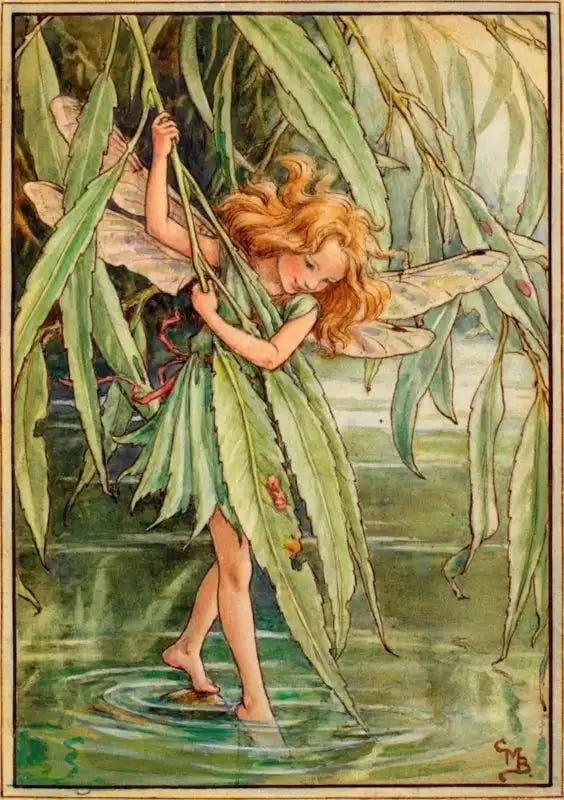
While Barker’s fairy paintings share the rich details and colors of her Victorian predecessors, most of her flower fairies are distinctly images of children. Examples of cherub-like fairies in art precede her work (Edward Robert Hughes’ Midsummer Eve ca. 1908 comes to mind), but Barker’s illustrations are far more precise, both in the fairies’ facial features and in her botanically-accurate depictions of plants.
.jpg)
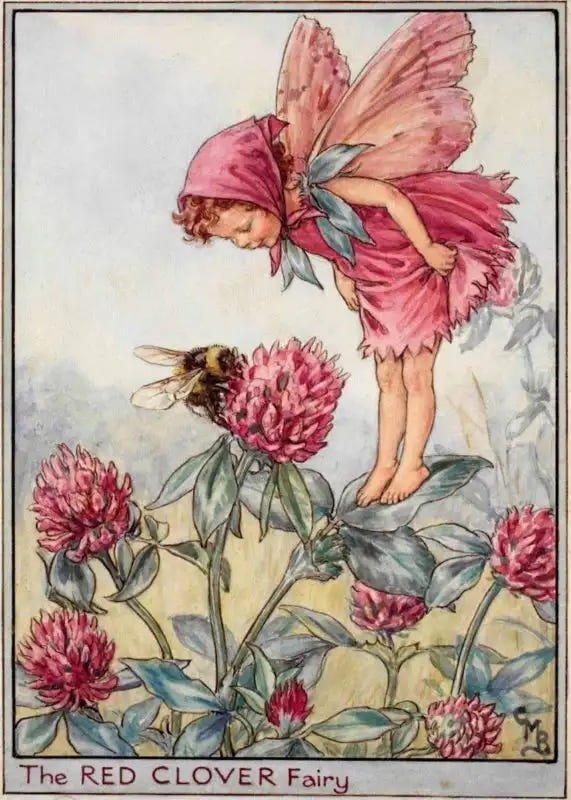
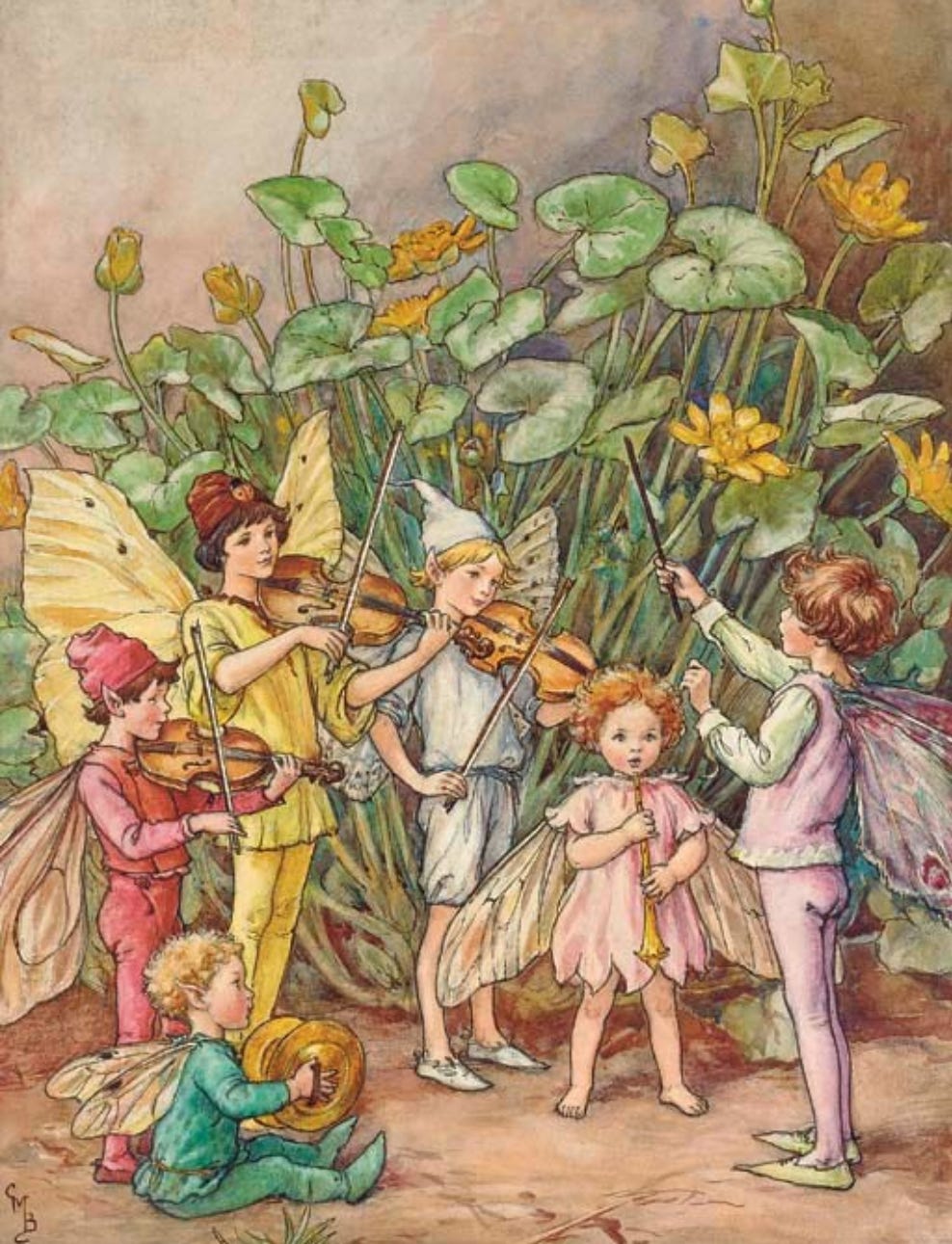
The models for Barker’s art came from the children she knew in her own life. While Barker never married nor had children, her older sister Dorothy ran a kindergarten, and the children of the school are immortalized in Barker’s art. Another key influence for Barker was a fellow woman artist, Kate Greenaway. Greenaway was a Victorian artist known for her children’s book illustrations; one can see how Barker found inspiration for her fairy paintings from works such as Greenaway’s Frontispiece for The Pied Piper of Hamelin, ca. 1888.
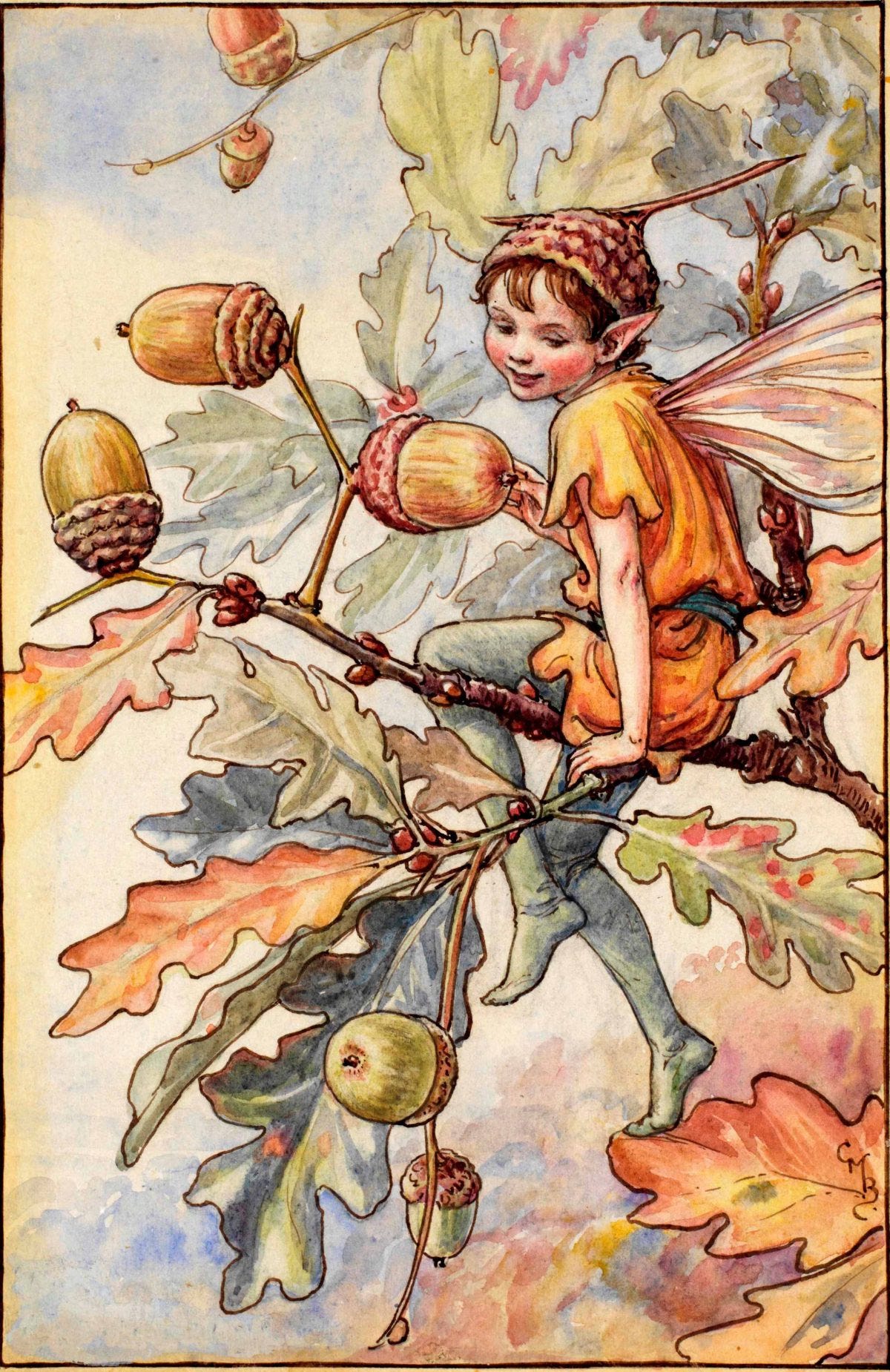
In the 21st century, a clear divide has emerged between the fairy stories that exist for adults and those meant for children. Fairies, both demented (as in the works of Susanna Clarke) and sexy (as in the Crescent City series by Sarah J. Maas), have made their return in fantasy novels for grown-ups. But in children’s books, Cicely Mary Barker’s influence reigns supreme. When I look back on the picture books I devoured as a little girl, the fairy figurines sold at garden centers, the fairy toys and art marketed to children, many possess the influence of Barker’s timeless illustrations.
While I will always be fascinated by the old folklore, with all the terror, the majesty, and the awe that the fairies of olden days inspired, I know I’m lucky to live in a time that could produce the flower fairies, and I wish that all children were lucky enough to fall under their spell.
*For more on the history and evolution of fairy folklore, I recommend Fairies: A Dangerous History by Richard Sugg.