

Frankenstein, Yunnan, and the Opium Trade
The Year Without a Summer inspired authors from England to Southwestern China. But horrific famines would also compel farmers to turn to a lucrative, addictive cash-crop.

This essay is part of the series The Year Without a Summer.
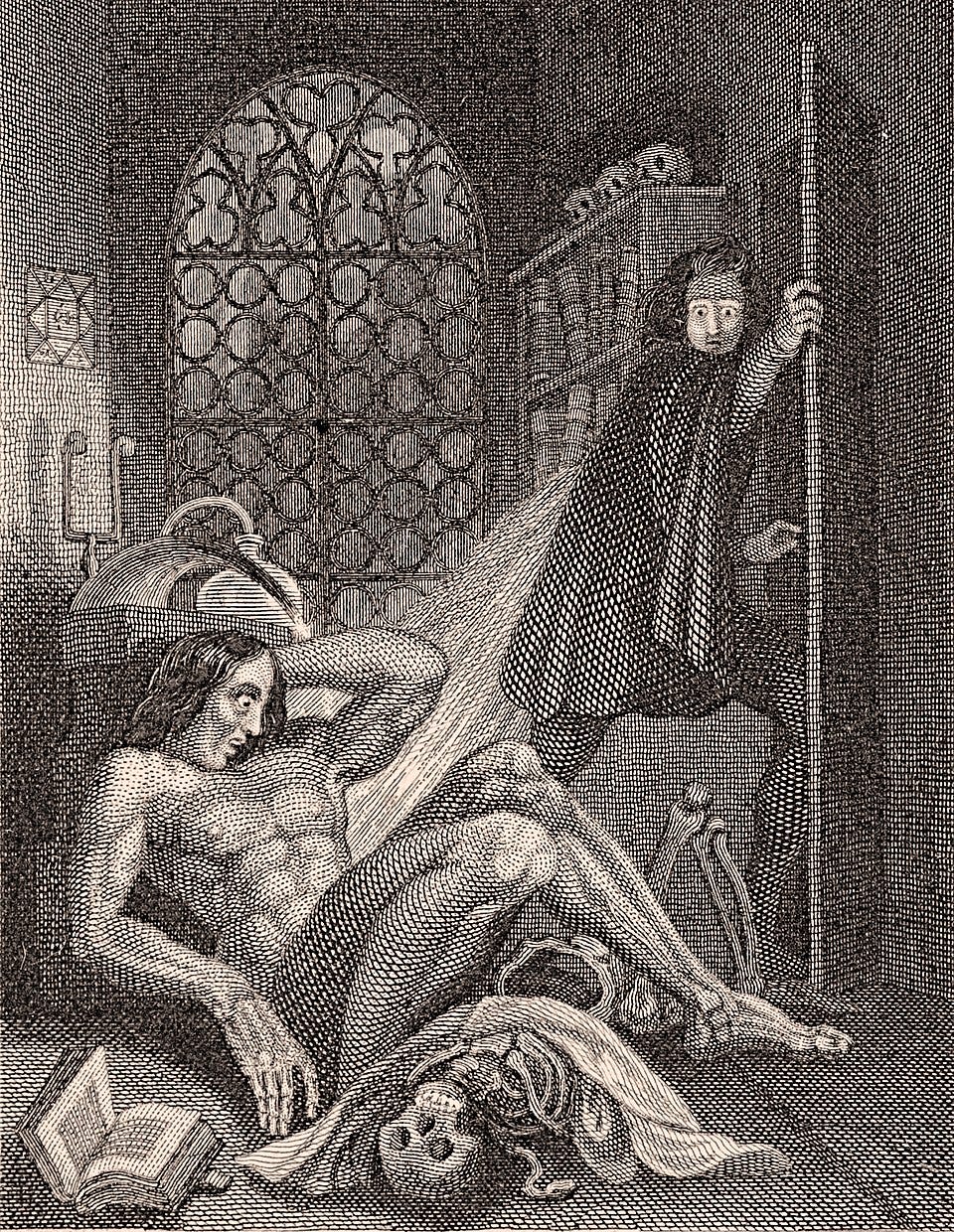

Thousands of miles apart, two very different writers were witnessing a climate emergency of epic proportions.
In Geneva, Mary Godwin (soon-to-be Shelley) planned to pass the summer of 1816 in tranquility with her lover, Percy Shelley, their friend Lord Byron, Byron’s doctor John William Polidori, and Mary’s stepsister Claire Clairmont, then pregnant with Byron’s child. Instead, she witnessed dismal, punishing rain, and a local populace who would soon face devastating circumstances if the weather didn’t turn around.
Between April and September of 1816, it rained 130 days in Geneva, resulting in floods and ruined summer crops. The extreme cold that had befallen Europe after the eruption of Mount Tambora also caused the growth of Alpine glaciers, which encroached upon agricultural fields and conjured fears of an ice age. Thunderstorms became the soundtrack of Mary Shelley’s holiday. Dark, stormy nights, lashing rain… the setting was downright Gothic, ripe for the birth of what many scholars consider to be the first science fiction novel.
I’ve written before about Mary Shelley’s Frankenstein, and the ghost-story competition that catalyzed her creation. But the horrors Shelley invented for her novel were no match for the trauma inflicted on Europe’s peasants that year. The meteorological impacts of Tambora stretched into 1818; the “Year Without a Summer,” though a famous moniker, is therefore incomplete in encapsulating the people’s suffering.


Note that this was prior to the spread of railway lines across the continent, which made transporting food to hard-hit areas a logistical nightmare. The wealthy Shelley circle were financially insulated from such trials, but the vast majority of people still relied on the land for food and income. In Switzerland, the fragmented political system made it even more difficult to respond to the crisis. With grain prices now two to three times higher than in coastal areas, the Swiss saw an explosion of famine that caused deaths to exceed births in 1817 and 1818.
One wonders if Frankenstein’s monster received his ghastly visage as a result of these events. A priest from Glarus described the conditions of his Alpine community:
It is terrifying to see walking skeletons devour the most repulsive foods with such avidity: the corpses of livestock, stinking nettles—and to watch them fight with animals over scraps.1
Percy Shelley also noted that the beggar children he encountered that summer “appeared in an extraordinary way deformed and diseased. Most of them were crooked, and with enlarged throats.”2 The situation throughout the rest of Europe wasn’t much better, and the only reason European nations escaped full-scale population collapse was due to shipments of grain from Russia. (Russia was not as impacted by the volcanic aerosols that had blocked much-needed sunlight in other parts of the world.)
Of course, the connection with Tambora’s eruption had not yet been deduced. But Percy Shelley almost hit the nail on the head after he and Mary toured the glaciers of the Chamonix Valley that fateful summer. The following day, once again shut indoors by the rain, Percy wrote his famous Romantic poem, “Mont Blanc: Lines Written in the Vale of Chamouni.” He also journaled about the glaciers’ treacherous advance through the valley:
…ravaging in their slow but irresistible progress the pastures & the forests which surround them, & performing a work of desolation in the ages which a river of lava might accomplish in an hour…3
Meanwhile, the suffering that had overtaken Europe was simultaneously upending life in East Asia. Harvests faced similar calamities during the 1816-1818 period, whose horrors would inspire the Chinese poet Li Yuyang.
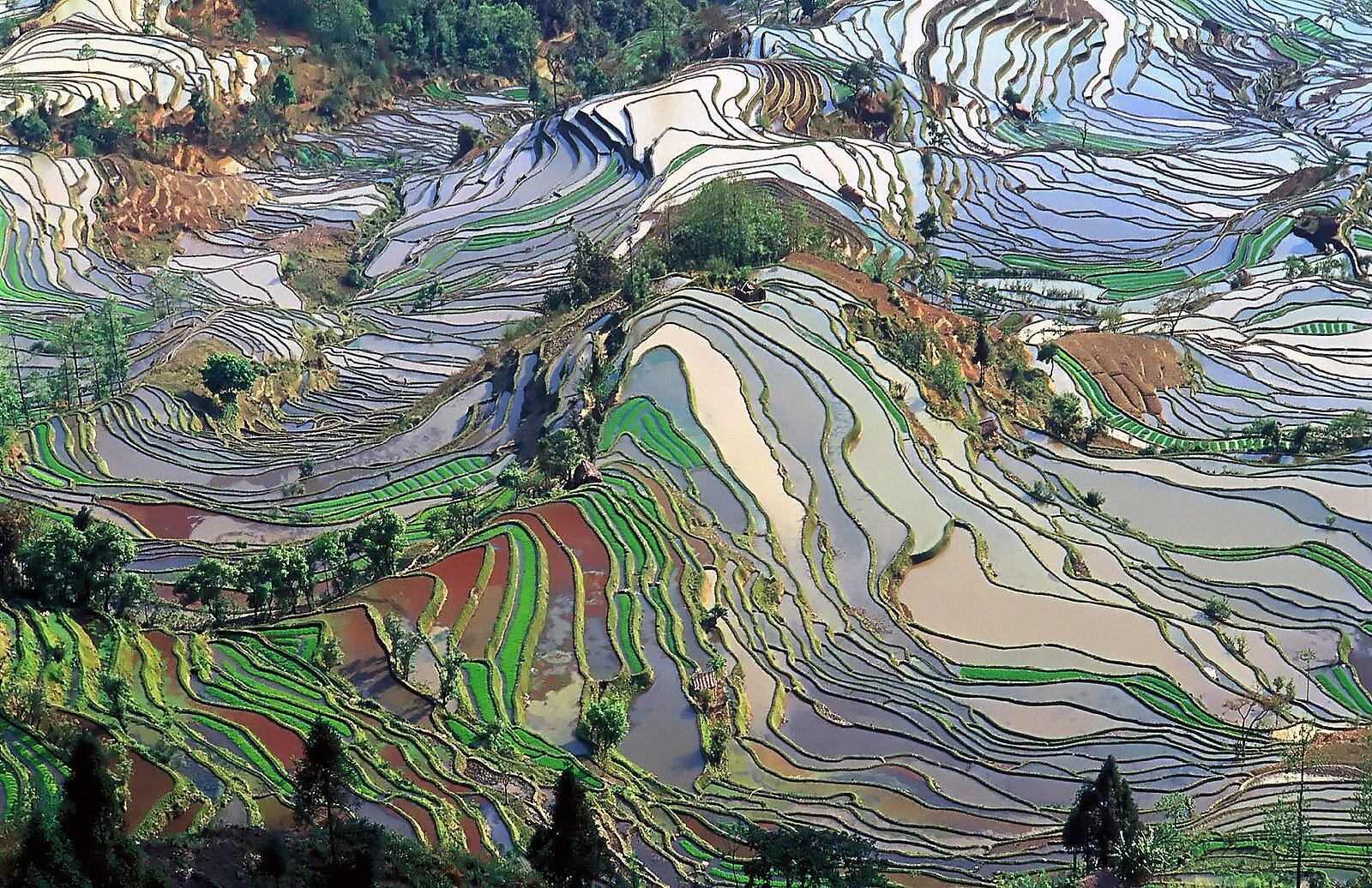

Li Yuyang resided in Yunnan, a province of Southwestern China that had been conquered and absorbed into the empire during the 14th century. Despite being a mountainous land, Yunnan enjoys a mild climate; its name means “south of the cloud.” It is an ideal environment for agriculture, particularly the cultivation of rice, and it served as a key stop along the Silk Road. The “Land of Eternal Spring,” as you can probably guess, was not prepared for the tragedy that would befall its people.
Extreme cold, the likes of which locals had never seen, decimated the rice harvest. Though China possessed organized state relief, in which the government would store grains for emergencies, bureaucratic corruption allowed that system to grow less efficient.
Corruption was a major problem in the Qing dynasty—a tradition-bound, autocratic ruling elite who failed to modernize to meet the challenges of an industrializing world. The best option for upward mobility was to excel in nationwide imperial examinations based on Confucian teachings; success in these examinations could lead to advantageous positions in the government. Despite receiving an education at a prestigious school in Kunming, Li Yuyang failed his examinations, and he was forced to find work as a farmer.
A farmer with an educated background, Li Yuyang was well-positioned to document the famine in Yunnan through a series of poems known collectively as “The Seven Sorrows of Yunnan.” His work provides an agonizing window into the degradation and collapse of civil life in the region during the few years after Tambora’s eruption:
Outside, the starved corpses pile high,
While in her room the young mother
Waits upon her child’s death. Unbearable
Sorrow. My love, you cry to me to feed you—
But no one sees my tears. Who can I tell which aches
More? My heart or my body wasting away?
She takes her baby out to the deep river.
Clear and cool, welcome water…
She will care for that child in the life to come.4
Farmers in Yunnan would not forget the scenes of anguish described in the poem above. Many parents were forced to sell their children into slavery to ensure that they would be fed—or worse, murdering their children to spare them a slow, agonizing death by starvation.
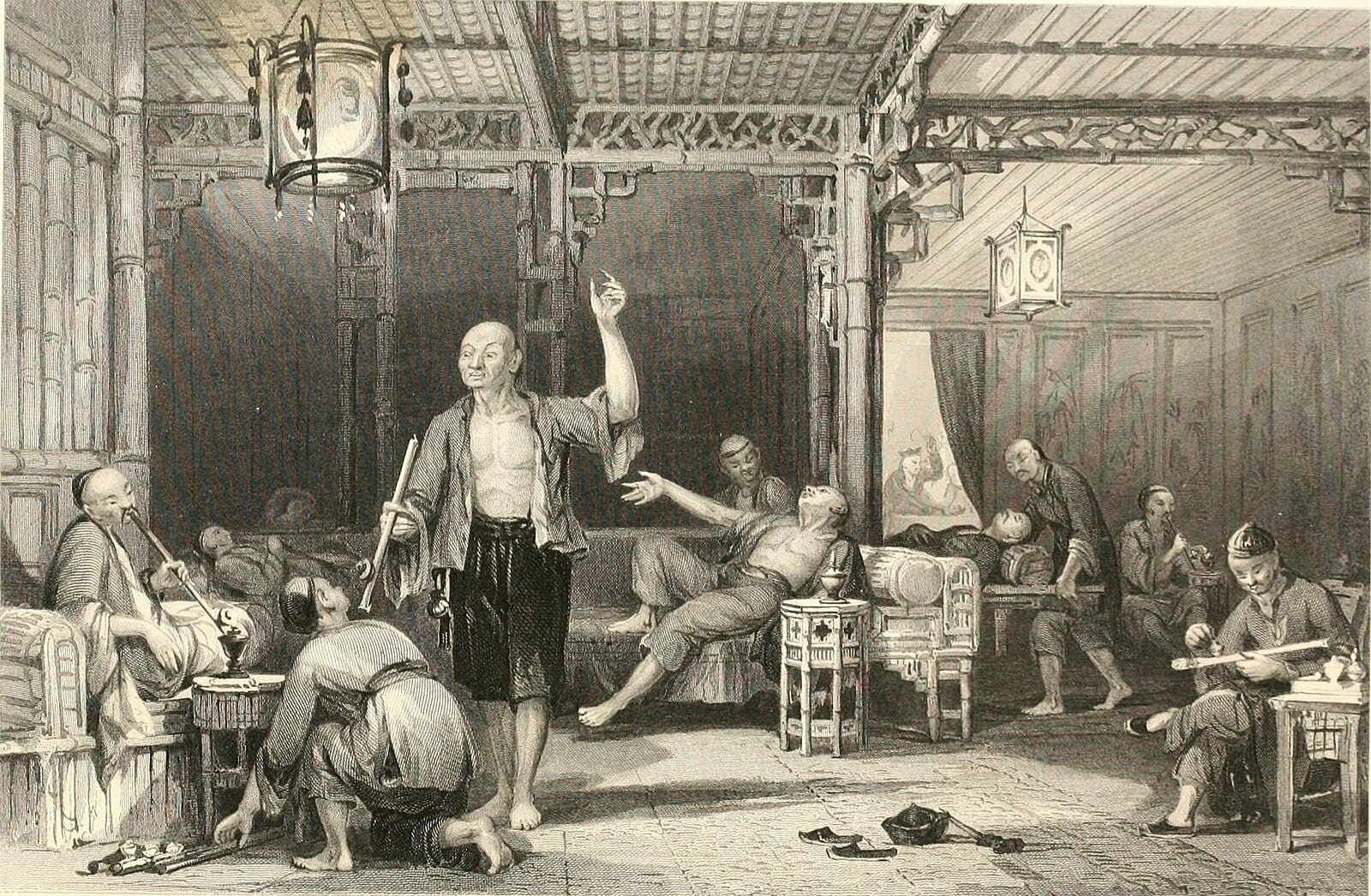

After the climate returned to its usual state by the end of the 1810s, Yunnan farmers steadily embraced another cash-crop, one that was flowing out of India and finding victims from London to Beijing. It was, ironically, the same product that had ensnared Percy Shelley and many young people of his generation: opium.
Poppies soon covered the fields of Yunnan. Farmers reasoned that they could sell opium for far greater sums than rice, thereby protecting them from future calamities like the Year Without a Summer. Over the next century, opium would become Yunnan’s chief export.
As I’m sure readers are well aware, opium is a highly addictive drug, one that upended the social stability of 19th-century China. Regions like Yunnan became major producers of opium; in fact, by the 1900s, China was exporting over 80% of the world’s narcotics, and 90% of adult men in Yunnan were users.
The origins of this crisis lies with the British. China was a major exporter of tea to Europe, yet the empire in turn banned most European imports. As a result, the British East India Company needed enormous quantities of silver in order to purchase Chinese tea. To overcome this deficit, the British flooded China with Indian opium, creating an addiction crisis that enriched their coffers. Over the course of the infamous mid-century Opium Wars, the British Empire succeeded in forcing the Chinese Empire to trade with the West.
By the end of the Victorian period, the hill tribes of Yunnan, such as the Hmong, began migrating into Myanmar, Laos, and Thailand, where they brought their knowledge of opium cultivation. This region, known as the Golden Triangle, remains one of the largest producers of opium in the world. Here, we can see the vast reach of Tambora: one volcanic eruption launched a sequence of events that would establish the epicenter of the international drug trade.
Gillen D’Arcy Wood, Tambora: The Eruption That Changed the World (Princeton University Press, 2014), 63.
Wood, Tambora, 65.
Wood, Tambora, 153. Emphasis my own.
Wood, Tambora, 114.