

Goodbye, Versailles!
How Marie Antoinette navigated the political crises of 1787-1789, and the advent of the French Revolution.

This essay is part of a series on the life of Marie Antoinette. To gain access to the full archive, become a paid subscriber today:
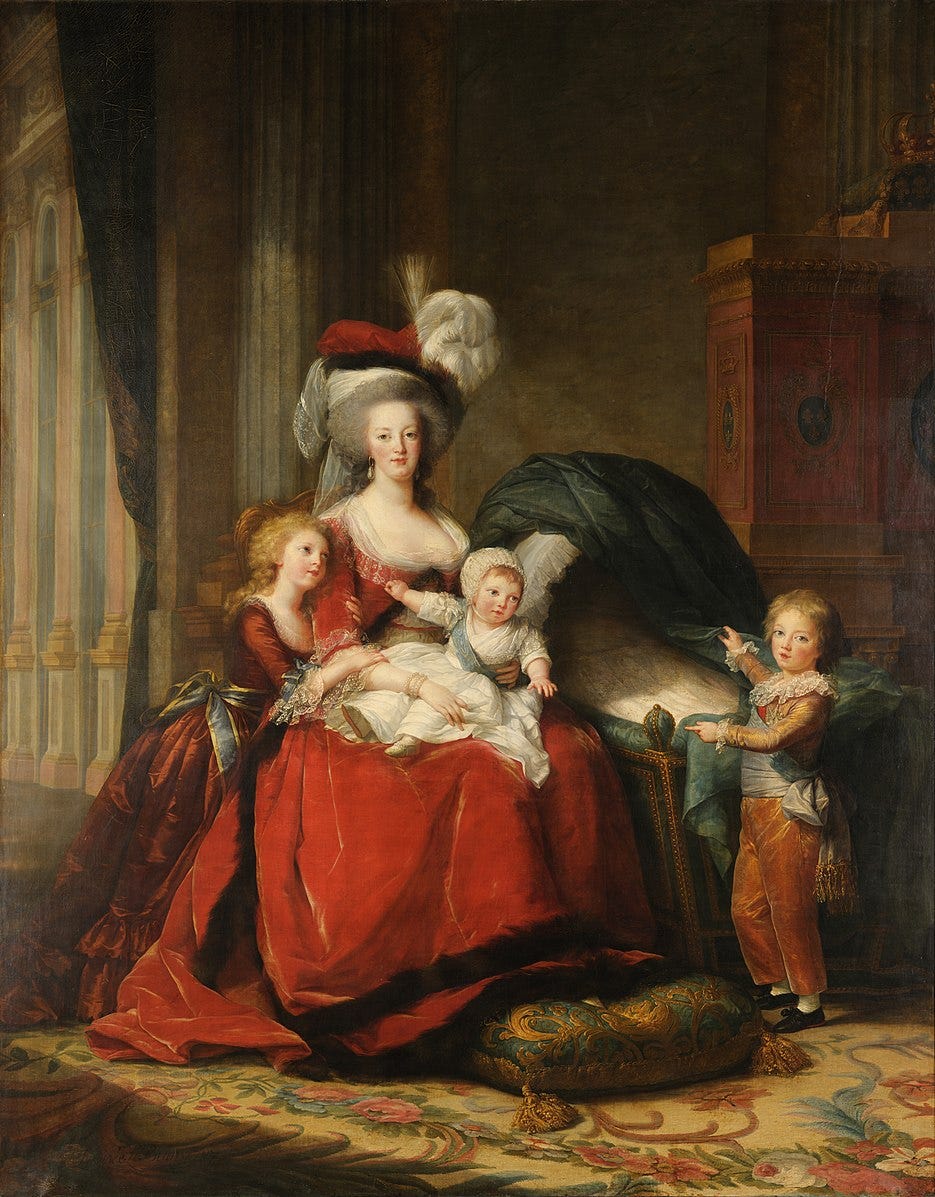

On October 5th, 1789, an angry mob of mainly women began their march from Paris to Versailles. After years of intolerable hunger and obstacles to reform, the mob had three demands: bread for the people of France, the king’s approval of the National Assembly’s Declaration of the Rights of Man, and the return of the monarchy to Paris. The age of absolute monarchy in France was over.
As we’ve established in the first two installments of this series, the breakdown of the French monarchy was decades in the making, including Louis XIV’s decision to move the royal court to Versailles in 1682. The Sun King’s project resulted from his desire to insulate the monarchy and to keep all his scheming nobles under the watchful eye of the sovereign. But the cost, beyond the extraordinary expense of building Versailles into the most glorious palace in Europe, was a palpable lack of connection to the public. By the time that Louis XVI and Marie Antoinette understood the true scope of the public’s hatred towards them, it was already too late.
Let’s rewind two years, to 1787: Marie Antoinette was still reeling from the Affair of the Diamond Necklace, and the economic situation in France was dire. Royal revenue that year was 475 million livres, but about half of that went to servicing the nation’s debt.1 Fighting several expensive wars (including supporting the American Revolution—oh, the irony) remained part of the issue; the other part was a completely imbalanced tax system. The First Estate (the clergy) and the Second Estate (the nobility) paid very little, if any taxes, while the bulk of the tax burden fell on the Third Estate (everyone else). Unlike Britain, which already had a constitutional monarchy, the French monarchy offered little transparency regarding its finances.
The king and queen had another problem: any reforms that they tried to pass through the Parlement de Paris were routinely stifled. After all, most members of France’s largest Parlement were aristocrats—why would they vote to relinquish their own privileges? Either the monarchy would have to persuade the Parlement to give the government a hefty loan (which was unlikely), or they would need to increase taxes.
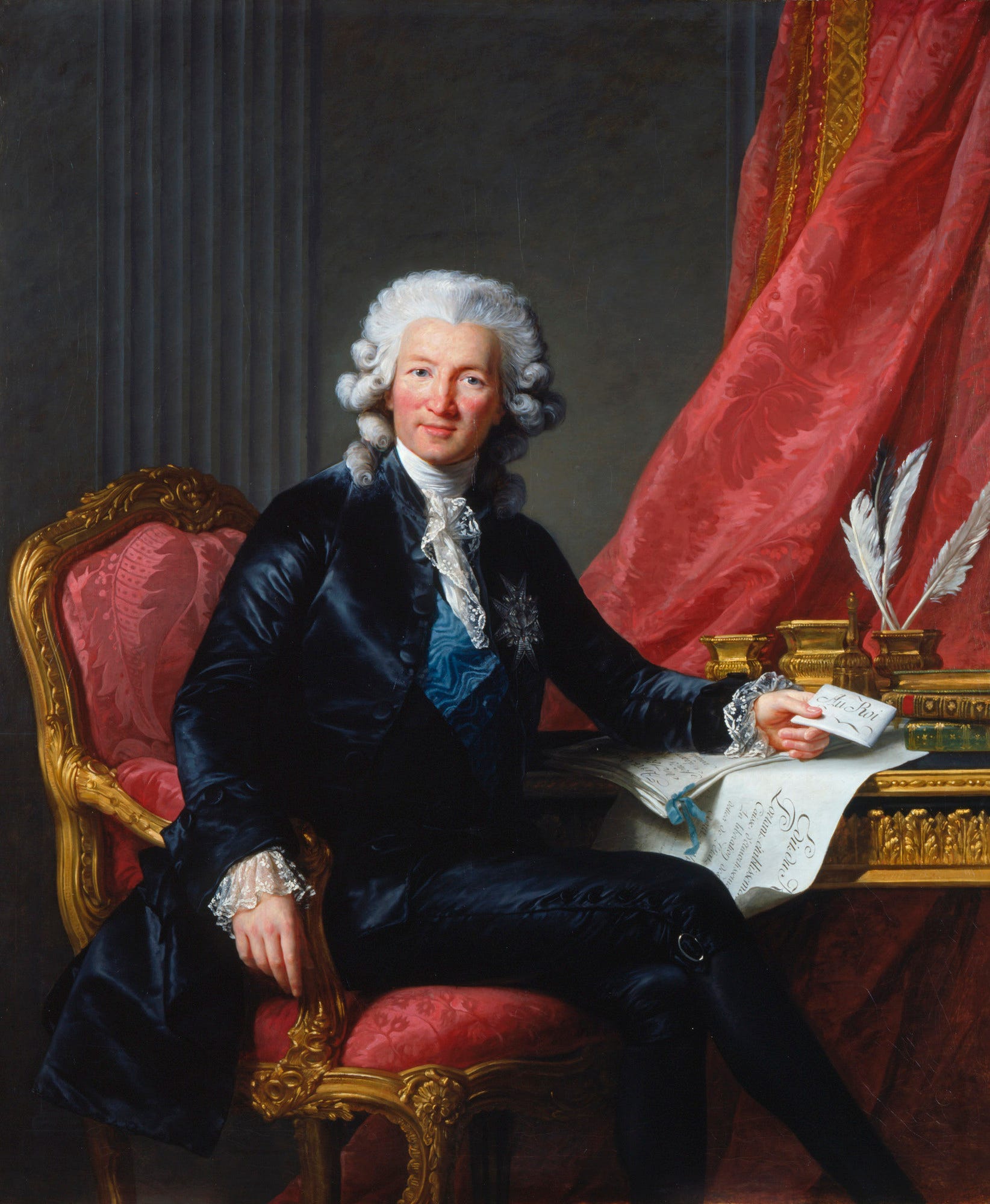
As the current finance minister Charles-Alexandre de Calonne pointed out in his Précis d’un plan d’amélioration des finances (1787), the kingdom was a muddled mess of pays d’etats (provinces that had the right to negotiate taxes), pays d’élections (provinces whose taxes were under royal control), provinces with regional administrations, and provinces with their own customs barriers. Calonne’s description of France as a “very imperfect kingdom” is much nicer than the language I would use to describe its complex bureaucracy.2
Calonne’s idea was to create a unified system of taxation, which included a land tax to circumvent the nobility’s penchant for tax evasion. Louis was interested in the proposal; Marie Antoinette remained neutral. Of course, the Parlement would never approve. But calling upon the Estates General (the legislative body that hadn’t met since 1614) could pose a major threat to royal authority.
Calonne proposed a middle road, advising the king to instead call upon an Assembly of Notables—which would include a mix of parlementaires, clergy, and counselors of the state. The Austrian ambassador Mercy advised Marie Antoinette to stay out of it, as her popularity had already sunk too low.
However, the Assembly possessed the same issues as the Parlement: nobles were not going to vote to increase their own taxes. The Notables waged a propaganda campaign to convince the public that the issue wasn’t equality of taxation, but despotism on behalf of the king. The king and queen were terrible at levying the forces of propaganda to their own favor, and they did not effectively fight back.
Furthermore, Calonne was extremely unpopular, as the public blamed him (alongside the monarchy) for France’s economic woes. This belief was exacerbated by Jacques Necker, finance minister who was fired in 1781 for publishing the country’s finances—an unacceptable degree of transparency in an absolute monarchy. Unlike Calonne, Necker was a commoner and a better propagandist. His Compte Rendu au Roi (“Report to the King”) claimed that the national deficit was low during his tenure, a vast exaggeration that nonetheless persuaded the public.
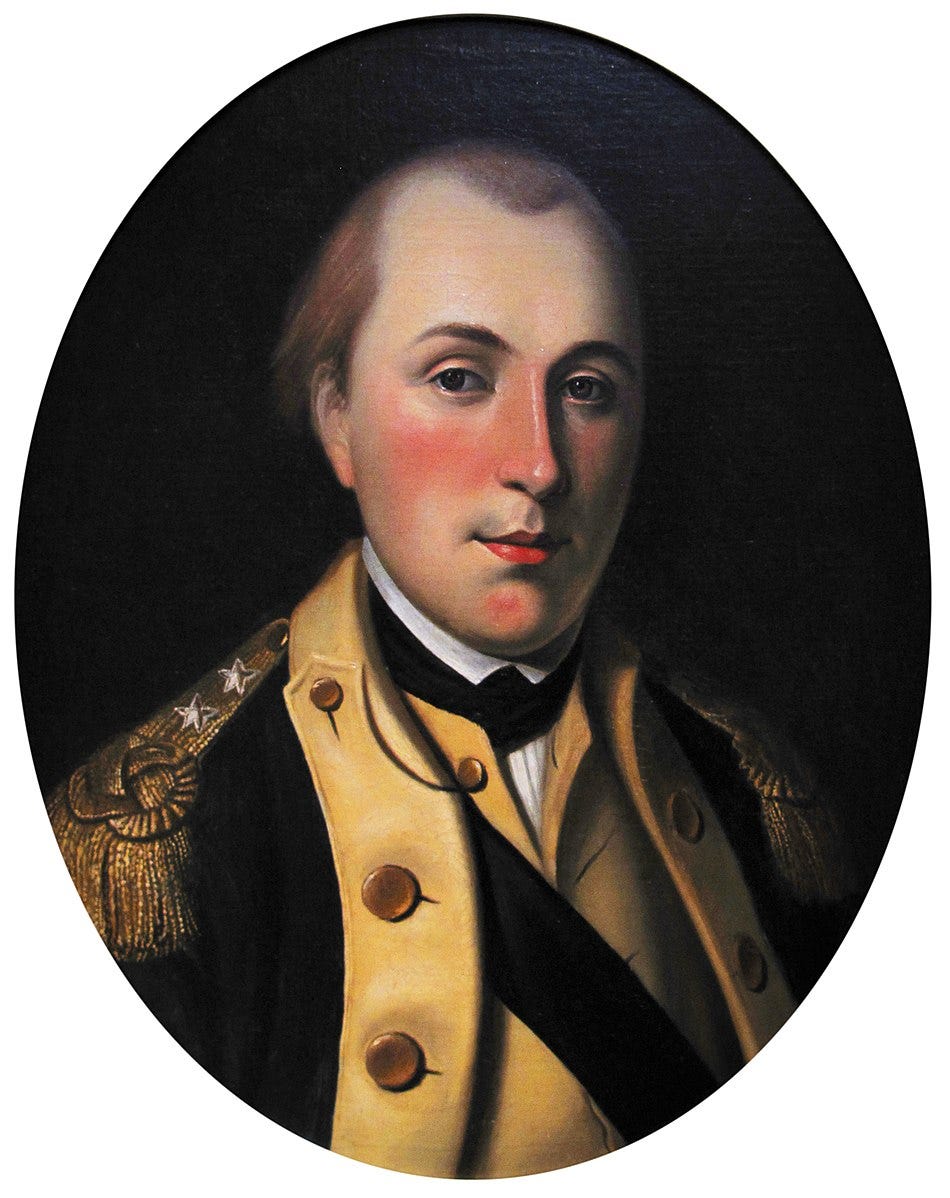

Dangerously for the monarchy, some members of the Assembly of Notables felt that Calonne’s reforms didn’t go far enough. Among them was the Marquis de La Fayette, whom American readers will know as “Lafayette,” the French general who helped the U.S. Continental Army fight the War of Independence against Britain. Lafayette learned a thing or two from his American friends, and he returned to France with a zeal for liberty and reform. As he wrote to Thomas Jefferson in 1787, the Assembly of Notables should call themselves an assembly of “Not Ables.”3
Where was Marie Antoinette in all of this?
Well, it’s hard to stay out of politics when your husband is on the brink of a nervous breakdown. Not only would Marie Antoinette get back in the arena, but she would have to take the reins.
The public soon caught wind that the king was growing mentally unstable, and pamphlets ridiculing his feebleness circulated Paris. To make matters worse, the Notables had found a way to get rid of Calonne—they discovered that he had a past history of shady investments, which they leaked to the public. This was the final straw. Calonne had to go.
As it turns out, Calonne’s dismissal was the best possible outcome for the man, as he lived in exile abroad for the rest of his days. Given what was to come, it seems that he had an angel on his shoulder.
But who to replace him? Necker was out of the question. The queen saw an opportunity to install one of her allies, Étienne Loménie de Brienne, the archbishop of Toulouse. Despite Louis’s objections to Brienne’s appointment, he eventually relented.4
Brienne attempted to pass a modified version of Calonne’s reforms, but the Notables wouldn’t budge without seeing the royal finances. Why should they increase their own taxes when the queen was publicly known for being a spendthrift? Louis, clinging to the last vestiges of royal authority, refused. The Assembly of Notables collapsed.
It was time for Marie Antoinette to flex her political muscles once again. The Parlements were calling for the return of the Estates General, and the monarchy wasn’t getting anywhere with Brienne.
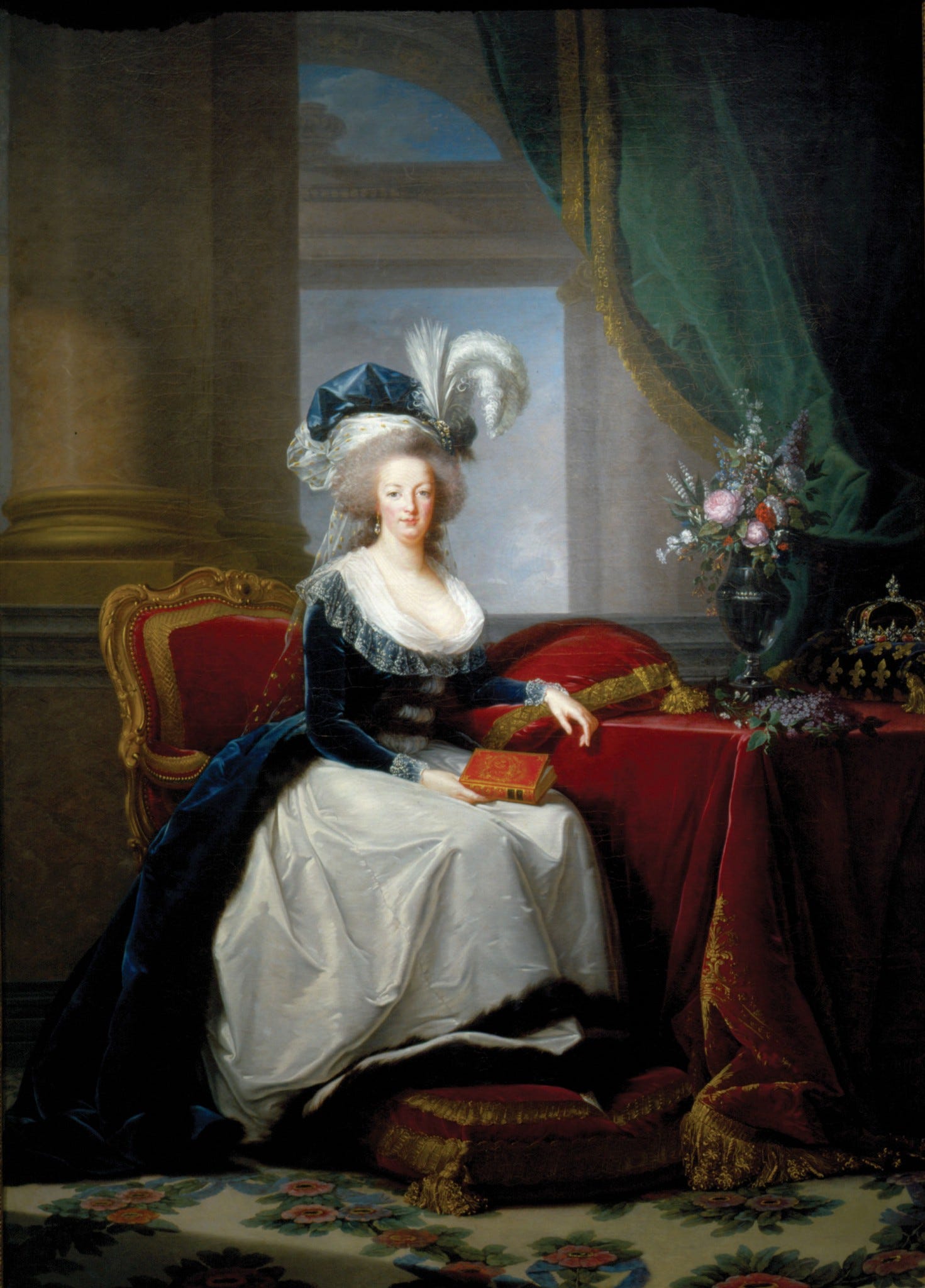
In a letter written on April 24th, 1788 to her brother Joseph II, Marie Antoinette outlined a plan:
We are about to make great changes in the parlements… The idea is to confine them to the function of judges and to create another assembly which will have the right to register taxes and general laws for the [whole] kingdom. I think we have taken all the measures and precautions compatible with the necessary secrecy; but this very secrecy involves uncertainty about the attitude of large numbers of people who can make or break the operation…5
This was the initial outline for what would become the May Edicts of 1788, which went over decently in Paris but were met with outrage in the provinces. With the state of the country falling into disarray, and her husband increasingly useless, Marie Antoinette knew there was only one thing for it: she needed to reinstall Necker, the people’s favorite.
As I noted previously, the queen wasn’t good at propaganda—frankly, she found it a bit distasteful. Perhaps if she understood the true depths of the public’s contempt, she would have crowed from the rooftops that she was the person who convinced Louis to reinstall Necker. By not making this publicly known, she opened the door for others take credit, such as Louis’s younger brothers. Through gritted teeth, the king and queen accepted Necker’s plan to reconvene the Estates General the following year.
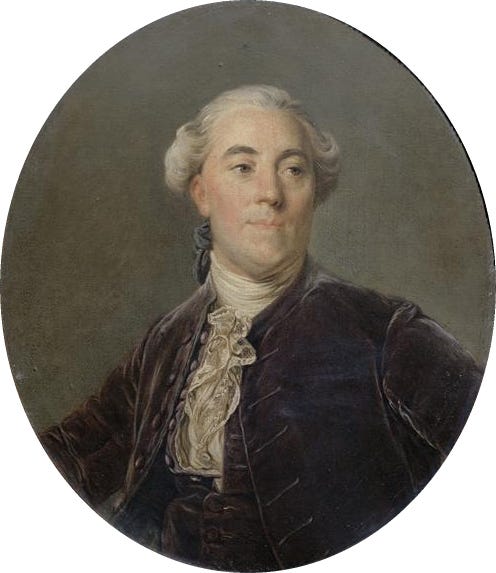

The winter of 1788 to 1789 was brutal, resulting in widespread crop failures. The rising specter of famine and revolt compelled Necker to reform the makeup of the Estates General prior to their meeting. Previously, the Estates General comprised of the Three Estates, who each got one vote. You can guess the result: the First and Second Estates banded together against the Third.
Necker—and Marie Antoinette—supported the policy of doublement, which would give the Third Estate twice the number of votes and thereby make the process fairer to commoners. The queen’s circle (the Polignacs and the princes of the blood) were outraged. They had agreed to reforms that would curtail aristocratic tax evasion. They had not signed off on a complete government overhaul.6
The elections of 1789, though imperfect (very few peasants were elected to represent the Third Estate), still marked a great leap toward constitutional monarchy. That spring was mired by arguing over procedure and voting structures: voting by head, or by Order (which would have favored the nobility and clergy). During this time, the queen’s support for the Third Estate began to fade, as she recognized the extent to which they wanted to curtail royal authority.7
The Third Estate, now calling itself the Commons, rebelled. The timing was advantageous: the perpetually-sickly Dauphin had died on June 4th. Grieving the loss of their eldest son, the king and queen were distracted. News spread throughout Paris that the Third Estate had formed a National Assembly, and members of the clergy were themselves joining the group.
Marie Antoinette, now convinced that the Third Estate had gone too far, made the fatal error of begging her husband to hold a royal séance, which would put the meeting of the Estates General on pause. The date of the séance was reserved for June 22nd, though the National Assembly was scheduled to meet on June 20th. Amazingly, no one bothered to inform the Assembly of this change. When they arrived for their meeting on the 20th, they found the doors of their meeting hall locked and guarded.
Retreating to an indoor tennis court, the Assembly mistakenly believed that the king and queen wanted to overthrow the Estates General altogether. The members made a pledge that would become known as the Tennis Court Oath: the National Assembly would not disband until they had written a constitution for the people of France.
As historian John Hardman notes, the monarchy and the National Assembly were not too far apart at this stage when it comes to the specific reforms they wished to enact.8 The push-and-pull that would ensue during the summer of 1789 was a question of authority. Would the king give a constitution to the Assembly (one that he would have the power to amend), or would the Assembly present the king with their own constitution? Would the king have veto power over laws created by the Assembly, or would he relinquish that control? In other words, would France have an “enlightened absolute monarchy,” or a constitutional monarchy?
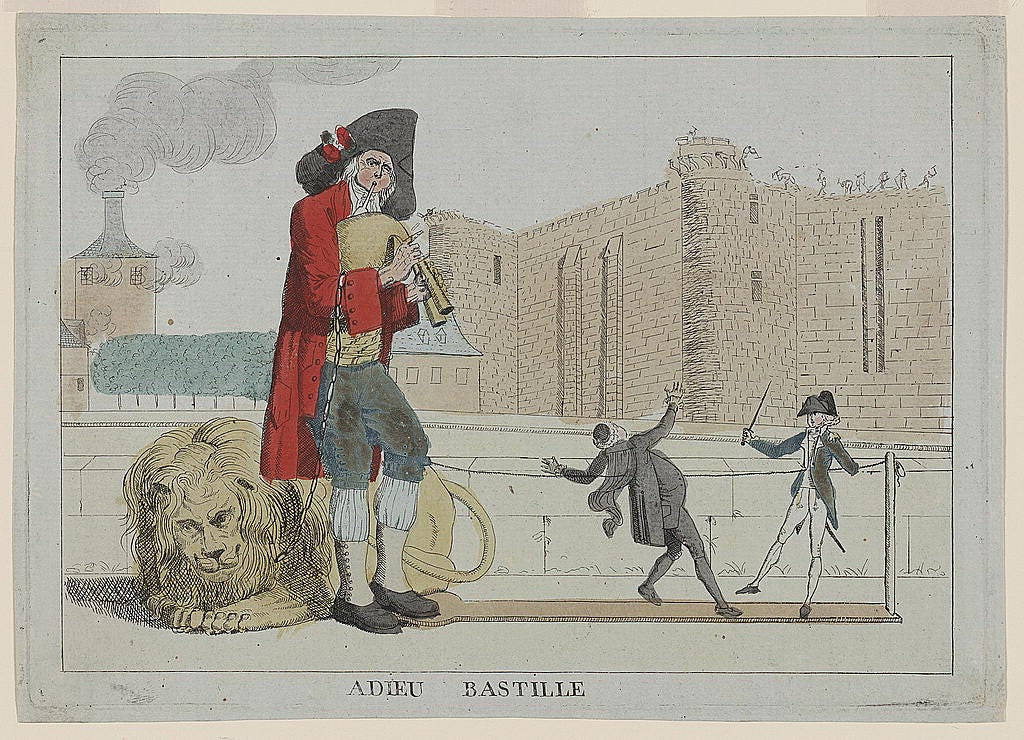
At this point in our story, it’s easy to want to throw the history book at the wall. If the king and queen had accepted a constitutional monarchy at this juncture, they probably would have survived. But both Louis and Marie Antoinette were brought up with absolutism, and they believed their authority came from God, not the people.
Seeing that violence was all the more likely, Louis moved 30,000 troops to Paris. On July 11th, he made another serious blunder: he fired Necker. It didn’t matter that Louis would change his mind and reinstate Necker in about a week. For the hungry masses, this was the final straw. On July 14th, 1789, a mob stormed the Bastille.
The storming of the Bastille finally awakened the nobility to the fact that they were aboard a sinking ship. Those smart enough to get out while they could fled the country. This included the infamous Comtesse de Polignac, the queen’s longtime favorite. (One of the many rumors spread about the queen was that she was Polignac’s lover, but there isn’t any evidence of such an affair.)
Élisabeth Vigée Le Brun, Marie Antoinette’s favorite portrait artist, recalls the events of 1789 vividly in a letter to the Princess Kourakin:
Society was at a standstill, and honest folks had no support; for the National Guard was so curiously composed, that the spectacle it afforded was as strange as it was horrible. Fear seemed to cast a gloom over all; I have noticed since, that the generation born during the revolution is much less robust than the one preceding: how many sickly and suffering children must have been brought into the world during that sad time!9
In spite of everything, the king and queen remained at Versailles.
Returning to that fateful day in October: the angry mob who marched on Versailles ransacked the palace and managed to break into the queen’s bedroom. She certainly would have been killed—if not for the secret tunnel to her husband’s room, which she had installed all the way back in 1775. The tunnel was there to ensure that she maintained a direct line of communication with him, unobstructed by his ministers.
(It’s amazing to think that Marie Antoinette is often characterized as uninterested in politics in popular media, when she clearly went out of her way to protect her influence.)
Marie Antoinette survived the night of October 5th, but the mob would have its way. With great urging from Lafayette, the king was forced to sanction the Declaration of Rights. As the queen told Necker’s wife the following morning, “They want to force us, the king and me, to go to Paris with the heads of our bodyguards carried before us at the end of their pikes.”10
The Versailles Century had come to a brutal end.
John Hardman, Marie Antoinette: The Making of a French Queen (Yale University Press, 2019), 123.
Hardman, Marie Antoinette, 126.
Antonia Fraser, Marie Antoinette: The Journey (Doubleday, 2001), 248.
Fraser, Marie Antoinette, 253.
Hardman, Marie Antoinette, 149.
Hardman, Marie Antoinette, 164-165.
Hardman, Marie Antoinette, 174.
Hardman, Marie Antoinette, 179.
Souvenirs of Madame Vigée Le Brun: Third American Edition, ed. Morris F. Tyler (R. Worthington, 1879), 105-106. Available to read on the Internet Archive.
Hardman, Marie Antoinette, 192.