

"I Am No More a Witch Than You Are a Wizard"
Why was Salem Village the epicenter of New England's witch craze, and what role did Reverend Parris play in the community's unraveling?

This essay is part of a series on the Salem Witch Trials.
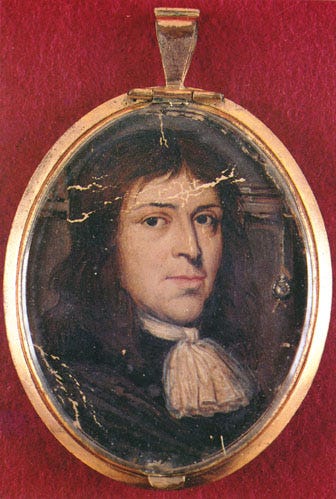
William Phips was in over his head.
He had barely been made the governor of the Massachusetts Bay Colony when the residents of Salem Village discovered a satanic plot against their community. They claimed that the town was riddled with witches.
This wasn’t so surprising. Salem Village was a notorious place in the Bay colony—God knew, they couldn’t keep a minister if their lives depended on it. Not to mention, its residents had long been at odds with the more affluent Salem Town. Perhaps the Devil was trying to tear the Village apart.
But how to address the crisis? Now that the colony had received its royal charter, it would have to write new legislation that aligned with English law. In the meantime, Massachusetts Bay existed in legal limbo with no formal court. Phips decided to create a Court of Oyer and Terminer (“to hear and determine”) with jurisdiction limited to Suffolk, Essex, and Middlesex counties. The Court could address the witch craze, and with any luck, Phips would quickly sweep this under the rug—ideally, without having to inform the Crown.
The Court would be led by deputy governor William Stoughton. Eight trusted leaders, including John Hathorne and Jonathan Corwin of Salem Town, would also serve as judges. So what if they didn’t actually possess legal training? The men of the Court were rich Puritan merchants who had served in legislative roles, or otherwise held high-ranking positions in the colony’s militia. Surely, they could handle this case.
Without new legislation in place, the Court depended upon precedent set by England’s Witchcraft Act of 1604, which called for the death penalty if a defendant was found guilty of witchcraft. Guilty verdicts could arise from a witch’s confession, the testimony of two eye witnesses, or “supporting evidence”—devil’s marks on the witch’s body, the presence of a familiar, or proof of poppets, potions, spell books, or other occult objects in the witch’s home.1
As the judges would soon discover, the accusations in Salem were largely based on “spectral evidence.” The afflicted girls claimed that specters (the witches’ disembodied spirits) tormented them, and the “attacks” grew more pronounced in the presence of the accused.
The first person to come before the Court on June 2nd was Bridget Bishop. Like Sarah Osbourne (who died in jail) and Sarah Good, Bishop fit everyone’s idea of a witch. In fact, she had been accused of witchcraft in 1679, but she was acquitted due to lack of evidence. Bishop was poor, ornery, and twice-widowed. Both she and her second husband, Thomas Oliver, had racked up several convictions each for domestic violence and public brawls.2 If Bridget wasn’t a witch, who was?
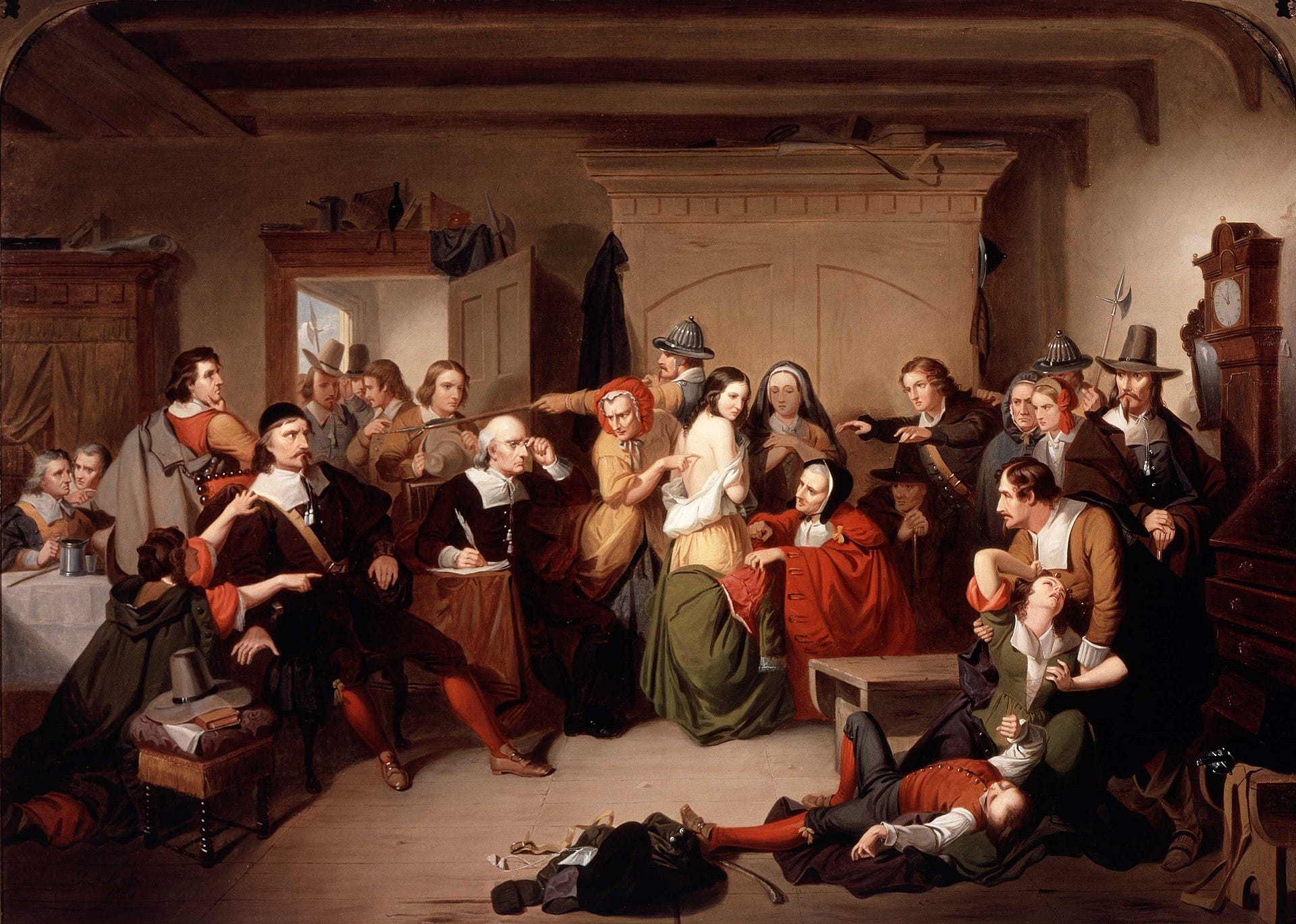
Many locals came forward to accuse Bishop of strange behavior and associate her with mysterious deaths. The final straw came from a father and son who claimed to find poppets (voodoo dolls) in her cellar while conducting repairs on her home. A group of women were then assigned to search Bishop’s body for devil’s marks. They found one, though several hours later, it allegedly vanished. A clear sign of sorcery!
Bishop’s fate was sealed, and on June 10th, she became the first person to be executed for witchcraft by the Court of Oyer and Terminer. The execution took place that morning on the base of Gallows Hill in Salem Town.
Later that month, five other women would be convicted of witchcraft, all elderly and in poor social standing, with the notable exception of Rebecca Nurse. Nurse had a spotless reputation and came from a respected family. Her conviction marked a turning point in the trials—soon, other well-regarded members of society would be accused as well.
Sarah Good was also among the five convicted women. All of them would be executed on July 19th at Gallows Hill. Just before Good’s execution, a voice in the crowd begged her to confess—it was Salem Town’s junior minister, Nicholas Noyes. If she confessed now, he reasoned, she wouldn’t die a liar.
“You are a liar,” Good retorted. “I am no more a witch than you are a wizard, and if you take away my life God will give you blood to drink.”
Several years later, Noyes passed away. The cause was an internal hemorrhage, and the minister died choking on his own blood.3
Readers may recall that the first young girls to become afflicted were nine-year-old Betty Parris and her eleven-year-old cousin, Abigail Williams. Betty Parris was the daughter of Reverend Samuel Parris, the minister of Salem Village.
Or perhaps I should say, the current minister.
In my previous essay, we discussed the myriad financial and legal challenges that plagued the Massachusetts Bay Colony in the lead-up to the trials. Salem Village had its own difficulties that would make the community particularly susceptible to division.
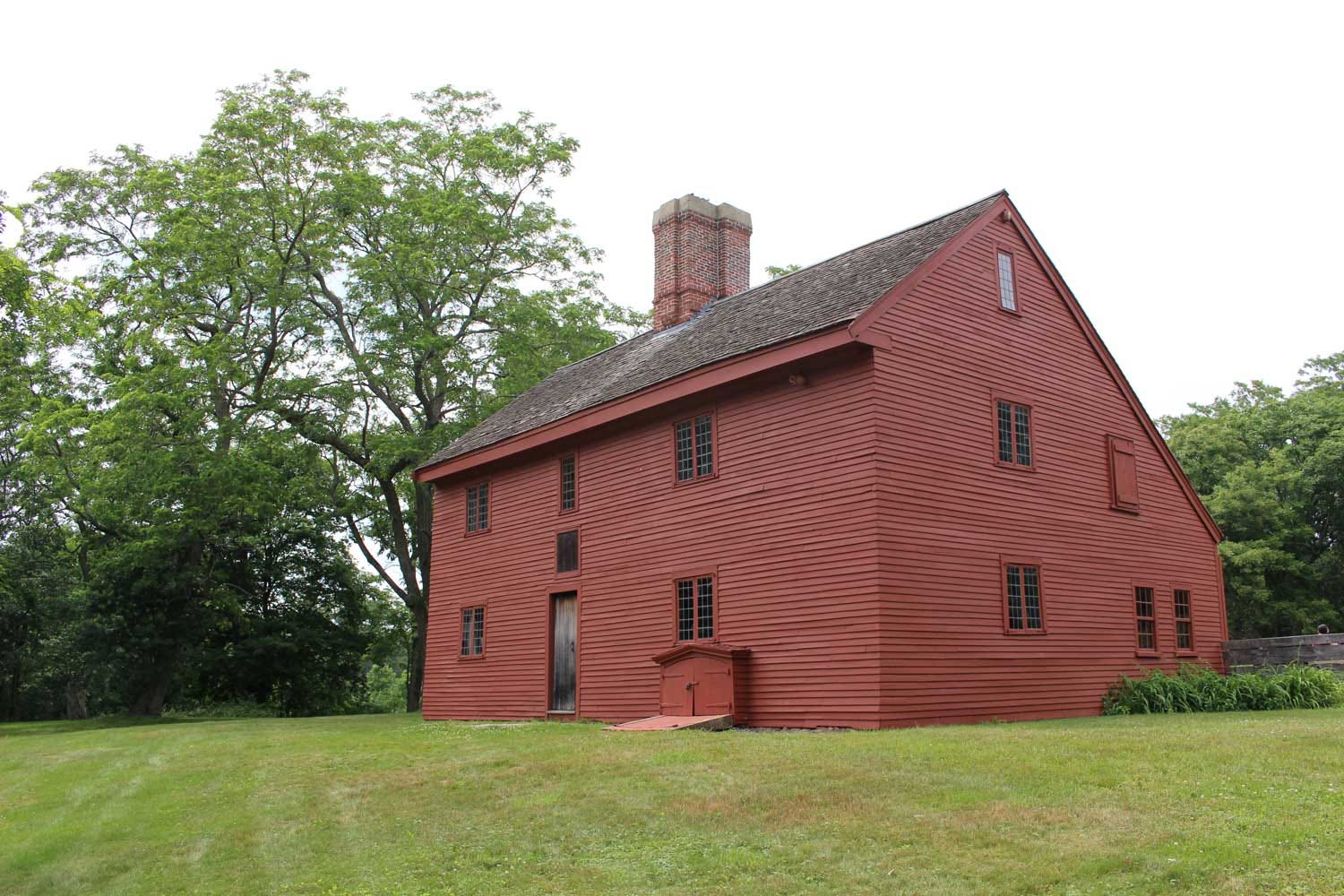
An early source of community strife was the struggle between Salem Village and Salem Town. Initially, Salem was a unified settlement, with a modest urban community on the coast and farmers’ fields lying further inland. As is often the case, the first families who colonized what would become Salem Village consolidated their land holdings over the decades, leading to a landed gentry emerging in the somewhat-democratic society. But during the 1650s and 1660s, the shipping and trade industries flourished, and power shifted to Salem Town. With money and political might moving to the coast, the residents of “Salem Farms” (as the Village was then called) grew frustrated by the imbalance.
They weren’t the only ones—other communities, including Manchester and Beverly, branched off from Salem to form their own townships. With these departures, Salem Town grew hesitant to let Salem Village do the same. After years of struggle, Salem Town finally relented in 1672, but only on several points: Salem Village could organize its own parish and hire a minister, but they would remain under the authority of Salem Town, and they could not form a church. In Puritan-lingo, this meant that a minister could host services in the Village meetinghouse, but to achieve full church membership or “sainthood,” and receive the sacraments, one would have to be a member of Salem Town’s church.4
Salem Village’s precarious parish status contributed to a vacuum in leadership, one that a minister could hopefully fill. Unfortunately, the lack of clear authority in Salem Village gave rise to factionalism over who had the power to choose the minister in the first place. For example, the Village’s first minister, James Bayley, was voted in by the freemen of the village. This angered the Salem Town church members who lived within the Village’s boundary; in their view, they should have control over who became the minister.5 Some stopped paying taxes in protest. In 1680, Bayley was forced to step down.
By the time Reverend Samuel Parris became the minister in 1689, two additional ministers had been hired and fired. (One of them, Reverend George Burroughs, would later be accused of witchcraft by enemies in his former congregation. He was executed in August of 1692.) Salem Village was garnering a reputation for being a difficult parish with squabbling residents. Only a very desperate person would take on such a role.
And Parris was desperate. He was forced to become a career minister after his family’s plantation in Barbados went under, the causes of which are murky. Like his predecessors, Parris’s ministry in the Village would come under fire, threatening financial destitution for him and his family once again. It didn’t help that Parris was so extreme in his Puritan orthodoxy that even his fellow Puritans thought he was too strict. He remained staunchly opposed to the Half-Way Covenant, which allowed the children of baptized church members to be baptized as well, thus instituting partial church membership for later generations in an effort to combat spiritual declension. Parris’s refusal to support the Half-Way Covenant contributed to declining attendance at service and angered many Village residents.6
Samuel Parris played a key role in amplifying the divisions that already existed in Salem Village due to its political and economic instability. It may not come as a surprise that discussions were underway by the end of 1691 to have Parris fired.
Just several weeks later, in January of 1692, the minister’s daughter Betty fell under a witch’s spell…
Related from The Crossroads Gazette:


Emerson W. Baker, A Storm of Witchcraft: The Salem Trials and the American Experience (Oxford University Press, 2015), 25-26.
Baker, A Storm of Witchcraft, 28.
Baker, A Storm of Witchcraft, 32-33.
Paul Boyer and Stephen Nissenbaum, Salem Possessed: The Social Origins of Witchcraft (Harvard University Press, 1974), 39-42.
Boyer and Nissenbaum, Salem Possessed, 42-46.
Baker, A Storm of Witchcraft, 92-96.