

Last Call at the Café: Manet's Final Years
In the last installment of our series, we examine Édouard Manet's work at the end of his life.

This essay is part of the series The Life of Édouard Manet.
.jpg)
The Folies Bergère opened its doors on May 2nd, 1869. It was a concert hall, the kind that played popular music and light-hearted operettas, and featured the fantasy of scantily-clad dancers in an otherwise buttoned-up age. It was where, in 1926, Josephine Baker would dance in little more than costume jewelry and a circle of rubber bananas around her underwear.
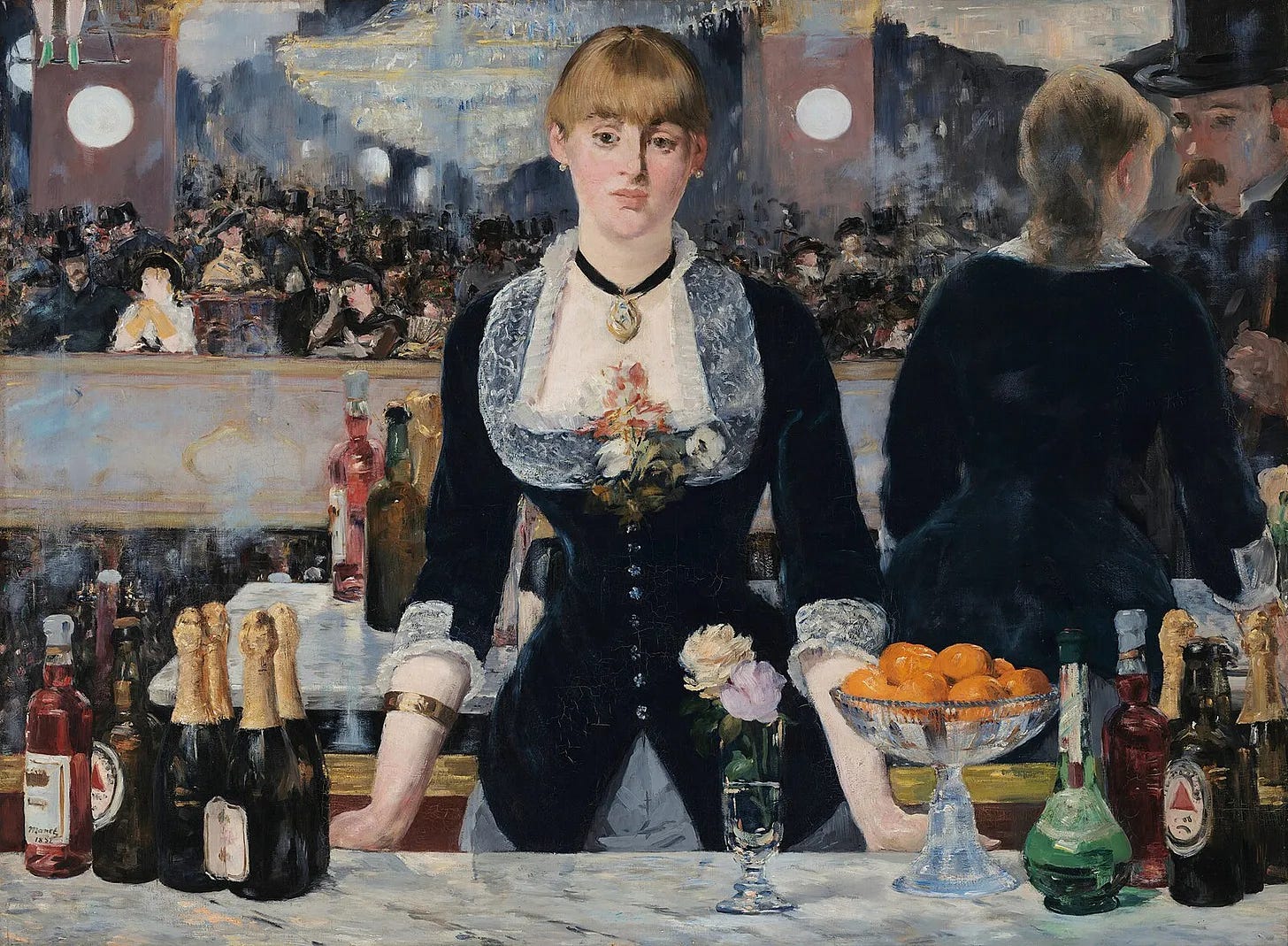
Decades before that infamous performance, a bar in the Folies Bergère was immortalized by Édouard Manet. He wandered in one autumn evening in 1881 and quickly noticed the effect that a barmaid seemed to have on her clientele. She was a young, blonde woman; despite her “common” occupation, she possessed a regal air. She regarded her customers with an aloofness that seemed to only further draw them in. But Manet was well known for his charm, and he struck up a conversation with the barmaid. Her name was Suzon.
Suddenly, he had a brilliant idea.
He knew that it would be an ambitious painting—an apotheosis of Parisian life, an ode to the bars and café scenes that he loved so deeply. Since the First Impressionist Exhibition in 1874, his style had only grown to resemble the movement that he refused to formally join, though his work always possessed its own flair.
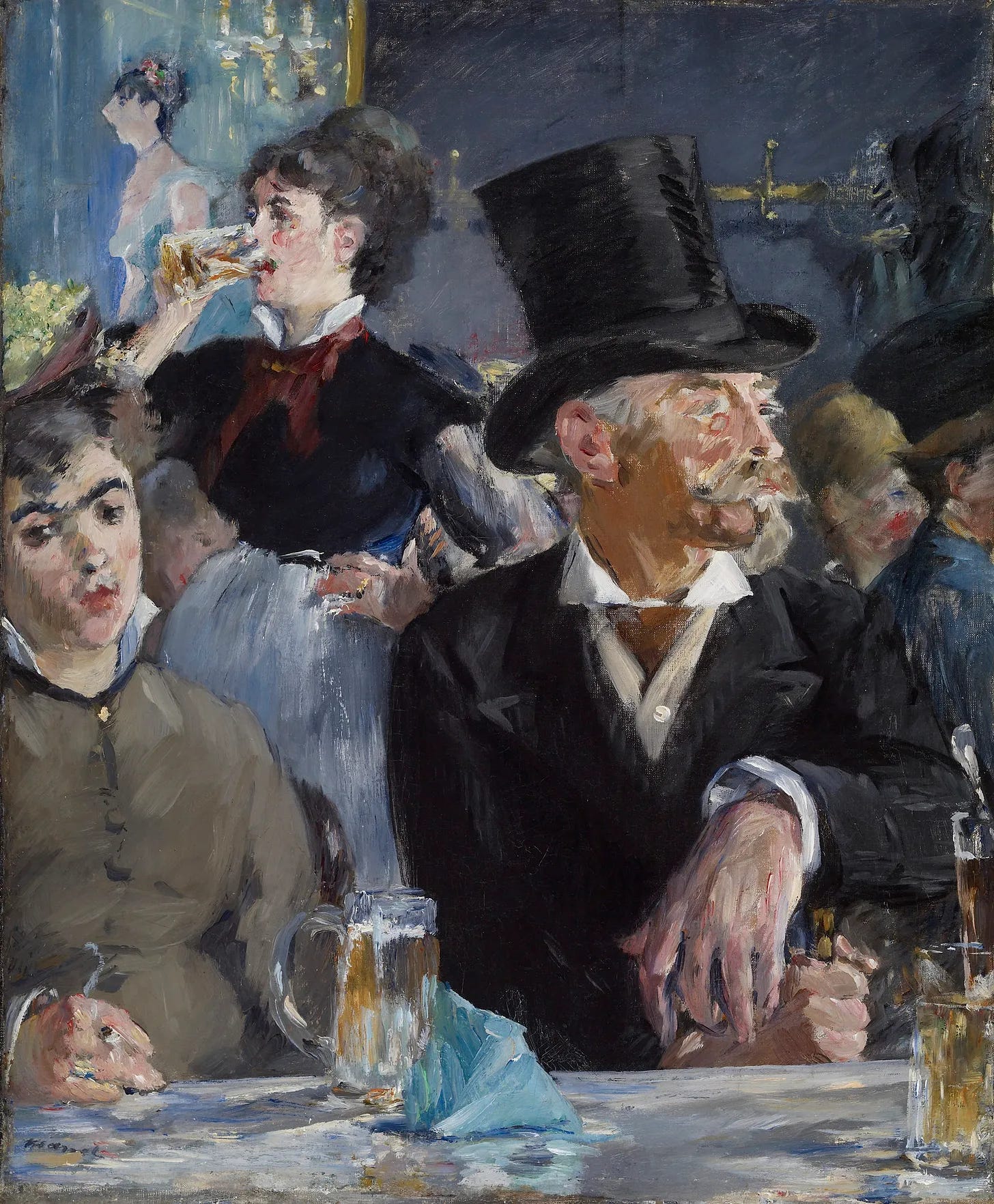
There was one issue. Suzon would need to come to his studio. The environment at the bar was too chaotic… and there was the inconvenient reality of Manet’s declining health.
The trouble began several years ago.
After enjoying a period of consistent placement at the Salon, his painting Le Linge (1875) was rejected for the 1876 exhibition. He decided to host a private showcase at his studio for all of his rejected works over the years, and to his joyful surprise, critics responded favorably.
While the Impressionists plowed forward with their own exhibitions over the subsequent years, Manet continued putting on solo shows in his studio. In 1877, a beautiful woman arrived to one of these shows, and she paused in front of Le Linge. “But that’s really good!” she exclaimed, perplexed that the Salon had rejected it.1 Manet rushed to make her acquaintance.
The woman was none other than Méry Laurent (a stage name—her real name was Anne Rose Suzanne Louviot). Laurent was the mistress of the very rich American dental surgeon, Dr. Thomas W. Evans, whose clients included some of the wealthiest families in France. Laurent had married a grocer at merely fifteen before running away to join the cabaret. Now, she lived in style, with an allowance from Dr. Evans of 50,000 francs per year.
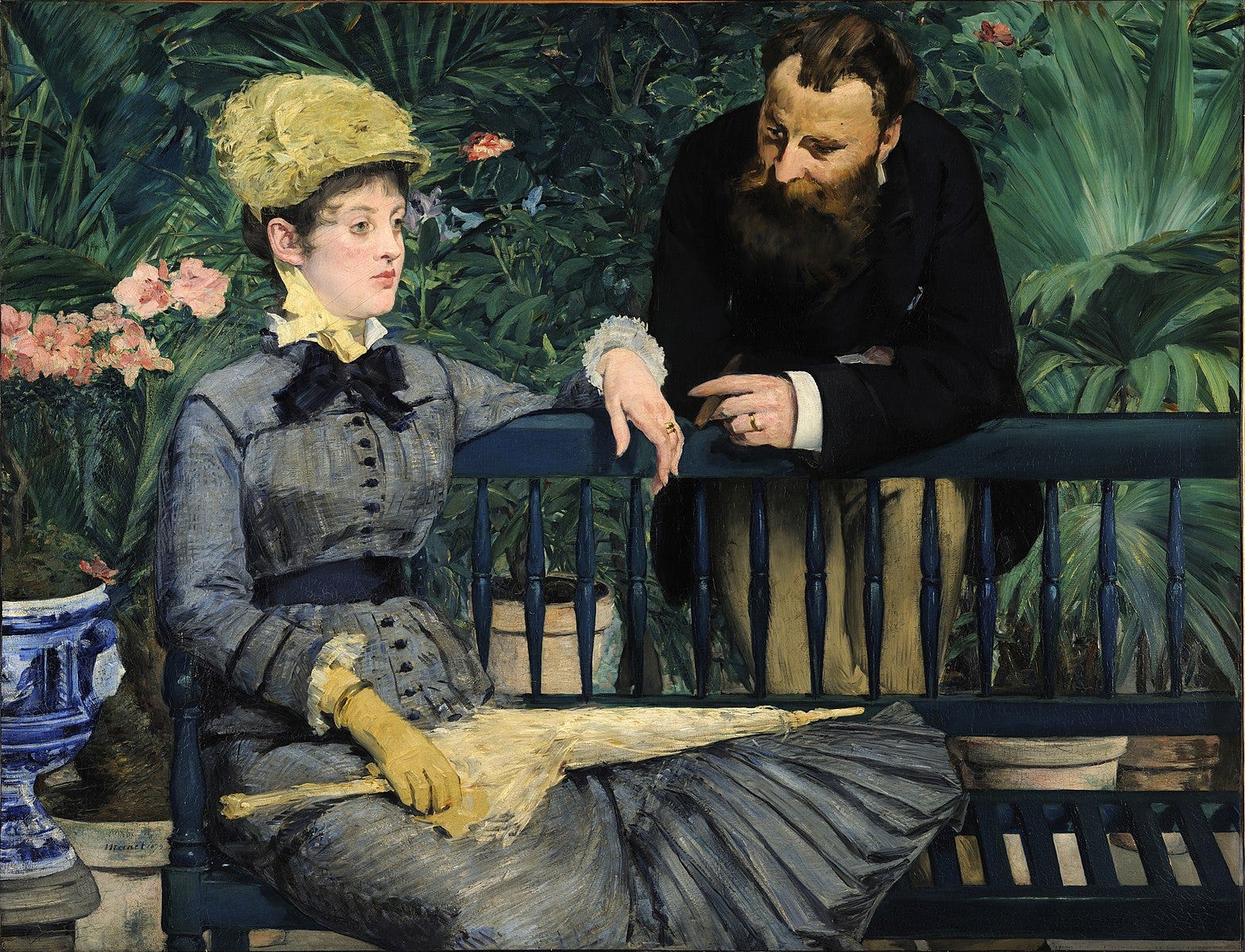

Manet was mesmerized. Here was a woman who embodied the high-low liminality that fascinated him about Belle Époque Paris. Laurent would, at various points throughout her life, be attached to writers such as Stéphane Mallarmé, François Copée, and Manet’s friend Antonin Proust. Nevertheless, she would not leave Dr. Evans. She explained to Manet, “To leave him would be the wickedest thing to do. I content myself with deceiving him.”2
And so, Manet became one of her lovers. Like many 19th-century bourgeois wives, Suzanne Manet turned a blind eye to her husband’s infidelity. Lord knows, Mother Nature had her own methods of extracting penance.
For late the following year, Manet began to notice something odd.
It could have been the stress. That November, his beloved Berthe Morisot and his brother Eugène had their first (and only) child, a girl named Julie. For Édouard, the months before were occupied with moving his studio to 77, rue d’Amsterdam, as well as moving his family to a new apartment. All the while, he worked incessantly, gave parties, and did his best to push past his exhaustion. The nagging pain in his foot and occasional emotional fits could surely be explained by all of that.
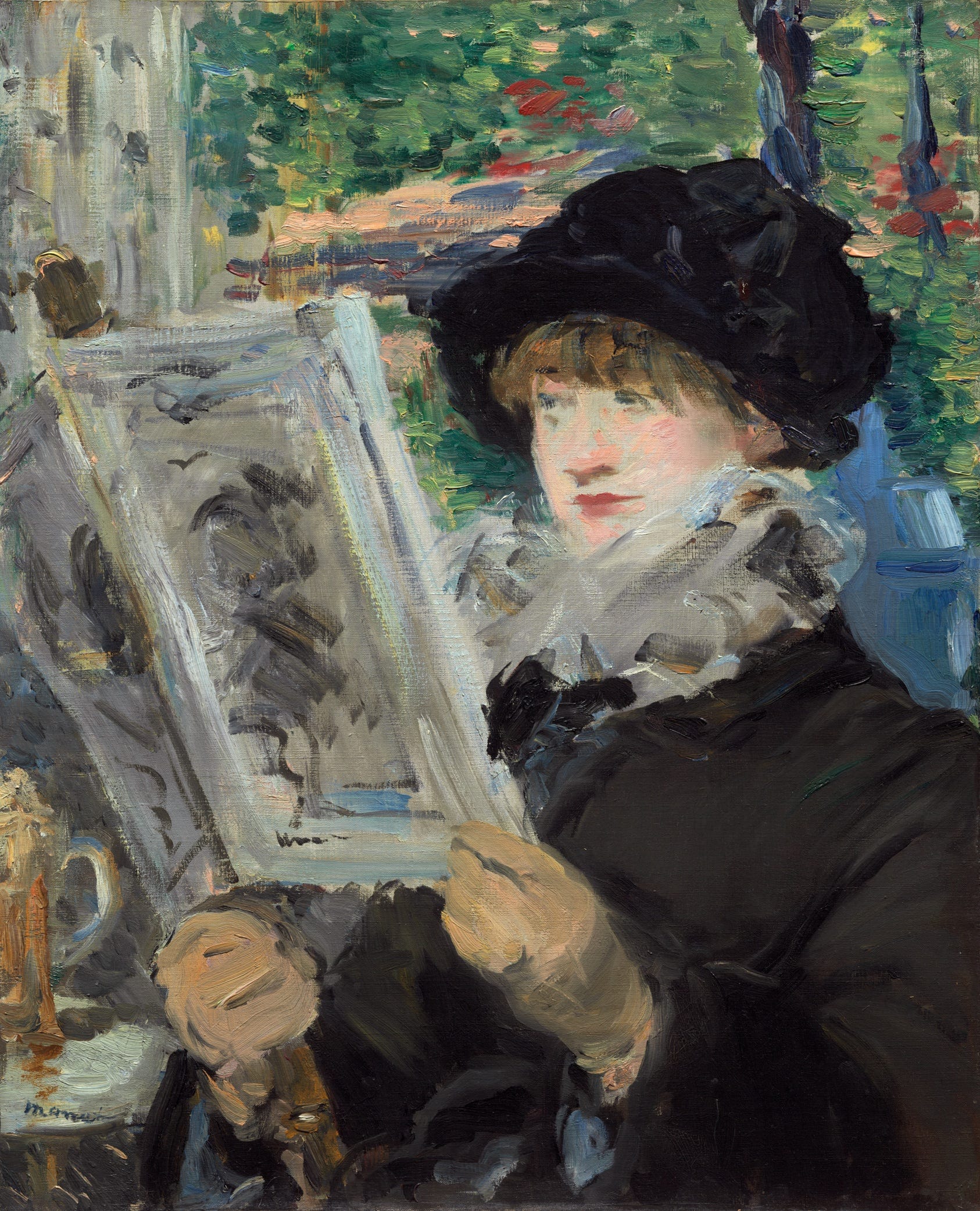
Then, in December of 1878, he was leaving his studio when a shock of gut-wrenching pain shot up his spine. He collapsed. Later, his doctor tried to break the news gently, but Manet knew. He knew.
Whether he caught it from Laurent or some lover we don’t know of, Manet was diagnosed with syphilis, a sexually-transmitted disease, a few weeks before his forty-seventh birthday.
Several years later, his illness had progressed, and he lived with constant pain. While he worked on A Bar at the Folies-Bergère, he received wonderful news: Antonin Proust was appointed Minister of Fine Arts in November 1881. Shortly after, Proust awarded Manet with the golden accomplishment he had always wanted.
Degas would later ask Manet why he desired the Légion d’honneur so fervently. Manet told him:
My dear chap, if these things didn’t exist, I’d hardly go to the trouble to invent them, but since they do, why not get everything you can, if it’s your due. It’s just another stage in your career. If I haven’t been decorated so far, it’s through no fault of my own, and if I get the chance, I’ll take it. I’ll do everything I can to make it possible.
Degas replied, “You don’t have to convince me what a bourgeois you are.”3
The following year, Manet finally completed A Bar at the Folies-Bergère, and it showed at the 1882 Salon. The gloriously standoffish Suzon stands in the center of the canvas. A viewer before the painting would occupy the place of a customer, revealed to be a man in a top hat in the mirror behind her. The reflected scene of the bar is hazy, an impression of what a drunken patron might see. In the top-left corner, an acrobat’s feet come into view.
This was Manet’s Paris: a bit wild, a bit risqué, pulling us into the raucous crowd as the music envelopes the room. For a few seconds, we are there with Suzon—there with Manet—before last call is announced, and the evening comes to a close.
On July 8th, 1882, L’Evénement broke the news that Manet’s health was deteriorating. He pushed himself to continue working, though by the end of September, he knew it was time to write a will. He left everything to Suzanne and made it clear that upon her death, Manet’s fortune would go to Léon: “I believe that my brothers will find these arrangements perfectly natural.”4
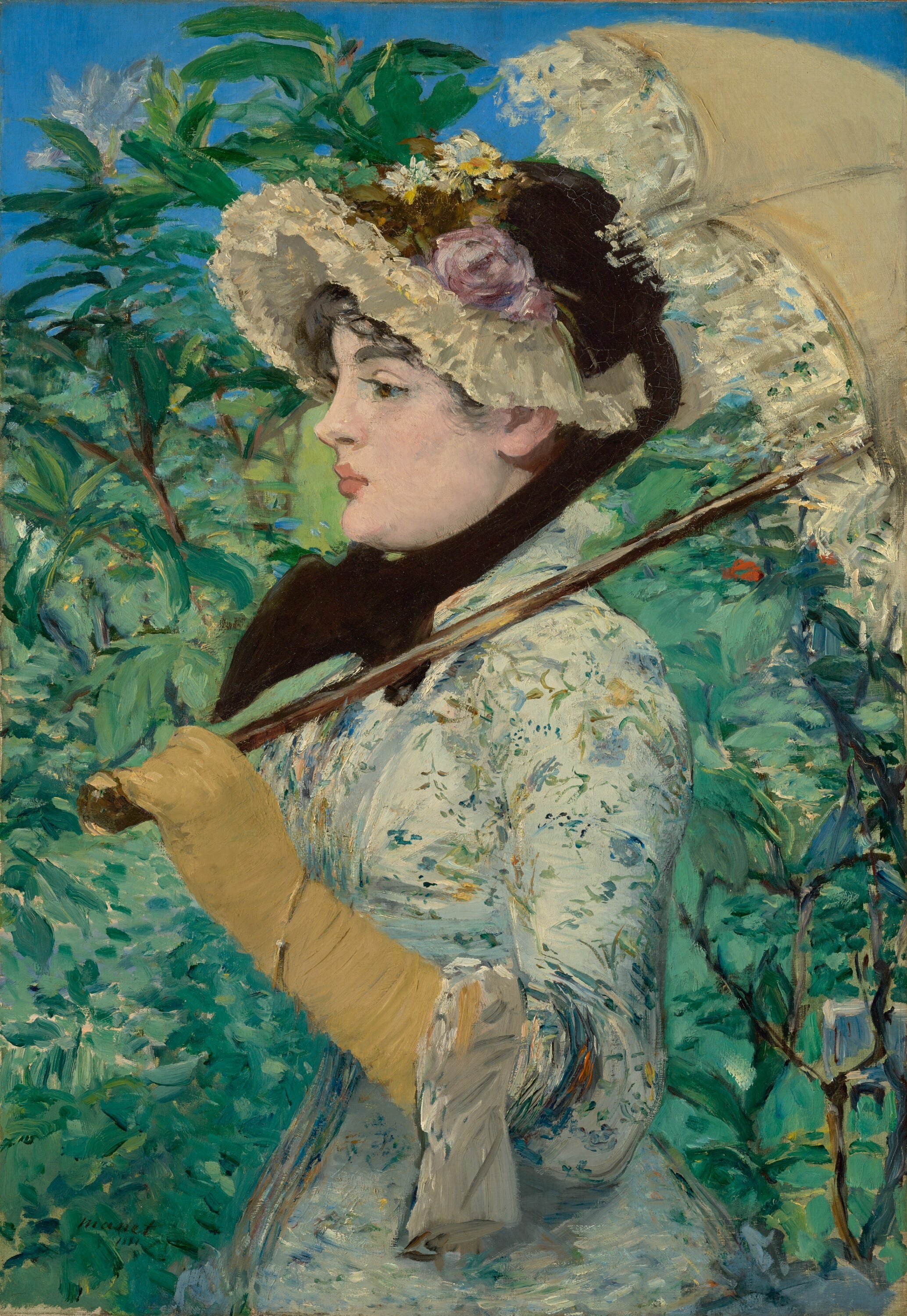
People began sending flowers. His former lover, Méry Laurent, sent a new bouquet every day. By the spring of 1883, Manet was bedridden, and these vases of flowers became his final subjects, with one notable exception: a pastel sketch of Laurent’s maid Elisa Sosset, who had delivered flowers to him every day for months. Suzanne found the portrait on Manet’s easel after he died; it is likely his final work.
In his last weeks, close friends and family visited his bedside: Laurent, Morisot, Proust, Mallarmé, Pissarro. As he lay dying, Suzanne, Léon, his brothers, and Berthe attended to him. Berthe later told her sister, Edma:
His agony was horrible, death in one of its most appalling forms, that I once again witnessed at a very close range. If you add to these almost physical emotions of my old bond of friendship with Édouard, an entire past of youth and work suddenly ending, you will know that I am devastated.5
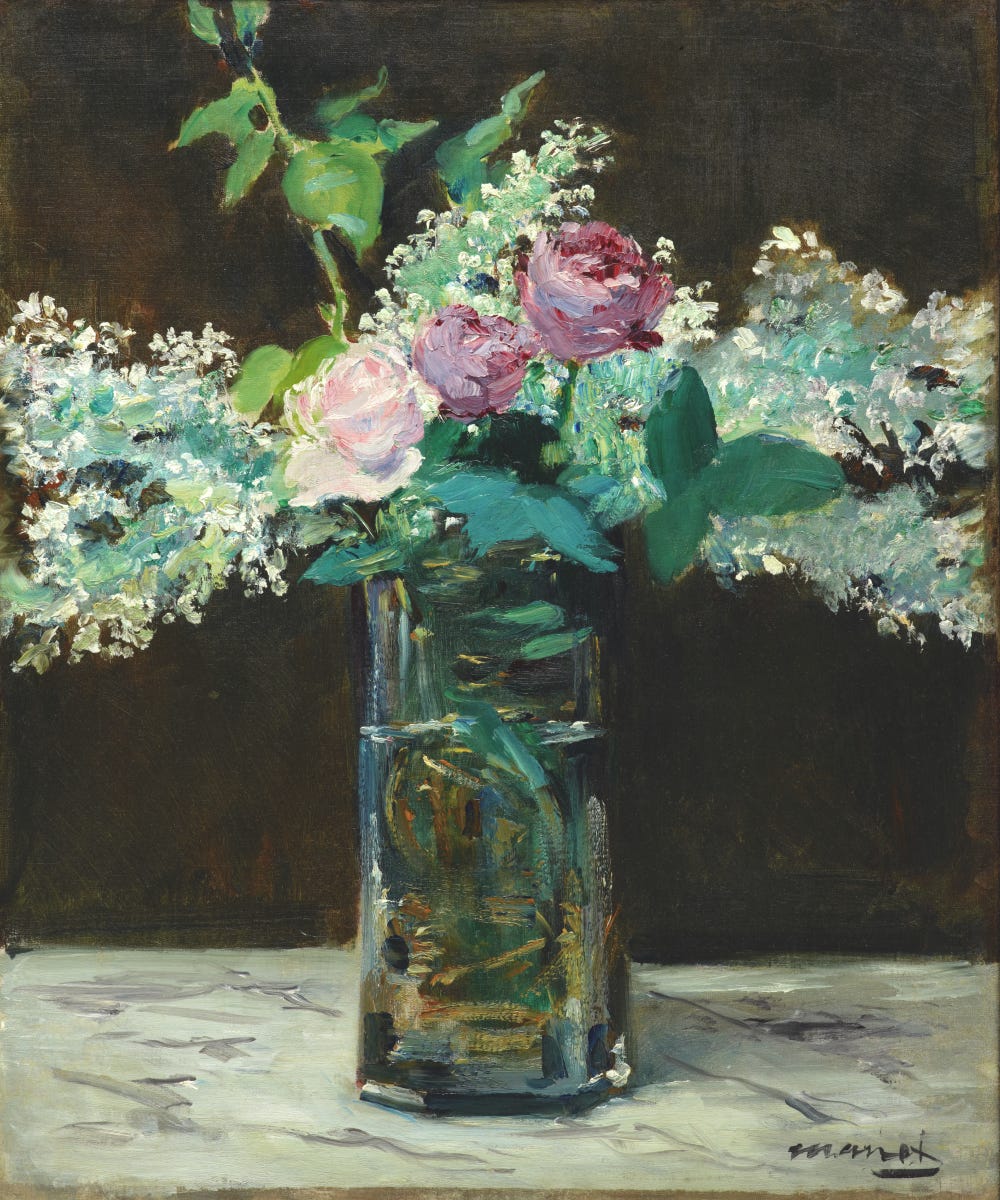
On April 30th, in the arms of Léon, Manet’s suffering finally came to an end. He was fifty-one.
Manet’s death had a significant impact on the Impressionists. Those who no longer resided in Paris streamed into the city for the funeral. Claude Monet was unpacking boxes at his new house in Giverny when he heard the news, and he quickly left to attend the ceremony. Despite never formally joining the Impressionists, Manet was the group’s real center of gravity. After he died, their cohesion faded away.
In 1886, his art dealer Paul Durand-Ruel would leave Paris for New York, where he captivated American viewers with the Impressionists’ art. Within a few years, their popularity would skyrocket, their years of thankless labor finally reaping the success they deserved.
Had Manet lived longer, he would have witnessed himself become an international celebrity. More importantly, he would have seen his ultimate goal realized: a new wave of art could gain acceptance within the establishment. The world would, with time, understand his vision.
The love he had for his craft is all the more apparent when considering the state in which he painted during his last years. He was in great physical pain, and yet he was compelled to work—to create bright visions of spring, of floral bouquets, of his favorite cafés.
His friend Charles Baudelaire once remarked, “Never will he completely overcome the gaps in his temperament, but he has temperament, that is the important thing.”6 That unbridled passion fueled Manet in his final days, and through visions of his lost world, it reaches us still.
Sue Roe, The Private Lives of the Impressionists (London: Vintage, 2006), 176.
Roe, Private Lives, 176.
Roe, Private Lives, 233.
Roe, Private Lives, 241.
Roe, Private Lives, 248.
John Rewald, The History of Impressionism: Fourth, Revised Edition (New York: Museum of Modern Art, 1973), 54.