

Marie Antoinette in the French Revolution
On the royal family's failed Flight to Varennes, the new Constitution, and the first inklings of the Reign of Terror.

This essay is part of a series on the life of Marie Antoinette.

On the summer solstice of 1791, a woman dressed as a governess snuck out of the Tuileries Palace on foot.
As the sun set on the longest day of the year, the woman walked from the palace in the direction of the Petit Carrousel, where a carriage would be waiting for her. But she had lived virtually as a prisoner in the Tuileries for the past year, and this was many decades before Baron Haussmann would give Paris a modern makeover. The streets surrounding the palace were still a medieval maze.
Inevitably, she grew lost, walking toward the Seine and back, praying desperately for the sight of the Carrousel. At one point, a familiar carriage passed by her, and she pressed herself against the wall of the nearest building. Her heart pounded. She closed her eyes.
But the carriage belonging to the Marquis de La Fayette rolled past her. No one had spotted the woman.
She would finally reach the Carrousel, where her safe harbor waited. The driver of the two-horse carriage was Axel von Fersen, disguised in simple attire to obscure his noble status. His eyes filled with relief upon seeing her, but he didn’t dare pull his lover into his arms, not when there were enemies at every corner who might recognize them. Instead, he opened the door for France’s queen, and Marie Antoinette climbed inside.
Within minutes, the carriage was on the move, away from the city that had held her hostage for months.
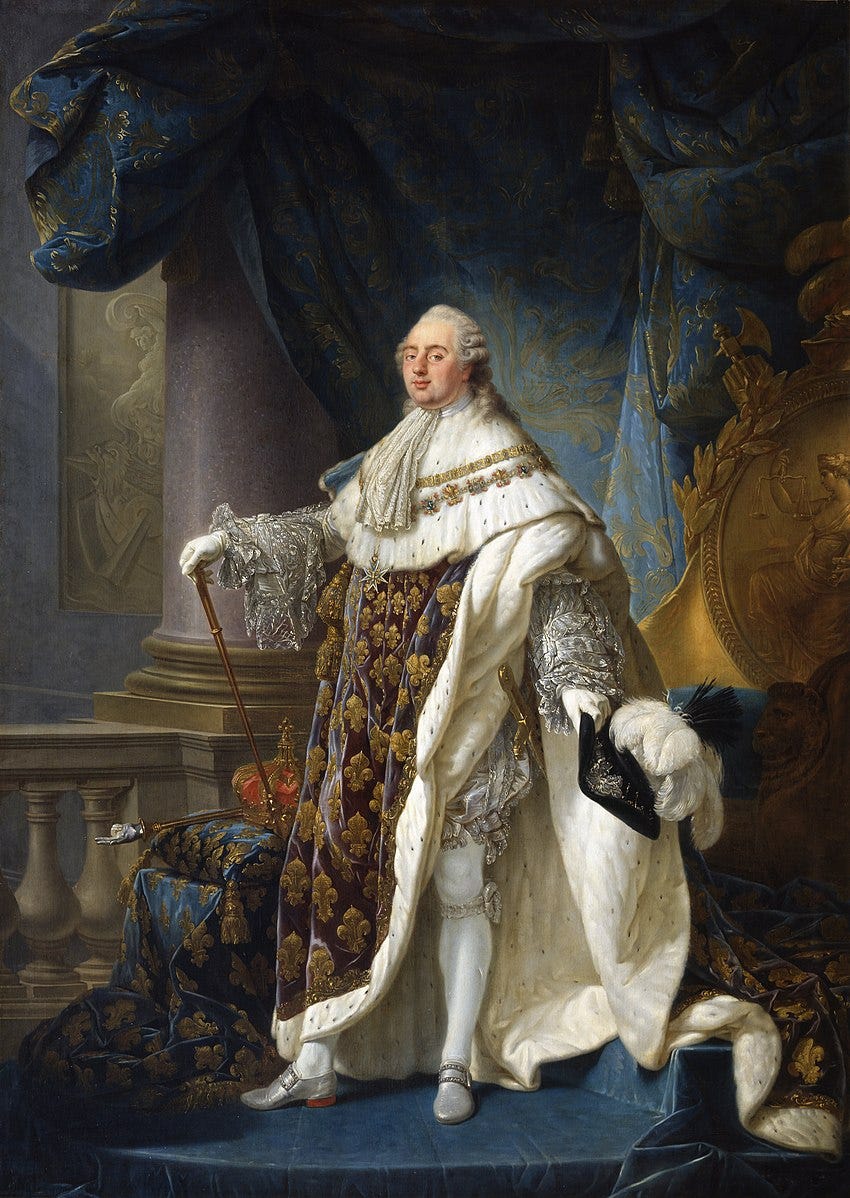
Marie Antoinette was not alone. Within her carriage sat her husband, Louis XVI, dressed as a steward, along with their two living children. The dauphin was disguised as a girl. The children’s actual governess, Madame de Tourzel, posed as the Baroness de Korff.
The Baroness de Korff was not an imaginary person invented for their escape plot. She was the Swedish widow of a Russian colonel, and a prominent figure in the Swedish community in Paris. A Swede himself, Fersen was a good friend of Korff, and he ordered the carriage and passports in her name (though he paid for the bill).1 The plan was for the royal family to escape to Montmédy, where a loyal army regiment was stationed, and the king could once again govern at a distance from Paris.
But how to get there?
,_rev%C3%AAtu_du_grand_costume_royal_en_1779_-_Google_Art_Project.jpg)
The fastest route, which would take the party through Rheims, was out of the question. Louis was crowned there, and he feared the people would recognize him. Another option would be crossing through Austrian Flanders, but this too was unacceptable to Louis. According to France’s new Constitution, leaving the country would mean forfeiting his crown. France would become a republic, or fall into the hands of his scheming younger brothers.
The only path forward was to cross through Varennes. The royal family knew how risky the journey would be. In this time period, their only option was traveling by horse and carriage. Horses needed rest, water, and food. They would have to stay in country inns. The chances of getting caught were high. But the events of the past year had convinced them that they had no other choice.
When we last left Marie Antoinette, the royal family’s home at Versailles was attacked by an angry mob, and the king was forced to move to Paris and sanction the Declaration of the Rights of Man. The royal family lived under virtual house arrest, their movements carefully monitored. The incident that cemented their desire to escape occurred before Easter of 1791, when they tried to celebrate the holiday at the summer retreat of Saint-Cloud. (The year before, they had been permitted to spend the summer at the castle, which lied in the suburbs of Paris.) Their attempt to leave Paris that Easter—in broad daylight, for a planned trip—was blocked by furious protesters. As Marie Antoinette commented, “The guard placed about us is our biggest threat.”2 She was right; they made no effort to stop the oncoming crowd.
Leading up to that summer was a year of frustration and appeasement. Louis signed off on whatever the National Assembly wanted, possibly to demonstrate to the world that he was not free. Some of these reforms ushered in considerable progress, such as the abolishment of feudalism in France. Others proved more controversial: the nobility was abolished in June 1790, which alienated France’s 250,000 nobles and motivated many to join the émigres abroad. This was followed by the Civil Constitution of the Clergy in July, which ended apostolic succession of the clergy and instituted popular elections for bishops and curés. For a country that remained overwhelmingly Catholic, this reform represented a major blunder on behalf of the National Assembly.
It is from this period onward that Marie Antoinette’s political leadership took center stage, as her husband’s mental state deteriorated. His waffling on whether or not to flee delayed their departure. To make matters worse, a new organization called the Society of the Friends of the Constitution (better known as the Jacobin Club) was on the rise. The National Assembly was split between those who wished to restore the monarchy to its former glory, those who advocated for a constitutional monarchy, and those who wanted the monarch to serve as a figurehead. But the Jacobins, led by Maximilien Robespierre, were ardent republicans—and their numbers were growing. The people of France were hungry, and hungry people are always a dangerous force.
If you know how the queen’s story ends, then you know that she and her family were caught and captured on the way to Montmédy.
Their plan came crashing down in Varennes, where they were recognized by the townspeople. On their journey through the French countryside, they learned that whatever sympathy there once had been for the monarchy had largely evaporated.
The ride back to Paris was riddled with atrocities; everywhere, they were followed by violent mobs. A priest who had attempted to greet the king and queen was hacked to pieces before their eyes. When a nobleman tried to do the same, the queen warned him off. It didn’t matter—the crowd shot him down, cut off his head, and paraded his remains before the carriage.3 The Reign of Terror hadn’t even started yet.
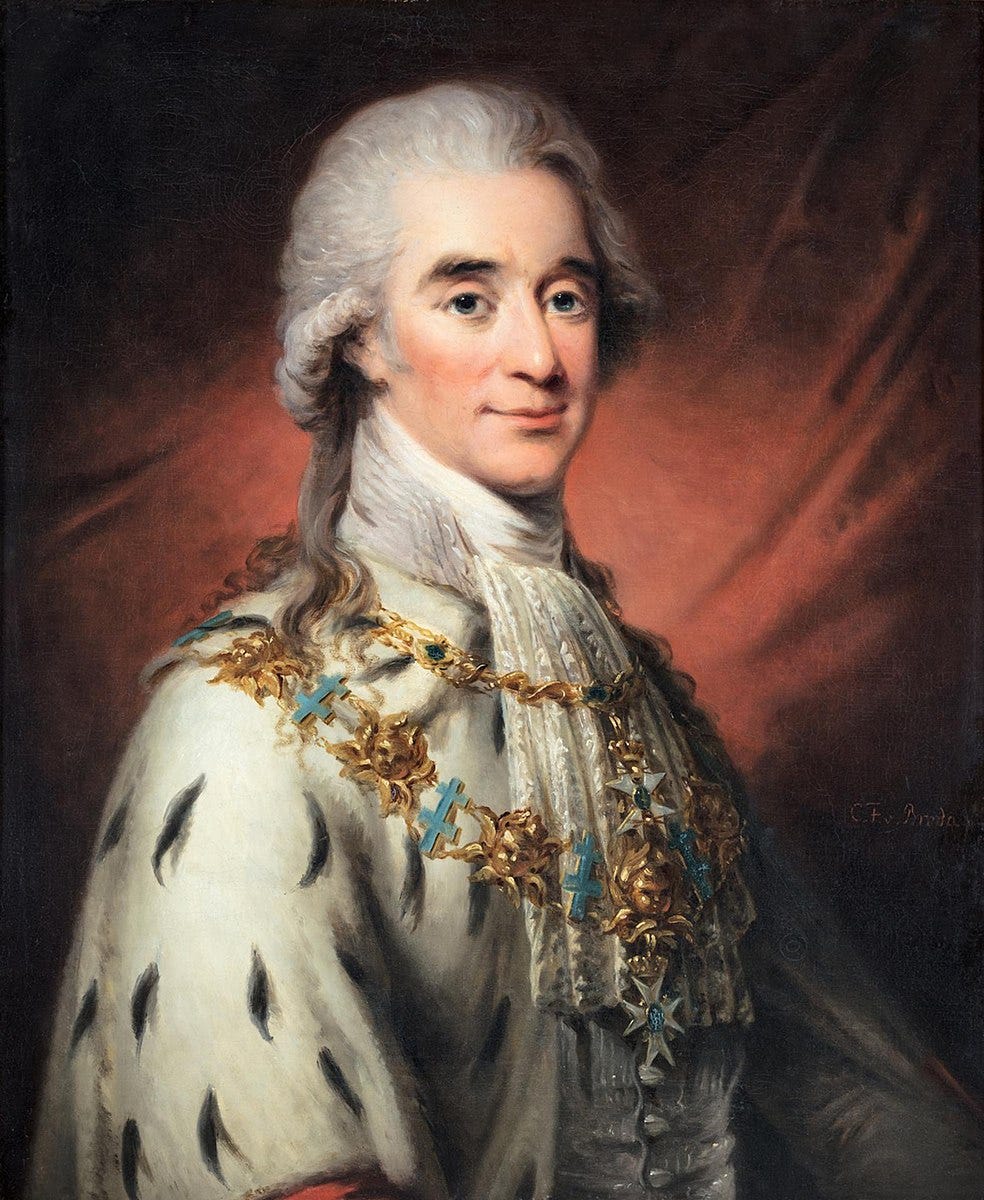

Fersen, the queen’s lover, was not with them during their return trip. He had left them even before their arrival in Varennes, possibly to shield the king and queen from further suspicion.4 As the party neared Paris, they were accompanied by three commissioners from the National Assembly: the monarchist Comte de la Tour-Maubourg, the republican Mayor of Paris, Jérôme Pétion de Villeneuve (whom Marie Antoinette found very rude), and Antoine Barnave, a moderate who supported constitutional monarchy.
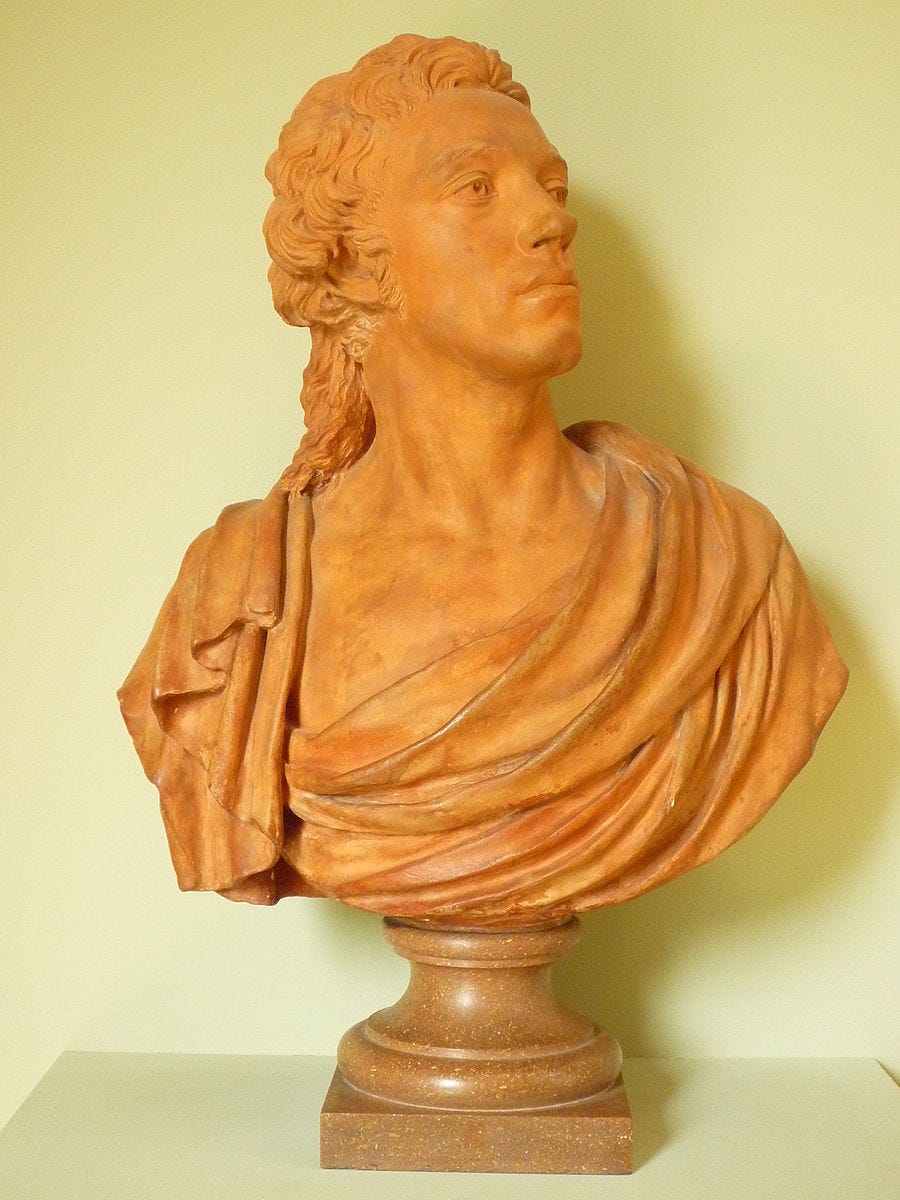
Barnave would become an incredibly important figure in the queen’s final years, and it is their letters, written in code, that reveal the full extent of her political role. On the long journey to Paris, the queen sat directly across from Barnave; hours of talking allowed them to develop something resembling a friendship.
There is no evidence that they were lovers; the main suggestion of an affair exists only in Count Fersen’s writings, as he records a passing rumor about Barnave and the queen. Fersen was extremely jealous of their relationship—Barnave was a handsome man, and the queen was basically running the government via secret correspondence with him. By the time she and her family returned to Paris, they were so carefully guarded that she couldn’t have begun an affair with him even if she wished to do so. By all accounts, the queen’s devotion to Fersen lasted until her death.
Barnave was a constitutional monarchist, and he feared the growing popularity of republicanism in France, along with the possible disintegration of private property rights. On July 17th, a few weeks after the royal family’s return, Lafayette’s National Guard opened fire on a crowd at the Champs de Mars—an act that Barnave supported. The crowd had assembled to demand the overthrow of the monarchy. The Massacre on the Champs de Mars, coupled with the royal family’s attempted flight to the countryside, solidified the public’s hatred for the monarchy.5
.JPG)
But Barnave and the queen pressed onward. The Constitutional Committee tasked with revising the Constitution was a mess, like much of the French Revolution. Conservatives and moderates fought bitterly about the parameters of royal authority. The final result was a watered-down constitutional monarchy—the king’s powers were vastly limited, but still, there would be a king. Seeing that he had no other choice but to abdicate, Louis signed the new Constitution.
Was Marie Antoinette satisfied with this compromise?
There was always the perilous hope of foreign intervention. On August 27th, Leopold II of Austria and Frederick William II of Prussia signed the Declaration of Pillnitz, which stated that if the other great powers assisted, “then and in that case” they would stage a military intervention to restore the French monarchy. By “great powers,” they were referring to Britain—an absolute pipe dream, considering that France’s downfall would serve Britain’s imperial interests. As the queen wrote to Fersen on September 26th:
I don’t see that foreign help is that imminent particularly by the Declaration of Pillnitz… perhaps it is fortunate because the more we proceed the more these wretches will recognize their misfortune; they may even come to want foreign intervention themselves.6
The National Assembly had proven largely inept at addressing the suffering of the French people, and indeed, we know how the story ends: after the French Revolution, after the rise and fall of Napoleon, the Bourbon monarchy would be restored in 1814-1815.
Nevertheless, the Declaration of Pillnitz planted the fantasy of foreign intervention in the queen’s mind. As we’ll see in our final entry next week, this fantasy would cost Marie Antoinette her life.
John Hardman, Marie Antoinette: The Making of a French Queen (Yale University Press, 2019), 216.
Hardman, Marie Antoinette, 211.
Hardman, Marie Antoinette, 224.
Why was Louis XVI so accepting of his wife’s lover? As I mentioned in “Marie Antoinette: The Early Years,” Louis never took a mistress—incredibly rare for a Bourbon king. The royal mistress served an essential function in court beyond pleasing the king: her role was to protect the queen by distracting the public. The fact that Marie Antoinette never had that shield meant that the public’s ire was focused on her. Louis didn’t seem terribly interested in intimacy, and he accepted Fersen as part of his wife’s life. The king and queen’s marriage was arranged, and they only became friends in their later years, largely as a result of the stress of the French Revolution.
Antonia Fraser, Marie Antoinette: The Journey (Doubleday, 2001), 360-371.
Hardman, Marie Antoinette, 240.