

Marie Antoinette: The Final Years
Our series on France's most infamous queen reaches its tragic conclusion.

This essay is part of a series on the life of Marie Antoinette.
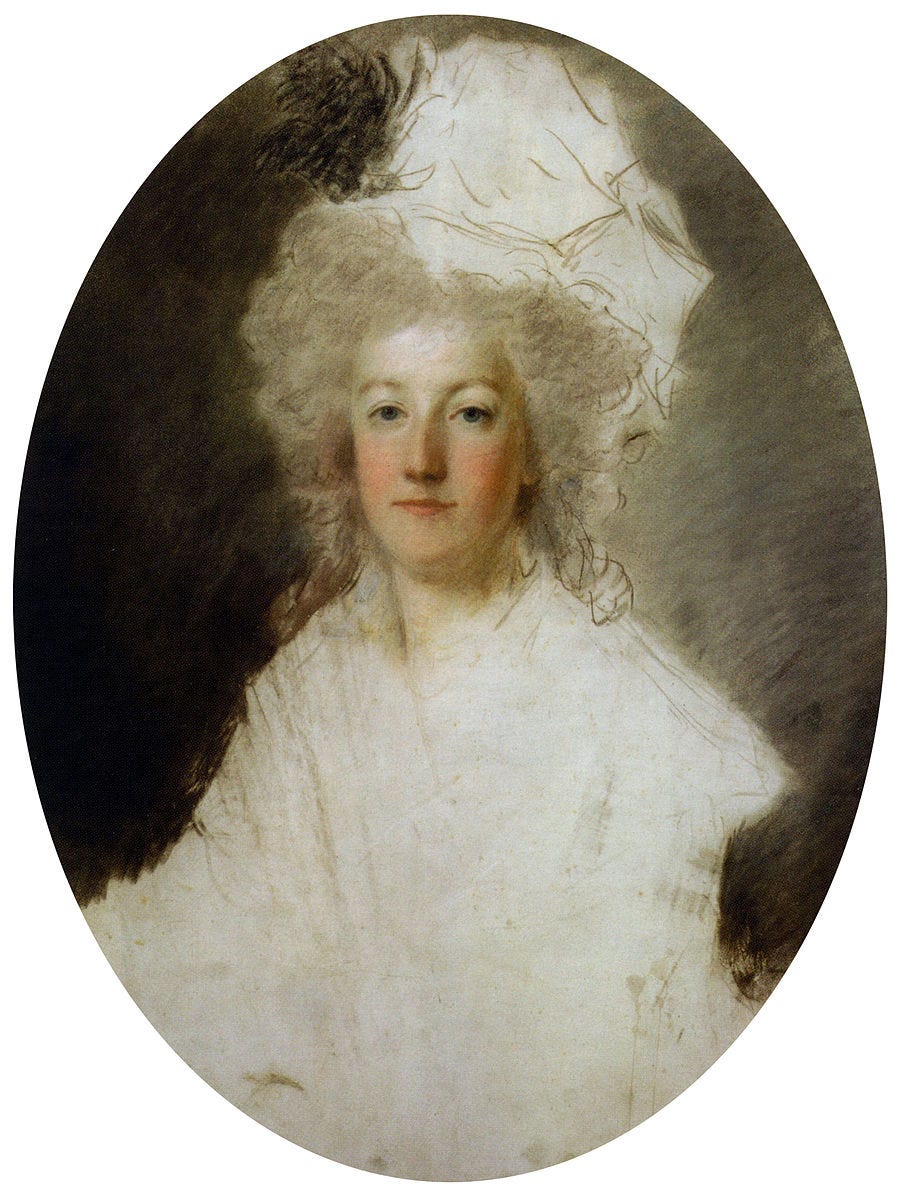

Marie Antoinette lived in many grand palaces throughout her life—her childhood at the Hofburg and Schönbrunn, the splendor of Versailles, summers in Saint-Cloud, even her imprisonment in the Tuileries. But her final home, for the last two months of her short life, was a prison cell in the Conciergerie.
Unlike the other political prisoners held there, Marie Antoinette was not permitted to go outside. Held in solitary confinement and separated from her children, the queen was well and truly alone.
If her early years were dominated by a cycle of hedonism, petty politics, and ennui, the last two years of her life were replete with horrors. As would be the case with the communist revolutions of the 20th century, the French revolutionaries had many legitimate grievances against the monarchy, but their leadership would prove far more brutal and just as inadequate.
On January 21st, 1793, Louis XVI was executed by guillotine. His trial was driven by politics, as the scope of the king and queen’s correspondence with foreign powers had yet to be revealed.
In between the failed Flight to Varennes in 1791 and Louis’s trial, Marie Antoinette continued running the government in secret with Antoine Barnave. Spies were everywhere in the Tuileries, and the desperate state of the fledgling constitutional monarchy grew clearer by the day.
Ever since the royal family returned to Paris, republican fervor spread in the Legislative Assembly (formerly the National Assembly). One of the few vestiges of royal authority that remained was the king’s veto, and the Girondins (the center-left) proposed legislation that would force Louis to use that veto. The intention was to portray the king as being against reform by proposing laws he could never support: forcing all émigrés (aristocrats who had fled the country) to return to France, while confiscating their land and sentencing them to death if they refused, and forcing clergy to take an oath to the Constitution or be stripped of their pensions.1
Letters between Barnave and the queen reveal their strategizing on these matters; they came to the conclusion that Louis should veto the decrees, but include an order that the king’s brothers return to France. (Louis’s brothers ignored this, of course.) Further letters demonstrate their organizing of the king’s guards and convincing the département of Paris to request the king’s veto on the decree aimed at clergy. The idea was that this would help Louis to appear obliging to his people—and in fairness, decrees aimed at religious leaders were unpopular throughout the country.2
Then there was the issue of war. Behind Barnave’s back, Marie Antoinette urged her brother Leopold II to form an “armed congress” with other European powers. This was a risky move—she knew that the Austrian Empire wished to annex the German-speaking regions of Alsace and Lorraine. She didn’t actually want to go to war, which she knew would be disastrous for France. Her hope was that an armed congress would scare the French into restoring the monarchy.
For a long time, her brother Leopold thought that her faith in the “threat of war” was foolish.3 But the progress of the French Revolution seemed to have changed his mind. This is further demonstrated by Austria and Prussia’s treaty of alliance, signed on February 7th, 1792. Frederick William of Prussia seeked to encroach upon French territory, and Leopold wished to curb the worrying influence of revolutionary thought in Belgium.
In France, support for war with Austria was mixed. Émigré armies, with aid from Leopold, waited along the French border. Meanwhile, the Jacobins had surged in power, both in the Legislative Assembly and among the people. Louis, for his part, saw an opportunity to pin the failure of the war on the Assembly. Robespierre was unsupportive of war, believing it could only help “the queen who was the moving force behind the [European] Powers.”4
Those in the Assembly who wanted war had their wish granted: on April 20th, 1792, Louis went before the Assembly and declared war on Austria. That summer, Marie Antoinette continued to pass on military secrets and French battle plans to Austria.5 Through Fersen, she also sent assurance to the king of Prussia that they would cover his military expenses once the French monarchy was restored.
Domestic politics were even more chaotic. The Jacobin-dominated legislature passed increasingly extreme measures, which Louis continued to veto. Parisians were enraged, but support for the monarchy was growing in the provinces, as the more conservative areas of the country became incensed by the revolutionaries’ attacks on the clergy.
After a series of victories against the French, the Duke of Brunswick, leader of the Allied army (Austria and Prussia), issued what is known as the Brunswick Manifesto on July 25th, 1792: should anything happen to the king and queen, the Allies would retaliate against the people of Paris. What was supposed to cow the Parisians only fueled their hatred of the monarchy.
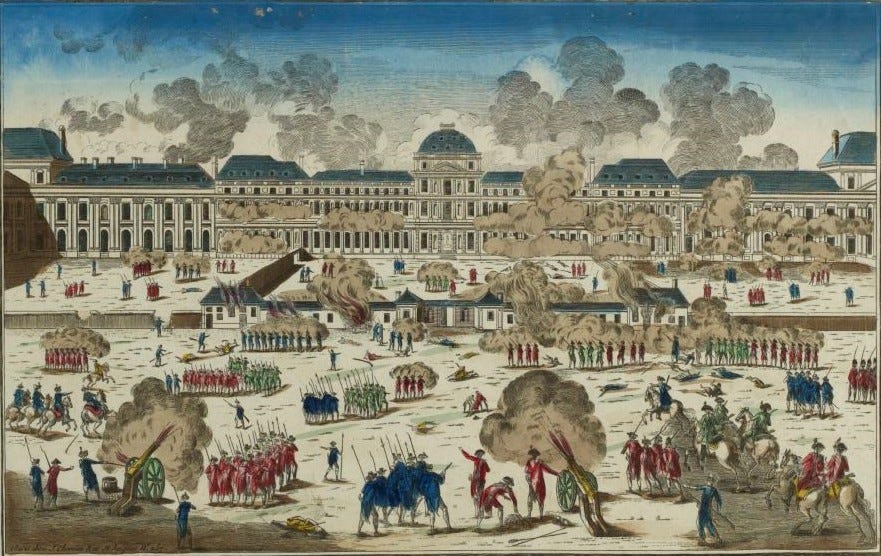

On August 10th, an angry mob (so many mobs in this story) attacked the Tuileries, massacred the Swiss Guards, and imprisoned the royal family in the tower of the Temple, a medieval fortress that was used as a prison during the revolution.6 With the monarchy overthrown, the Assembly transformed into a new National Convention with the goal of rewriting the constitution: this time, without a king. If the royal family thought the Tuileries was stifling, they would now truly live as prisoners.
The violence of the French Revolution was only beginning. The September Massacres kicked off several weeks later—between 1,000 and 1,600 prisoners were executed in rapid succession. Within months, King Louis XVI was beheaded, the economy remained in shambles, and the people of France were still hungry.
In March of 1793, the département of La Vendée revolted against the new republican order, followed by the Catholic West and the sugar islands—now, Parisians were rioting over the absence of tropical commodities like sugar and citrus fruits. Robespierre formed the Committee of Public Safety, architect of the Reign of Terror, in response to these riots.7 All that remained was to kill the queen.
Her trial was held on October 14th. Most of the accusations against her were ridiculous: orgies at Versailles, incest with her son. (She famously refused to respond to that latter charge: “On this, I appeal to all the mothers who may be here.”)8 But the charge that would ultimately cement her fate was treason, and of this, she was clearly guilty: she did conspire with foreign adversaries and give French military secrets to Austria.
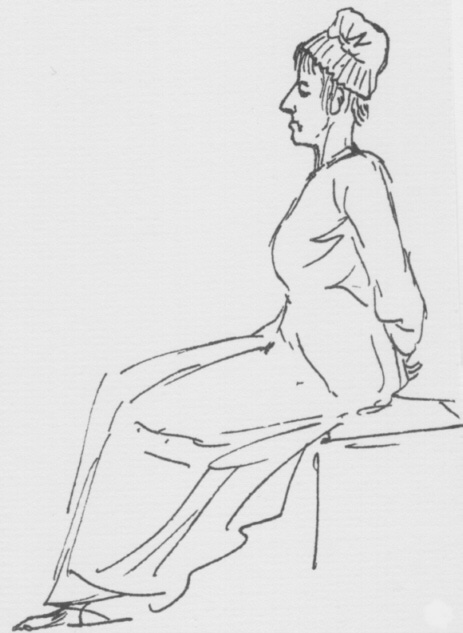

On October 16th, she was sentenced to death. Her execution would occur later that day. Paraded in an open cart through the streets of Paris, Marie Antoinette went to her death with great composure and dignity. Her final words were a hasty apology to her executioner when she stepped on his foot. She was thirty-seven.
Did Marie Antoinette deserve her fate?
I, on principle, do not support capital punishment. Stooping to the level of the lowest criminals should be anathema to a civilized society. (Oh, if only… As Voltaire famously quipped, “It is forbidden to kill; therefore all murderers are punished unless they kill in large numbers and to the sound of trumpets.”)
However, when evaluating this case from a historical perspective, and given that execution was the norm of the era:
On one hand, she did conspire with foreign adversaries in their invasion of France. This act of treason would have been a capital offense in just about every country at the time—and certainly would in her husband’s court during the Versailles years.
On the other hand, she was backed into a corner, with enemies clamoring for her death at every turn. Countless missteps muddled her reign, but I’ve come to the conclusion that Marie Antoinette wasn’t evil or heartless—and by the way, she never said “let them eat cake.” She was an enemy the moment she set foot in France as a teenage girl; to her fellow courtiers and the public at large, she would always be “L’Autrichienne.” Long before her arrival, the court of Versailles had spent decades driving the country into financial ruin.
Marie Antoinette married into an impossible situation and proceeded to make things worse thanks to her youth, lack of experience, and initial under-education in politics. She was a child bride. She committed treason. She was hedonistic. Hedonism was the norm of the French court.
In Thomas Jefferson’s Autobiography, the U.S. president and close friend of Lafayette wrote, “I have ever believed that had there been no queen, there would have been no revolution.”9 His statement is incredibly ironic: the nail in France’s economic coffin was the country’s financial aid for the American Revolution—which Marie Antoinette urged her husband to support.
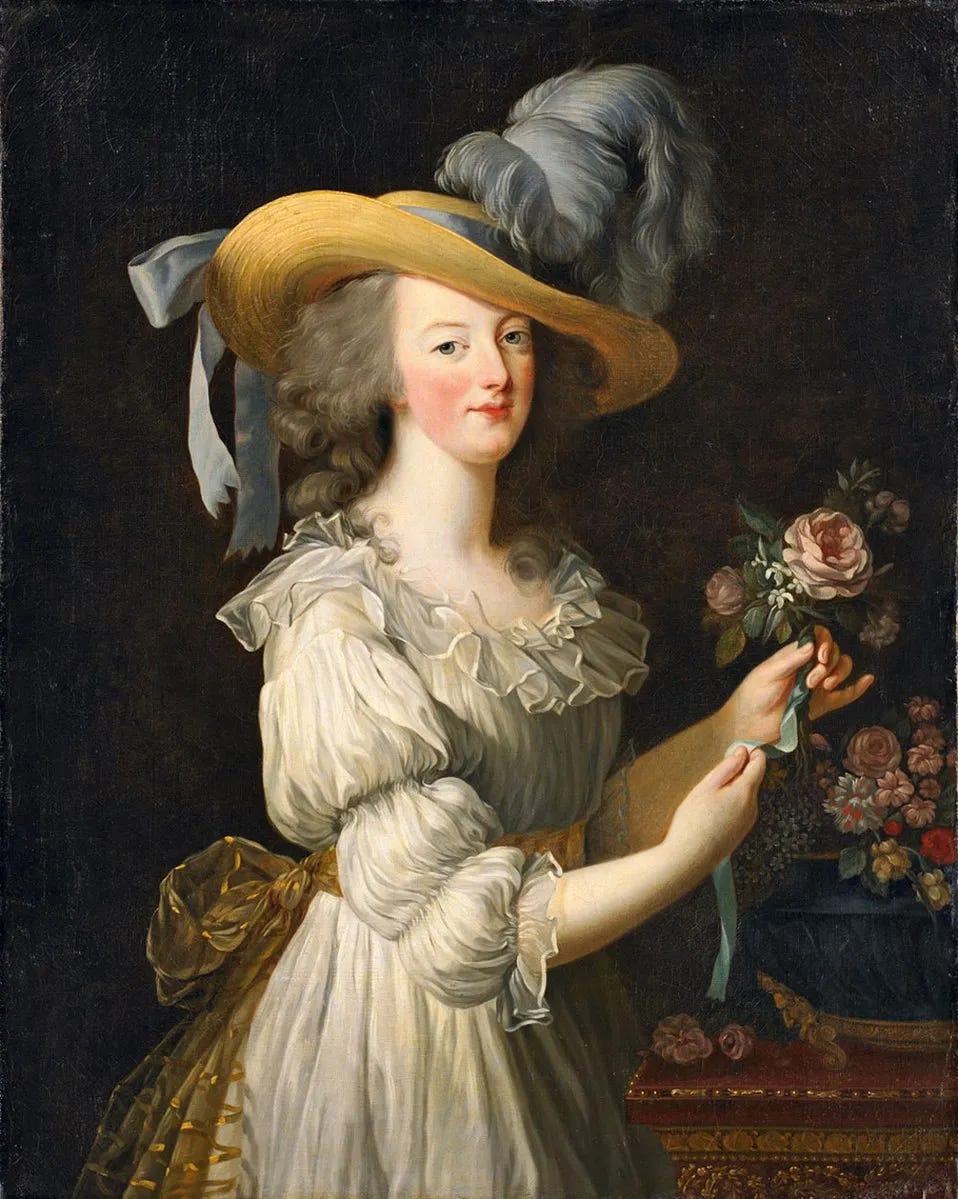

A few weeks after her death, the queen’s allies in constitutional monarchy, Antoine Barnave and Duport du Tertre, were executed. The casualties of Robespierre’s Reign of Terror number between 35,000 and 45,000 people—in the end, he too would be among the dead. As historian John Hardman observes, “All political careers end in failure and certainly did in the Revolution.”10
Perhaps it would have brought the queen meager comfort to learn that her enemies would fail. The French Revolution, followed by the rise and fall of Napoleon, concluded with the Bourbon Restoration of 1814-1815. With the exception of the short-lived Second Republic (1848-1852), France would not become a republic again until 1870.
Today, Marie Antoinette is a symbol of aristocratic excess, or in some camps, bourgeois victimhood. What we’ve learned through this journey is that the woman behind the archetype was far more complicated, and consequently, all the more interesting.
Thank you for being a patron of The Crossroads Gazette! Our next patron series will cover the Salem Witch Trials.
If you have a suggestion for a future topic, you can contact us here.
John Hardman, Marie Antoinette: The Making of a French Queen (Yale University Press, 2019), 247.
Hardman, Marie Antoinette, 250.
Hardman, Marie Antoinette, 254.
Hardman, Marie Antoinette, 267.
Antonia Fraser, Marie Antoinette: The Journey (Doubleday, 2001), 365-368.
Fraser, Marie Antoinette, 375.
Hardman, Marie Antoinette, 290.
Fraser, Marie Antoinette, 429-434.
Thomas Jefferson, Autobiography of Thomas Jefferson, (Courier Dover Publications, 2012), 92.
Hardman, Marie Antoinette, 318.