

Rococo, Old and New
Elegant or frivolous? Pretty or polarizing? From 18th century Parisian salons to the Cannes premiere of Sofia Coppola's "Marie Antoinette"—how Rococo persists in dividing its viewers.

.jpg)
I was fifteen years old when I first watched Sofia Coppola’s Marie Antoinette. I had been scrolling through YouTube when a bootlegged version of the 2006 film, split up into nine or ten parts, appeared on the screen. Enticed by the sumptuous costumes featured in the thumbnail, I clicked on the first video.
I spent the next two hours in champagne-soaked, candy-colored bliss. I didn’t know what the word “Rococo” meant, but I gained an intuitive understanding as I watched the young Antoinette (played by the magnificent Kirsten Dunst) frolic in the gardens of Versailles after a late night of partying, her friends skipping about her in silk culottes and opulent gowns, the sun rising over the lake in an outdoor scene that teeters on the edge of Romantic—until someone pops a bottle of champagne, and the party wins again.
As I’ve said before, it’s the only movie I can watch on mute and still be entertained. The prettiness of each scene overflows with greater effervescence than a champagne tower; the film is a monument to beauty, never really criticizing the ill-fated queen’s excess. Over a decade later, during a recent rewatch, I found myself just as entranced by the pastel kaleidoscope of Milena Canonero’s costume designs, the lush wildflower meadows that encircle Petit Trianon, the way Kirsten Dunst portrays the queen’s delicate melancholy against a backdrop of New Wave hits.
Last week, I released a patron video about the life of Élisabeth Vigée Le Brun, Marie Antoinette’s favorite portrait artist who blended Rococo and Neoclassical styles in her groundbreaking, boundary-shattering career. (Not so easy, being a female artist in the 18th century.) While conducting research for the video, I thought back to my recent viewing of Marie Antoinette, and how the film served as a modern example of Rococo. Like the 18th century artistic and decorative style, the film prizes elegance, charm, visual beauty, and fun. Both were criticized by their contemporaries for being “shallow” and “frivolous.” Both tend to flatter and romanticize aristocratic subjects.
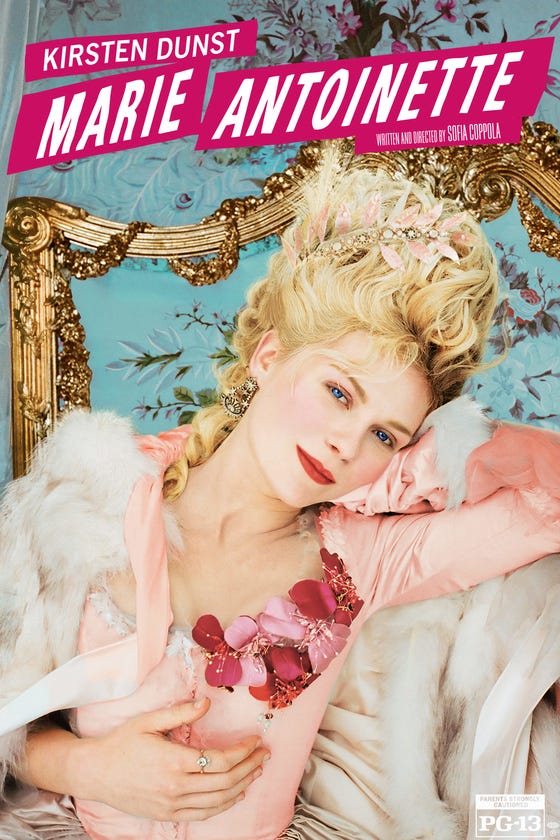
After watching the Coppola film for the first time as a teenager, I was shocked to learn that it had been booed after its premiere at the 2006 Cannes Film Festival. Of course, as an adult, I’m not surprised—the film plays fast-and-loose with history, portraying Marie Antoinette as a largely powerless victim of her gilded cage (an interpretation unlikely to go down well with a French audience). But the truth is more complicated than those booing at Cannes would perhaps acknowledge, as it would be just as wrong to portray the queen as a uniformly callous villain. As with many historical figures, her story is deeply complicated.*
But the film’s polarized response, contrasted by the cult status it enjoys today, may help us to understand the criticisms that Rococo received all those centuries ago. As viewers, we’re prompted to ask: does prettiness have a point? Even as difficult historical periods or figures are given a flattering makeover, can we pour our own glass of champagne and join in the fun?
Rococo found its footing in the early 1700s. Europe had just emerged from a century of war, religious upheaval, and geopolitical realignment, and the burgeoning artistic style seemed to shrug and say, “Can’t we just take a little breath?”
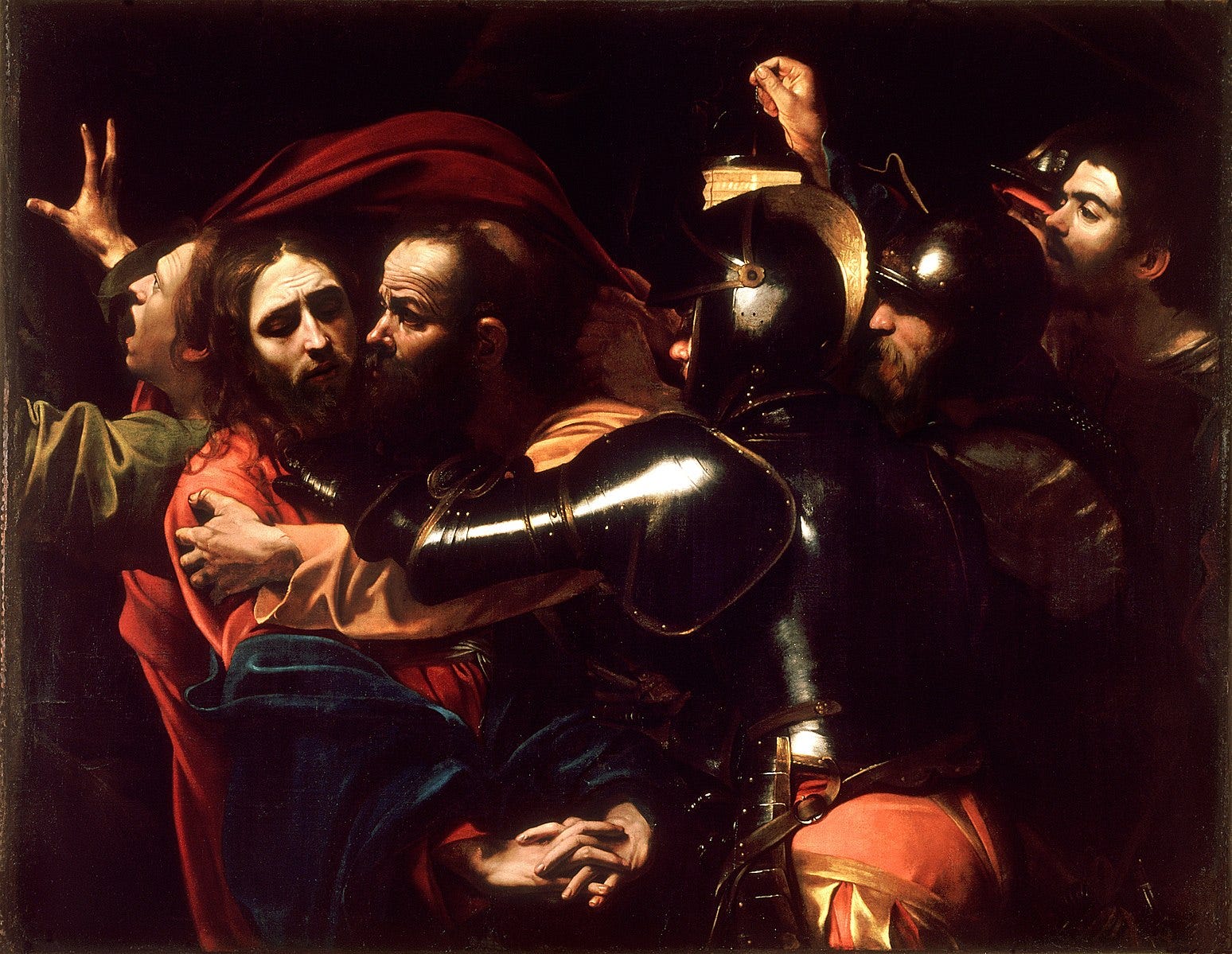
Sometimes, Rococo is referred to as “Late Baroque,” but I feel this moniker conceals the differences between these artistic movements. Beneath all the grandeur, they serve rather different purposes. The Baroque art of the 17th century found its footing as a religious statement against the Protestant Reformation, and was characterized by grandiose works of strong emotion and rich materials. In response to the restraint and simplicity promoted by Protestant churches, the Catholic Church realized that rather than shying away from the opulent architecture and art that characterizes its houses of worship, it should lean into that distinctive flair as a statement against Protestantism—and thus, the Counter-Reformation was born. Throughout the 1600s, the Baroque movement would influence art produced even in Protestant regions, such as in the works of Rembrandt van Rijn and Jan Vermeer.
.jpg)
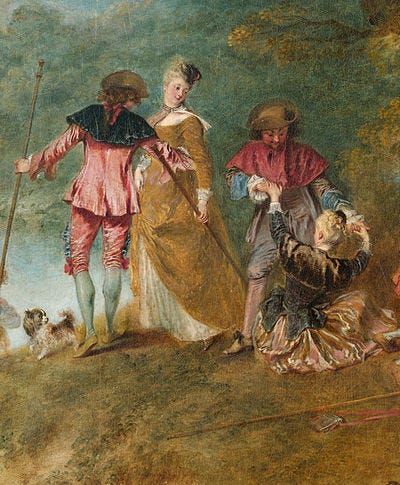
As Rococo emerged in the 1700s, the movement did retain similar subject matter—there were still plenty of mythological scenes, landscapes, portraits, and religious artwork—but these themes were treated in a much more light-hearted manner. An excellent example is Jean-Antoine Watteau’s Pilgrimage to the Island of Cythera (1717), also known as The Embarkation of Cythera (see below).
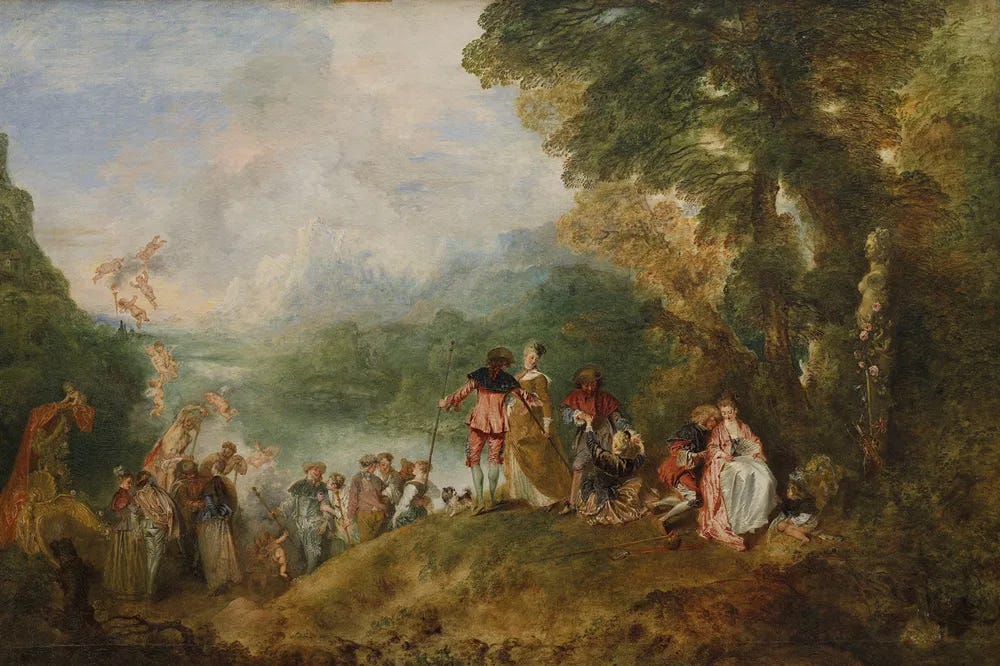

Watteau (1684-1721) was a pioneer of the Rococo style, particularly his depictions of fêtes galantes, or courtship parties. In these vivacious scenes of elegantly-dressed subjects happily frolicking through natural scenery, I am reminded of Marie Antoinette and her friends in the gardens of Versailles, as depicted in Sofia Coppola’s film. In Watteau’s Pilgrimage, the figures are couples visiting the island where Venus, goddess of love, washed ashore after her birth. Despite the painting’s name, the pilgrims appear to be leaving Cythera; if you look closely, there’s a certain melancholy in the central figure as she glances longingly behind herself. At some point, the party has to end.
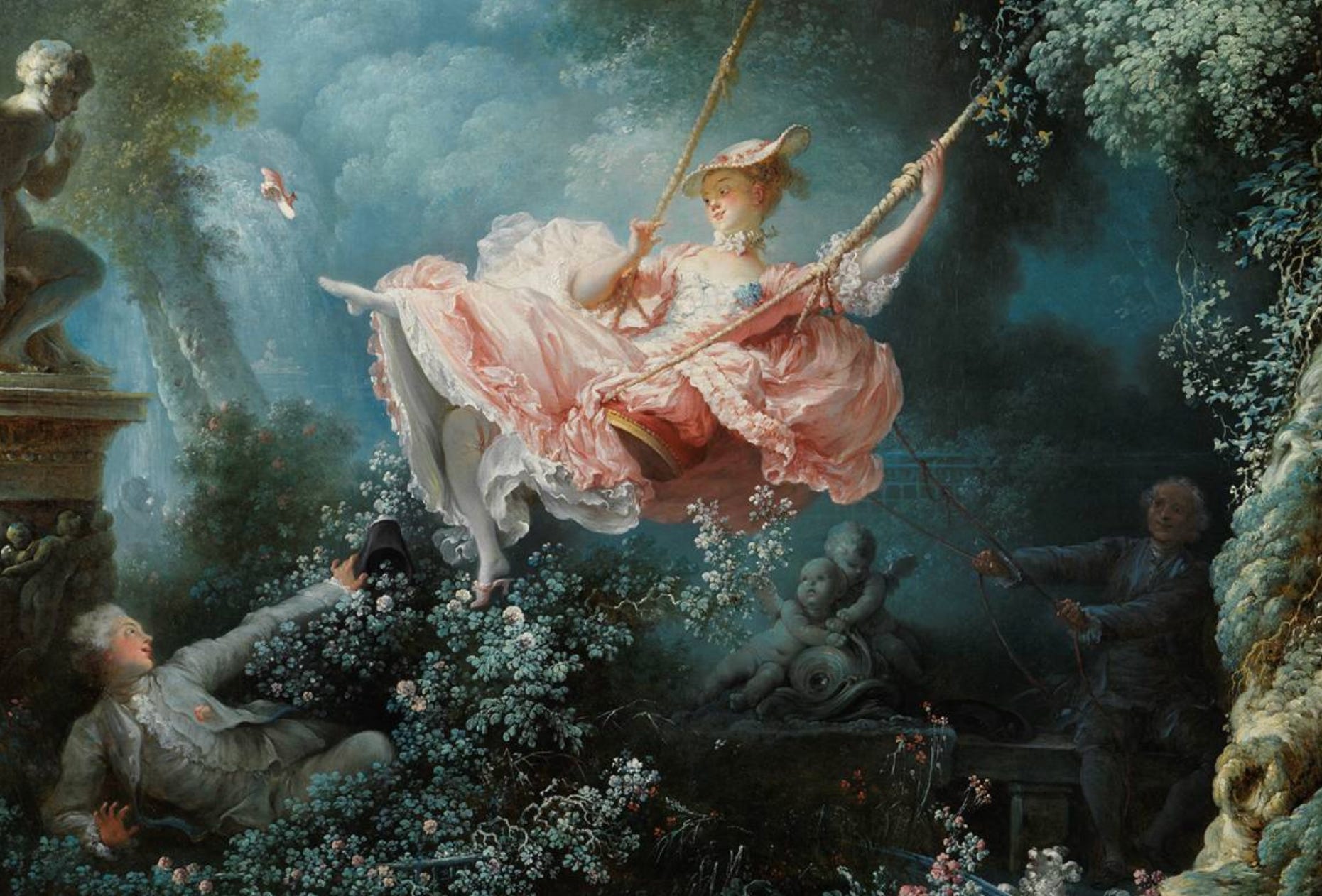
Perhaps the most famous Rococo painting today is Jean-Honoré Fragonard’s The Swing. Painted in 1767, The Swing was a private commission by a wealthy courtier, depicted as the man in the bush on the bottom-left corner of the painting. Above him, a statue of Cupid raises a finger to his lips. The courtier is, to put it bluntly, looking up his mistress’s skirt. The right side of the painting seems to send a different message—two stone cherubs look on in horror, and a little dog barks angrily. (Dogs are symbols of loyalty.)
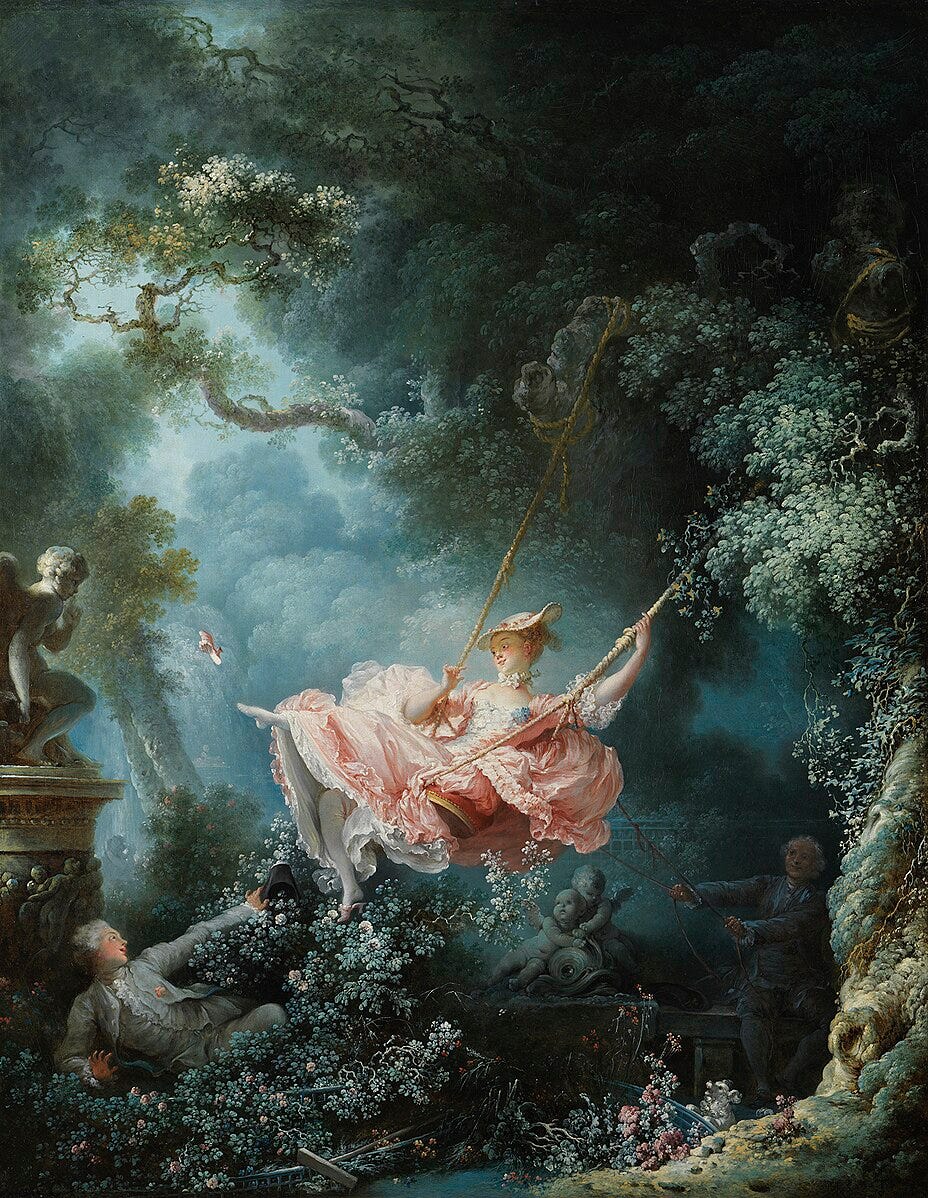
And, of course, the final mystery of the painting: who is the other man, pulling the ropes of the swing?
In the original commission, the courtier asked that Fragonard painted a bishop to operate the swing. Instead, it’s an older gentleman smiling cluelessly as the woman in pink literally swings back and forth between the two men. Allegedly, the older man is the woman’s real husband.
It’s a witty scene; you can easily imagine Fragonard winking at us. It was also painted just before Rococo began to fade from popularity, replaced by the Neoclassical movement (which took itself oh-so-seriously). It wasn’t until Rococo had largely gone out of fashion that its name was coined; the word “Rococo” came from “rocaille,” a decorative style that employed shells and pebbles to ornament fountains. While “Rococo” is a neutral term today, it was originally an insult—a pejorative deployed during the French Revolution to describe what revolutionaries saw as a frivolous movement upheld by aristocracy and the landed gentry.

And so, as viewers, we’re left to ask: what is the point? Is there value in the kind of escapism that Rococo promotes? As another modern example of Rococo, I can’t help but think of Netflix’s enormously popular series Bridgerton, based on the bestselling historical romance novels by Julia Quinn. Like Coppola’s Marie Antoinette, Bridgerton is a fantasy (though, it must be noted, it is much more self-aware on that point). Premiering during the height of the pandemic, Bridgerton bestowed viewers with a chance to escape the chaos enveloping the real world by presenting them with a plainly-fictitious version of Regency England. With aristocratic characters, passionate love stories, and vivid (if historically inaccurate) costuming, Bridgerton gave audiences similar relief that Rococo art offered—as its patrons kissed the violence and strife of the 1600s goodbye.
I find it personally interesting that even in politically-charged times, we’re still drawn to stories like Bridgerton that blatantly center the lives and experiences of the aristocracy. Perhaps because the Regency period feels so far away, it seems easier to construct a fairytale from that time.
But I believe that more broadly, Rococo as a style and an artistic statement speaks to our longing for fun, for romance, for the pursuit of happiness. Trivial? Maybe. Yet, in its own pretty way, deeply human.
*If you’re interested in learning more about Marie Antoinette’s life, I would recommend Marie Antoinette: The Making of a French Queen by John Hardman.