

So, Where Do the Fairies Actually Come From?
At the end of our series, we address the question that has pestered folklorists for generations.

This essay is part of a series called On the Origin of Fairies.
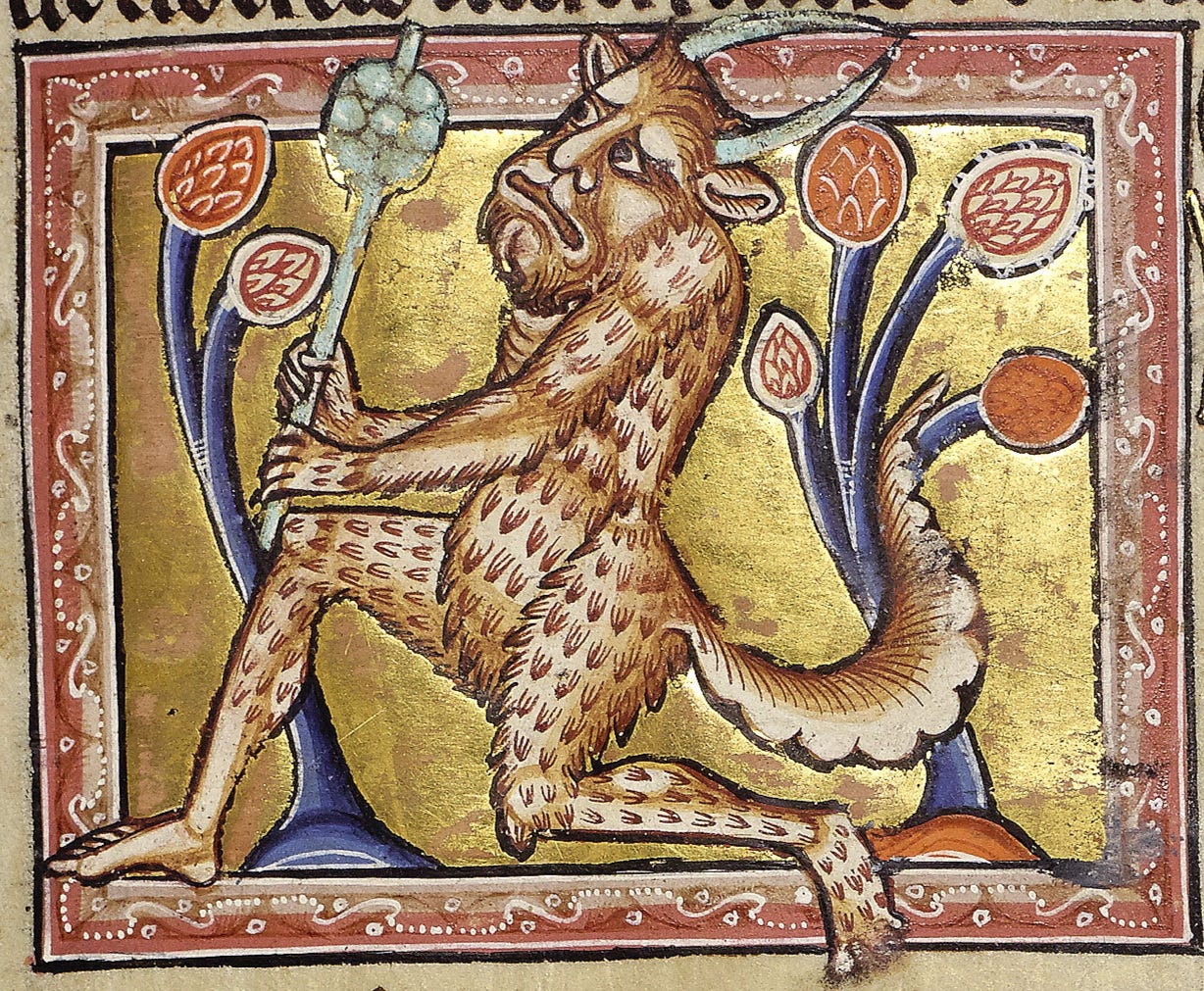

If you’re interested in fairy folklore, and you’ve spent any time on the Internet at all, then you have probably come across one of these two ideas:
Fairies are the folk memory of a Neolithic hunter-gatherer society of especially short stature, who were pushed to the fringes of Britain and Ireland, hiding in its ancient hill forts from a class of taller invaders. This is sometimes called the “pygmy theory.”
Fairies are demoted pagan gods, preserved through secret, underground worship.
Both of these ideas gained popularity in the 19th and 20th centuries, and despite the fact that historians have long since discredited them for sheer lack of evidence, they have endured in the popular imagination. The pygmy theory in particular was very much a product of a Victorian, imperialist mindset: in an era in which Great Britain was conquering land around the globe, the notion of a tribe being driven away by taller, better-armed invaders would have made sense to a 19th-century audience.
The second idea is one that has especially endured in the modern age—the concept that people refashioned their deities as fairies so that they could continue worshipping them. There are examples of this syncretic worship from more recent history, such as the evolution of Haitian Vodou, Cuban Santería, or Louisiana Voodoo, in which enslaved Africans concealed their deities through syncretic worship of Catholic saints. As I warned in the very first entry of this series, it’s important that we don’t allow our knowledge of 18th- and 19th-century colonialism to blur our vision when examining the medieval period—we are in very different territory here.
In yesterday’s essay, we revisited a concept that comes up often in studies of medieval folklore: that medieval Christians had more nuanced, ambivalent views of magic than we might assume. Medieval Catholicism was rich with mysticism and mystery; it was a culture perfectly capable of producing its own “godlings,” just as the ancients did before.
In the early 20th-century, folklorists turned to Ireland as a potential fountain of origin for all-things-fairies. In their view, Ireland’s extraordinary wealth of fairy folklore suggested that fairy belief belonged to “a shared ‘Celtic’ heritage of Ireland and Britain, lost in the mists of time.”1 Again, not enough evidence. And then, by the mid-20th century, the great British folklorist Katharine Briggs concluded in The Fairies in Tradition and Literature (1967):
…the flourishing time of fairy belief must be pushed back to the earliest historic times on these Islands, almost to the verge of pre-history… there is little doubt that [pagan deities] can claim their part in the building of the fairy tradition as well as the half-deified spirits of the dead and the spirits of woods and wells and vegetation.2
Ever since, the subject of fairy origins has been carefully avoided by folklorists. That is, until the past few years.
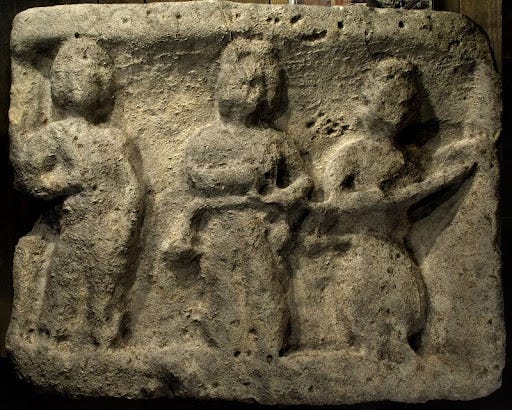
In 2023, historian and folklorist Francis Young published Twilight of the Godlings: The Shadowy Beginnings of Britain’s Supernatural Beings (Cambridge University Press). It is the first post-war book to examine the development of what would become British fairy lore from the Iron Age to the late Middle Ages. The central argument of Young’s book is that rather than looking at fairies as pagan survivals, the fairies occupy an enduring niche of “godlings” or “small gods” found in cultures around the world:
One of those assumptions [of earlier scholars] is that fairies are a distinct and fairly stable category of supernatural being with definable characteristics; I, on the contrary, argue that the specific characteristics of fairies are mostly unimportant, because they are just one member of a larger family of ‘godlings’ in European religion and folk-belief: ‘small gods’ (to borrow a phrase from Terry Pratchett) who rank below the deities worshipped in public cult and stand somewhere between the human and the divine. They are earthly beings, not heavenly; physical, not wholly spiritual. But they are also profoundly ‘other’: not quite human, and possessed of powers beyond our own. Another assumption I reject is that there is anything specifically ‘Celtic’ about fairies. Small gods exist in many cultures, and while constant cultural exchange can of course take place, the small gods of each region have their own distinctive history.3
In other words, the fairy as we know it was the product of a Christian culture and won’t be found as a distinct, continuous category before the late medieval period. However, the broader category of godlings to which the fairy belongs is a cultural niche that endures in the longue durée:
One of these is the niche for ‘small gods’ – those spirits of nature, fate and destiny that allow human beings in agrarian societies to make sense of the fortunes and misfortunes of everyday life (among other things). The cast of characters may change, but the niche they occupy remains. Thus, for example, the fauns, nymphs, lares and penates, divine Mothers and genii cucullati of Roman Britain occupied this niche two thousand years ago. This does not mean they are the ancestors of the fairies in any straightforward sense, but they were indeed their predecessors.4
It is a bold statement, and one that I found convincing after reading his carefully-argued book. However, I am by no means an expert in ancient or medieval history, so I would encourage you to read the book for yourself. My hope is that this book will open the doors for other scholars to publish on this subject, and enliven an area of study that many have been afraid to touch for decades.
Twilight of the Godlings takes us back to the Roman invasion of Britain and the “small gods” of Roman Britain: the nymphs, satyrs, the Parcae, etc. The extent to which these godlings blended with those of Iron Age Britons is, again, murky territory, but Young turns to the archaeological record for any hints that may exist. Young evaluates how the godlings later underwent a process of demonization as part of Christian conversion; in his words, demonization “serves to preserve folkloric beings but also reorganises their position in the cosmos, and has an impact on the language used to describe them even when popular belief ‘undemonises’, recovers or reinvents them.”5
This process of “undemonization” is what occurred in popular belief after the church’s authority in the region grew more stable. What I found particularly fascinating was the diversity of godlings that existed in early medieval Britain: “men of the woods” with prophetic gifts (fauns or woodwoses); supernatural women usually appearing in threes, who controlled the fates of human beings and who may be descendants of the Roman Parcae; diminutive people who live in subterranean kingdoms; human heroes who attain supernatural status; and finally, the Anglo-Saxon elves, though our knowledge of what exactly these elves were during this period remains limited.6
When the Normans invaded in 1066, they ushered in a new cultural hegemony that didn’t so much stamp out previous beliefs, but more likely, assimilated aspects of these godlings into the more unified category of “fairy.” English historian Ronald Hutton has argued in favor of this synthesis of native Anglo-Saxon elves and the various godlings mentioned above with Norman/Breton fays. (The word fairy comes from the French “fée.”) About a third of the soldiers who fought with William I in the Battle of Hastings were Bretons, whose ancestors had fled Britain after the collapse of the Roman Empire and during the subsequent Germanic invasions. With the success of the Norman Invasion of Britain, these Bretons settled in Devon and Cornwall, where they would have encountered fellow speakers of Brittonic languages. Young hypothesizes that this shared cultural ancestry may have influenced the Anglo-Normans’ fascination with “British” (rather than Anglo-Saxon) history.7
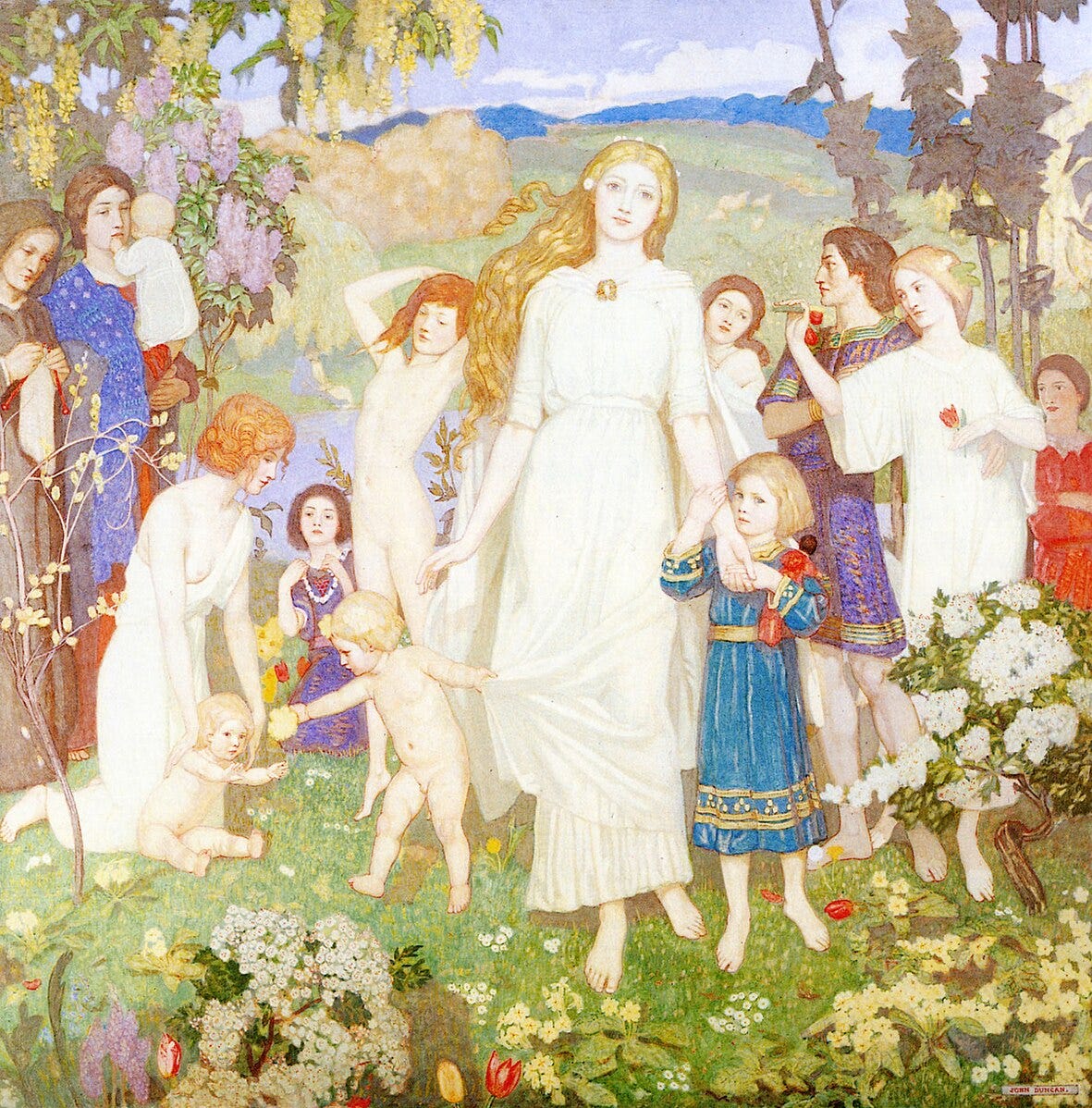

Irish history is beyond the scope of Young’s book. If the concept of a shared, pan-Celtic culture is mostly a myth, and we must see the development of fairy lore in Britain and Ireland as parallel but separate, then the question of Irish fairy origins lingers. The Tuatha Dé Danann, like the Welsh Otherworlders whom we met in yesterday’s essay, are described in Irish myths as a supernatural race of people. There is more evidence that members of the Tuatha Dé Danann probably represented pagan deities than there is for the characters of The Mabinogion, in which concrete evidence is scarce. “Tuatha ” means “tribe” and “Dé,” depending on the context, can refer to gods, but may also refer to a supernatural being. Like the Iron Age Britons, we run into the issue of illiteracy among the ancient Irish, and the fact that these stories were written down by medieval monks after the Irish Celts converted. The 9th-century Sanas Cormaic (Cormac’s Glossary) refers to members of the Tuatha Dé Danann, such as Brigid and Anu, as gods.8 However, with centuries of space in between, it’s impossible to know how accurately Catholic monks recorded these tales, and how closely they actually represent what their Iron Age counterparts believed.
The Tuatha Dé Danann are likely ancestors to the aos sí, a supernatural race in Gaelic folklore similar to the characters of The Mabinogion. The aos sí reside in ancient burial mounds, which serve as entrances to their domains—unlike the Otherworld of Welsh folklore, which is described as a unified realm. As with the Otherworlders of The Mabinogion, the aos sí likely influenced later Irish fairy lore.
We are eons away from the 20th-century flower fairies. In this confusing, mist-laden land, we’re bound to encounter a great deal of “maybe” and “we don’t know” and “possibly” and “not quite.” Katharine Briggs’ 1957 article in the journal Folklore, “The English Fairies,” sums it up best:
No single explanation seems to fit the whole subject. It is as if we were reading a detective story in which the crime turns out to have been committed not by one main criminal but by a number of fortuitous minor criminals, who has each unwittingly contributed to the main crime, and who have scattered clues about with bewildering profusion. This naturally outrages our sense of fitness and makes us feel as if the author was cheating.9
In the 21st century, fairies have made a comeback in stories for adults: from Susanna Clarke’s award-winning Jonathan Strange & Mr. Norrell (2004) to the “romantasy” novels of Sarah J. Maas to the more recent Emily Wilde’s Encyclopaedia of Faeries (2023), a “cozy fantasy” by Heather Fawcett that is centered on an academic rivalry between scholars of Faerie. I would argue that our return to a spookier version of fairies, at least in fantasy novels, reflects our evolving relationship with nature. From the wildfires of California to the flooding of Asheville, the devastation of climate change has once again revealed to us the apathy and frightening power of Mother Nature. It doesn’t come as a surprise, then, that Clarke and Fawcett’s fairies are stealing children and killing livestock once again.
With the emergence of the fairy in the late Middle Ages, we can say that fairies have been with us for at least 600 years. Try as we might, we cannot seem to let them go. When I think about the fairy rock in St. Fillans that began this series, or the other sites in the U.K. and Ireland in which construction was halted or re-routed to appease the Fair Folk, I do wonder if a view of “enspirited” nature may be useful in these times. Perhaps we do need a bit of that fear and reverence for natural spaces, before we destroy what remains of the earth’s beauty.
When I go for runs after work, as the afternoon fades to twilight, I often pause by a stream for a minute of quiet. A babbling brook in an urban park is nothing compared to the impenetrable wilderness experienced by our medieval counterparts. But as I turn to leave, sometimes, a vivid flash zooms past my eyes in glamorous shades of crimson and cerulean—the colors of the fairies’ clothing in the royal court of Annwn, beheld by Saint Collen.
My eyes settle, and I see that it’s only a bird, dipping its beak into the currents for a drink. But for a brief moment, I am steps away from the Otherworld—just a wrong turn down a fairy road before I, too, am lost in the mist.
Francis Young, “Everything You Know About Fairies is Wrong: Introducing Twilight of the Godlings,” Fifteen Eighty Four: Academic Perspectives from Cambridge University Press, March 23, 2023, https://cambridgeblog.org/2023/03/everything-you-know-about-fairies-is-wrong-introducing-twilight-of-the-godlings/.
Katharine Briggs, The Fairies in Tradition and Literature (Routledge, 1967), 4.
Young, “Everything You Know About Fairies is Wrong.”
Young, “Everything You Know About Fairies is Wrong.”
Francis Young, Twilight of the Godlings: The Shadowy Beginnings of Britain’s Supernatural Beings (Cambridge University Press, 2023), 193.
Young, Twilight of the Godlings, 194-249.
Young, Twilight of the Godlings, 257-259.
Katharine Briggs, “The English Fairies,” Folklore 68, no. 1 (1957): 270, https://doi.org/10.1080/0015587X.1957.9717577.
I loved this series!! And what a beautiful way to end it. Also that’s so funny - I have Clarke’s novel on my bedside, and reading it!! I had watched the BBC series a few years back and loved it. I love that you mentioned it!!
I need to read Jonathan Strange and Mr. Norrell