

Star of the Morning, Make for Me a Way: Magic and Mystery in the Egyptian Book of the Dead
For the ancient Egyptians, navigating the underworld and finding one’s way to paradise was tricky business.

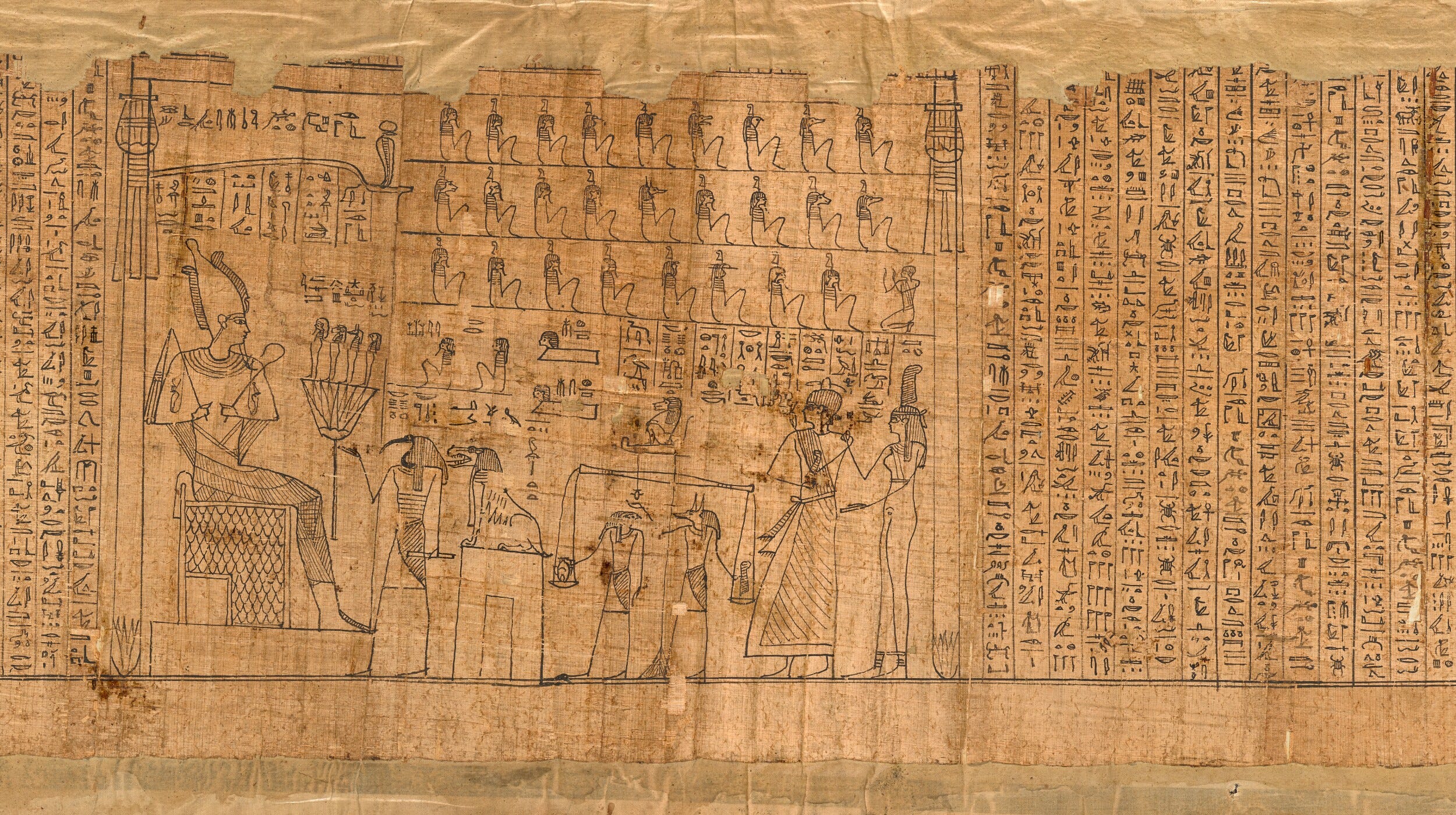
Over the holidays, I had the chance to visit the Getty Villa in the Pacific Palisades, California to see its special exhibit on the Egyptian Book of the Dead. Part of the Getty Museums (which are free to the public), the Getty Villa specializes in Greek and Roman antiquities and possesses an incredibly unique layout; the museum’s design was directly modeled on the Villa Dei Papiri in Herculaneum, which was buried in the eruption of Mount Vesuvius in 79 A.D. until the excavations of the 18th century.
Perched in the hills overlooking the Pacific Ocean, the Villa’s Roman gardens and scenic overlooks are usually where you’ll find most visitors. But on that day, the busiest spot in the museum was the little room housing the relatively small exhibit on the Book of the Dead.
It didn’t matter that it wasn’t a massive collection, or that it lacked the large, glamorous pieces of other traveling exhibits, such as the artifacts of King Tutankhamun’s tomb (which are the property of the Egyptian government and are typically displayed in Cairo, but are occasionally lent out for temporary exhibits). The exhibit at the Getty was packed with onlookers, including myself, eager for a glimpse at the seven delicate papyri and twelve linen mummy wrappings inscribed with the Book’s spells.
The Egyptian Book of the Dead, it should be noted, is not an actual book. The “book” is a collection of just under 200 known spells that were meant to guide the deceased on their journeys through the afterlife, with the goal of reaching eternal paradise. Spells were inscribed on papyrus scrolls, mummy wrappings, coffins, and more.
Why would one need such spells? The Egyptians believed that the journey to paradise was a treacherous one, filled with booby traps, monsters, and other obstacles as one’s soul traveled through the Duat—the labyrinthine underworld of Egyptian mythology, home to various gods such as Osiris, Anubis, Hathor, and more. These spells could prevent the dead from being hindered on their journeys and avoid violent annihilation. Once a dead person had made it through the Duat, they would face the ultimate test before Osiris: the weighing of their heart against the feather of Ma’at (illustrated in the photo above). If one’s heart was pure, its weight would be equal to that of the feather. But if one’s heart proved unworthy, then the goddess Ammit—with a crocodile’s head, a lion’s torso, and a hippopotamus’s hindquarters—would devour their soul.
But let’s say one was to pass this final test—then what?
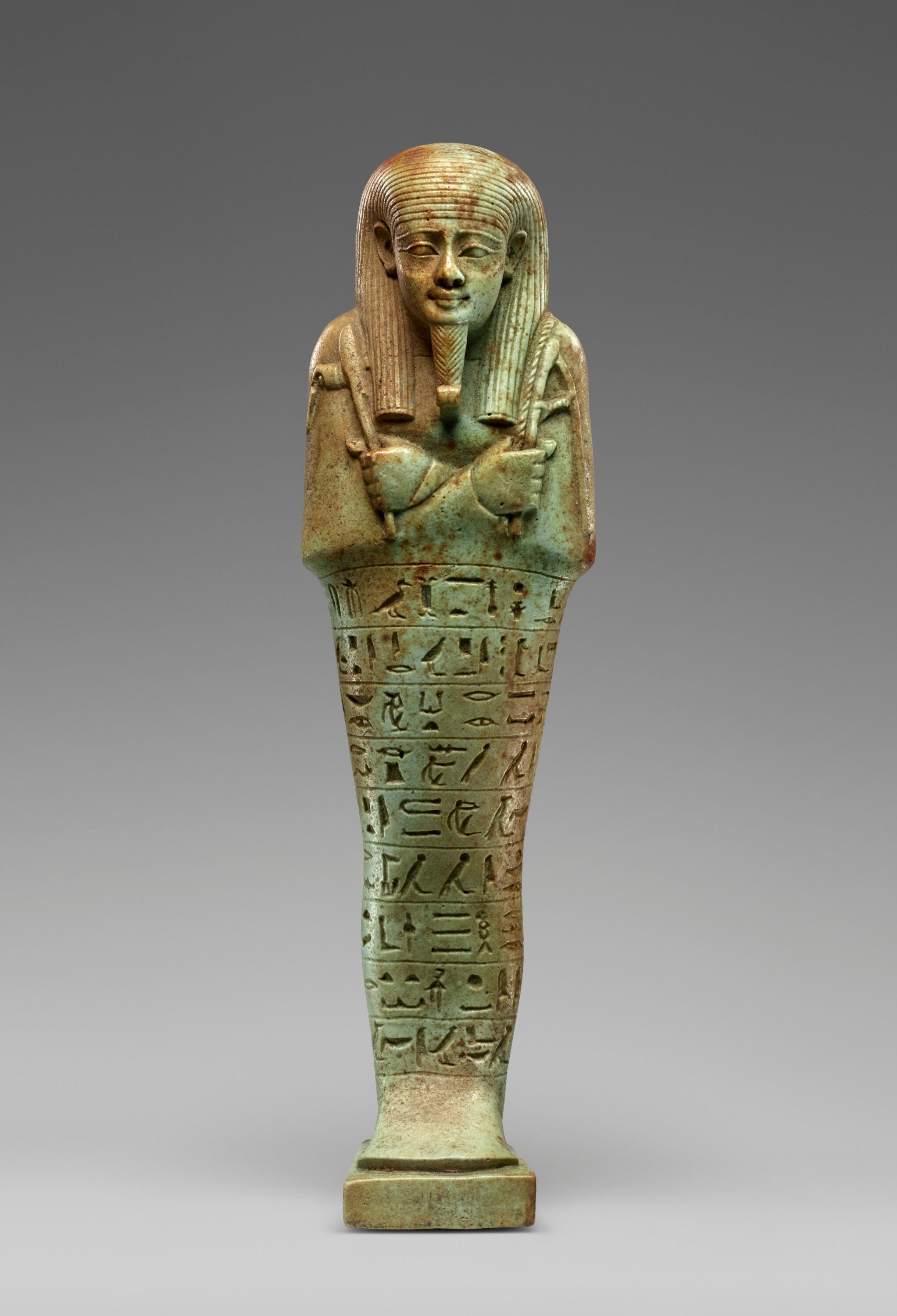
Their soul would reach Aaru, or the Field of Reeds: a place of eternal peace where the dead tended to the grain to feed the gods and themselves. But one didn’t have to do all that labor alone. Funerary figures called ushabti (see the photo below) were included amongst the wealthy’s grave goods. Ushabti were inscribed with spells and believed to come “alive” after the deceased had passed the final test and arrived at Aaru. The ushabti would then act as laborers, maintaining the dead person’s individual patch of grain.
The world’s unending interest in the ancient Egyptians perhaps rests in the fact that they were so like and yet so unlike us today. Most world religions have some concept of judgement or consequences within their traditions, whether in the Christian view of Heaven and Hell or Buddhist and Hindu beliefs regarding karma. The world of ancient Egypt, with its magic and monsters, may seem initially so distant; and yet that most human instinct—to wish for a happy afterlife, for eternal peace—lies at the core of its traditions.
As you probably know, our obsession with Egypt has in the past resulted in negative consequences, such as looting, colonization, and untold loss of cultural artifacts now sold on the black market. Luckily, there’s been a great deal of progress in this area; while looting and smuggling remain an issue (and have been for over 4000 years), you no longer see Western archaeologists and cultural institutions conducting the massive, unauthorized excavations of the past. An Oxford professor can’t just show up to Egypt and start digging; all excavations must gain the approval of Egypt’s Ministry of Tourism and Antiquities, and any artifacts found are the property of Egypt. It’s incredibly heartening to witness this period of international collaboration and far more ethical procedures in today’s archaeological field.
Now, you might be wondering, where did the Getty source its Book of the Dead collection?
Perhaps this will illustrate the convoluted world of the antiquities market: in 1983, the Getty received these artifacts via donation from an American book dealer named Hans P. Kraus and his wife, Hanni. The Kraus family purchased them in the 1970s from the estate of British antiquarian Sir Thomas Phillipps, who died in 1872 and whose descendants spent the following hundred years auctioning off his gargantuan collection of books. Sir Phillipps was an obsessive collector; by the time he passed away, he had amassed over 50,000 books and 60,000 documents.
But where did Sir Phillipps acquire the Egyptian artifacts? As the Getty notes on its website:
… the history of the objects requires some more sleuthing. For example, additional bandages from the same three mummies represented in our collection are now found in collections around the world. Researching how they were split up is one major piece of the puzzle. Another goal is to identify the present locations of the full group of ushabtis discovered in Neferibresaneith’s tomb; so far we’ve found them in places from San Jose, California, to Cuba, from Poland to India.
Understanding how Phillipps acquired his collection is part of Getty’s ongoing research and will help us reconstruct the movement of Egyptian antiquities in the 19th and 20th centuries.
The detective work that this endeavor will require seems almost as intriguing as the artifacts themselves.
As I left the Getty’s exhibit, thoughts swarming with ancient spells and archaeological digs, I noticed an excerpt from Spell 13 displayed on one of the gallery walls:
Star of the morning, make for me a way, so that I may worship Re in the beautiful West, so that I may wash the hair of Osiris, so that I may run the hounds of Horus. I have made my way.
At the time, I had only launched The Crossroads Gazette a few weeks prior, and my mind had been so consumed with starting and promoting my publication. Would I succeed? Would anyone read it?
But seeing that spell, a funerary relic thousands of years old, I found myself moved not just by its lyricism, but its overwhelming optimism. I have found my way.
For an exhibit that was supposed to be about death and the afterlife, I left feeling lighter than when I had arrived. Stepping out of the Villa and into the sunshine, I was joyfully alive.
The Getty Villa’s exhibit on The Egyptian Book of the Dead is open until January 29, 2024. Tickets are free to the public, but must be scheduled online prior to arrival and parking is $20 per vehicle.