

Tambora and the American Frontier
In the final essay in our series "The Year Without a Summer," we'll examine how Tambora's eruption motivated westward expansion of the United States.

This essay is part of the series The Year Without a Summer.
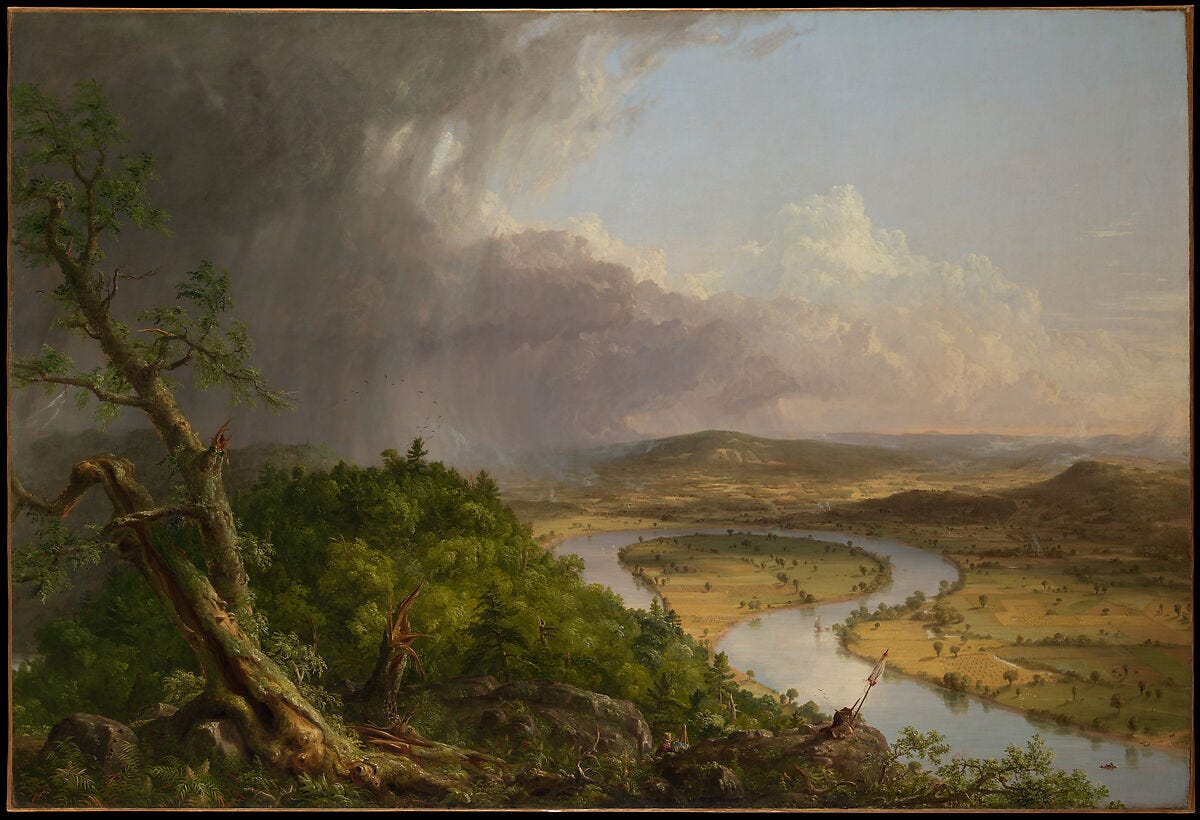
Throughout this series, we’ve traveled the world and witnessed tragedies, discoveries, and inventions left in the wake of the largest recorded volcanic eruption. We’ve examined how a natural disaster could be a catalyst for events that would shape human history, such as the establishment of the Golden Triangle (still today a major center of the narcotics trade), or the creation of a novel that launched the science fiction genre. Tambora forced scientists to reevaluate how climate was studied, and compelled millions to adopt more effective methods of food preservation.
What about the regions that didn’t face extreme weather? As I noted earlier in this series, different areas of the world experienced varying levels of impact after Tambora’s eruption. Russia managed to escape the worst of it, and Russian grains played a key role in preventing population collapse in Europe.
Across the Atlantic, the United States’ East Coast was bludgeoned by unforgiving freezes. Instead of “the Year Without a Summer,” the notorious year of 1816 lived on in New England folk memory as “Eighteen-Hundred-and-Froze-to-Death.”
But beyond the Appalachian Mountains, the frontier largely avoided Tambora’s wrath—with profound consequences for the westward expansion of the United States.
Weather was a deeply personal matter to the fledgling nation. Not only were most Americans farmers, but the emerging patriotic vision of the country was that of an agrarian republic of Edenic abundance. Since the nation’s founding, weather had generally improved, leading to an attitude of “climate boosterism” among its people. After traveling throughout the US in the early 1800s, geographer Constantin-François Volney reported:
I have collected similar testimonies in the whole course of my journies [sic] … On the Ohio, at Gallipolis, Washington (Kentucky), Frankfort, Lexington, Cincinnati, Louisville, Niagara, Albany, everywhere the same changes have been mentioned and insisted on. Longer summers, later autumns, shorter winters, lighter and less lasting snows, and colds less violent were talked of by everybody: these changes have always been described, in the newly settled districts not as gradual and slow, but as quick and sudden, in proportion to the extent of cultivation.1
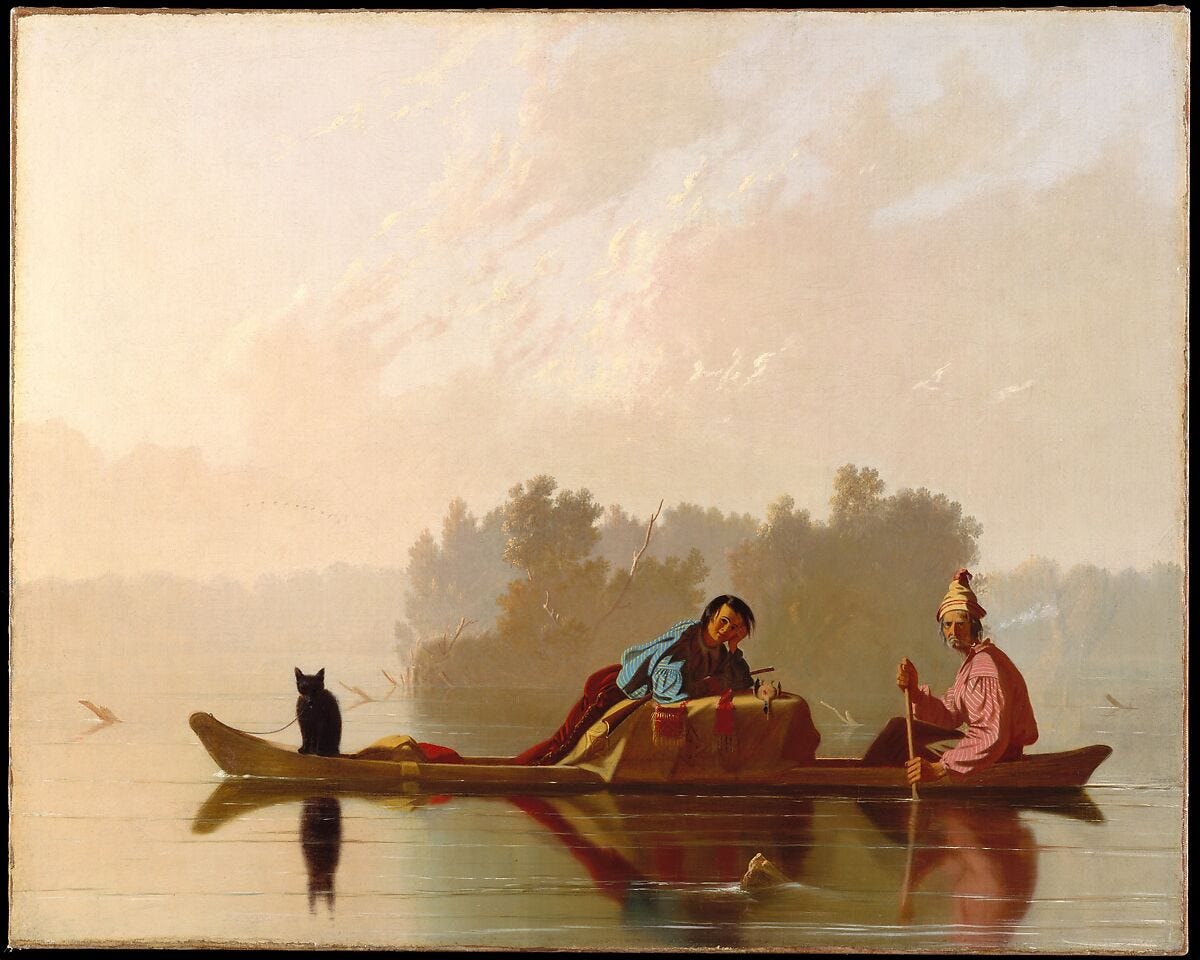
However, the year 1809 launched a period of cooler temperatures, with the eruption of Tambora causing two especially brutal years in 1816 and 1817. In New England, a shocking snowstorm in June of 1816 destroyed farmers’ crops. Hopes of a calmer summer were soon dashed as frosts persisted into September. Many farming families had no choice but to make the treacherous journey across the Appalachian Mountains to what are now the Midwestern states. There, they discovered that the volcanic weather that had overtaken New England never made it past the mountains.
The flat Midwestern prairies proved ideal for farming. In 1817, the volume of grains sold down the Mississippi quadrupled as the suffering New England states were eager to buy flour, and trade with starving European nations boomed. It was also a period during which thousands of European refugees migrated to the United States, so much so that the British Parliament attempted to limit the number of emigrants leaving their ports.
For context, immigration from Europe never surpassed 10,000 per year in the 1790s. In 1817, that number grew to over 22,000, with an additional 10,000 in 1817 and 14,500 in 1818 coming from British Canada. Politicians from frontier states and territories were eager to advertise to these immigrants in the hopes of boosting economic activity. As one Missouri representative put it, “There neither is, nor, in the nature of things can there every be, anything like poverty there. All is ease, tranquility, and comfort.”2
Of course, this flurry of expansion came to the detriment of indigenous tribes, who were pushed further west either by force, by treaties that favored white settlers, or by the spread of diseases.
For the new settlers, the gravy train would soon come to an end. By 1818, climate patterns were returning to normal in areas that had been hit by Tambora’s volcanic weather. As farmers on the East Coast and across Europe recovered, demand for Midwestern grains plummeted.
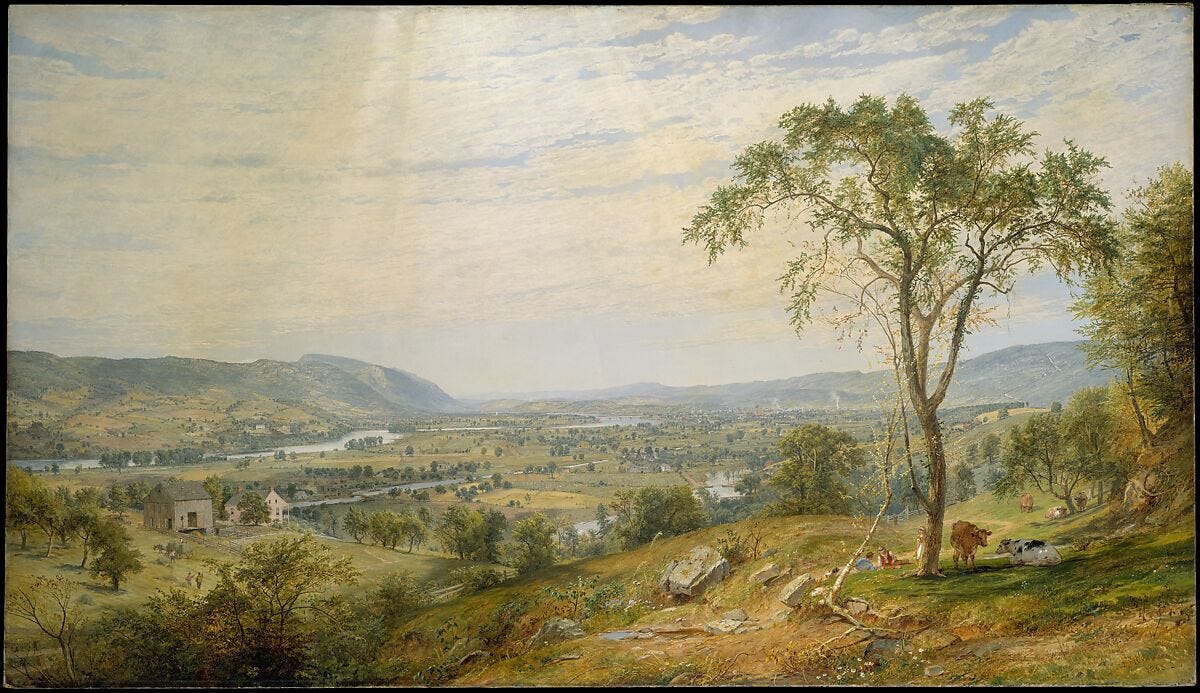
The problem was that at this early stage in American history, many of the land deals on the frontier were brokered with a handshake and backed by letters of endorsements from friends and family rather than cold, hard cash. The country’s national bank was especially irresponsible, issuing $22 million in notes to finance the land boom even though it only had $2 million in reserves. Speculation on the frontier, coupled with the drop in demand in grain, resulted in the Panic of 1819—the United States’ first economic depression.
The consequences were long-lasting. Readers from the US will remember Thomas Jefferson and Alexander Hamilton’s dueling visions for the nation from history class: Jefferson’s agrarian republic versus Hamilton’s economic centralization. While Jefferson’s plantation Monticello floundered during the Year Without a Summer, Hamilton’s ghost was resurrected. Long since dead (he passed in 1804), Hamilton’s ideas promoting a powerful national bank and industrial development proved victorious. Credit was depersonalized, and the government began investing in better infrastructure to transport agricultural goods into urban communities.
Tambora’s 1815 eruption provides us with a unique opportunity to investigate how one event can cause a domino effect that would change the course of history. What if the US never faced any impacts from Tambora? Would the nation be slower to industrialize, and if so, how would that transform its future? The possibilities of alternate realities seem endless.
Despite the fact that it would be another hundred and fifty years before the connection to Tambora was discovered, “Eighteen-Hundred-and-Froze-to-Death” endured in the minds of Americans. In 1924, meteorological historian Willis Milham said of the year 1816, “If all the statements in climatologies, in books on the weather, in biographies, in histories, and in the periodical literature were collected, they would form a sizable volume.”3
Indeed, Mary Shelley’s “wet, ungenial summer” would leave a tangled web of events whose threads stretched long into the future, and whose trials would survive in the folk memory of people around the globe.
Gillen D’Arcy Wood, Tambora: The Eruption That Changed the World (Princeton University Press, 2014), 215.
Wood, Tambora, 218-219.
Wood, Tambora, 199.