

"The Devil Hath Been Raised Amongst Us"
An introduction to the infamous Salem Witch Trials, which took New England by storm in 1692.

This essay is the first in a series on the Salem Witch Trials.
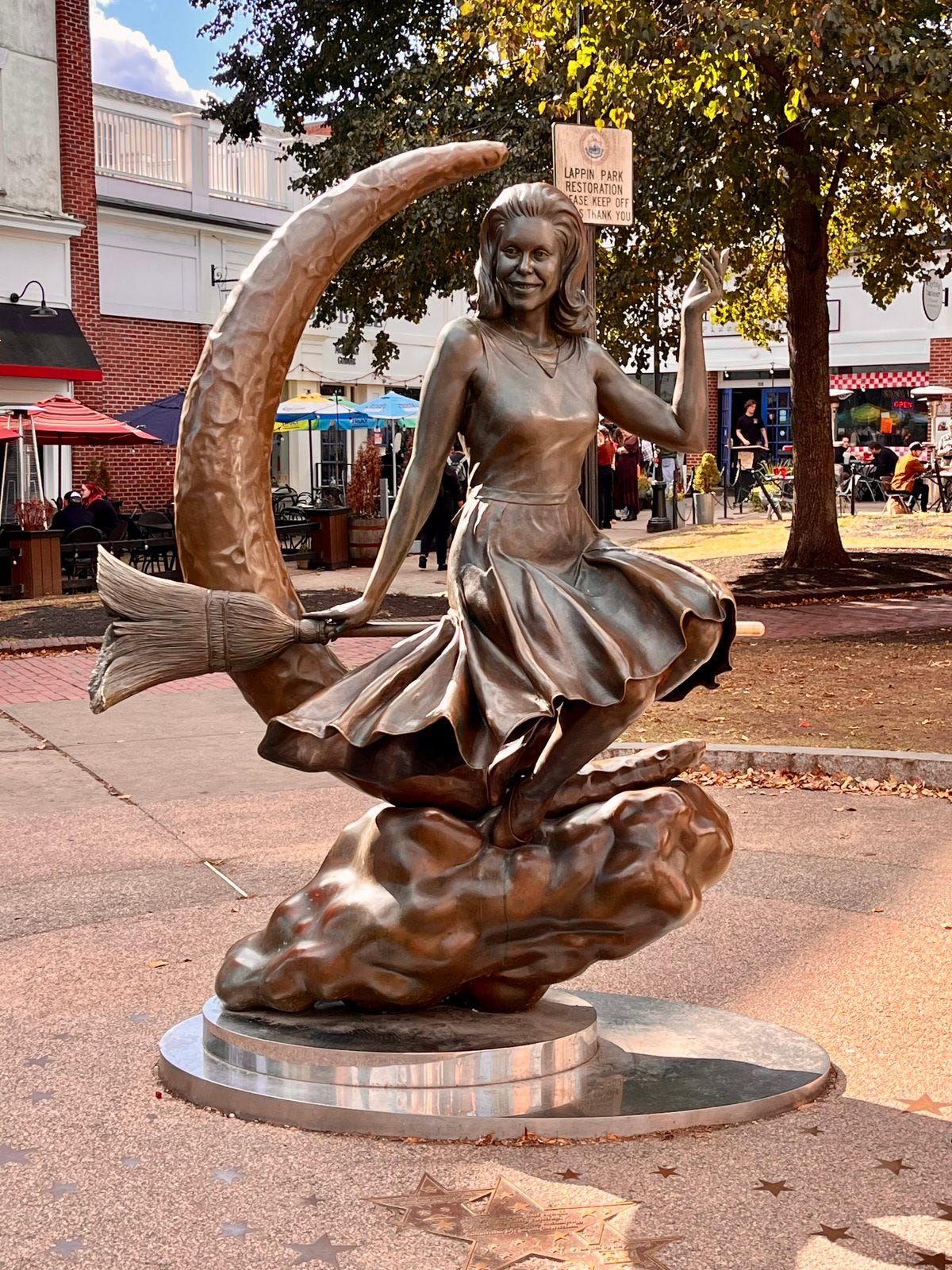
In the center of Lappin Park, a small oasis in Salem’s bustling downtown, visitors will find a witch.
There are lots of witches in Salem, you might be thinking. But this witch is a bronze statue: a coifed 1960s housewife riding a broom. A crescent moon stands in the background.
She can only be Samantha Stevens, played by Elizabeth Montgomery—the protagonist of the hit television sitcom Bewitched. The statue was erected in 2005 to commemorate eight special episodes of the show that were filmed in Salem in 1970. The statue divided residents of the city, with some feeling that Salem’s “Witch City” branding trivialized the brutal history of its witch trials.1
Witch trials were a ubiquitous scourge in early modern Europe, so perhaps it’s not surprising that the phenomenon would reach the New World via British colonizers. The Salem Witch Trials are not the largest, nor the deadliest trials in history. But when we conjure images of monstrous judges and conniving accusers, many of us don’t think of Trier in 1581, or Edinburgh in 1590, or Cologne in 1626. First, we think of Salem. It’s a history that the people of Massachusetts spent centuries trying to forget.
Despite efforts by the victims’ families to properly memorialize their ancestors, local leaders wrung their hands about what to do—should there be some kind of memorial? Couldn’t they just pretend it never happened?
The shift came in the mid-20th century, thanks to the publication of Marion Starkey’s The Devil in Massachusetts (1949), a bestselling nonfiction account of the trials, followed by Arthur Miller’s hit play, The Crucible (1953), which served as an allegory for the Red Scare and the McCarthy Trials. In 1966, the Parker Brothers board game company (of Monopoly fame) bought the rights to make Ouija boards. At the time, their factory was based in Salem, and their location provided powerful marketing for the spooky game.2
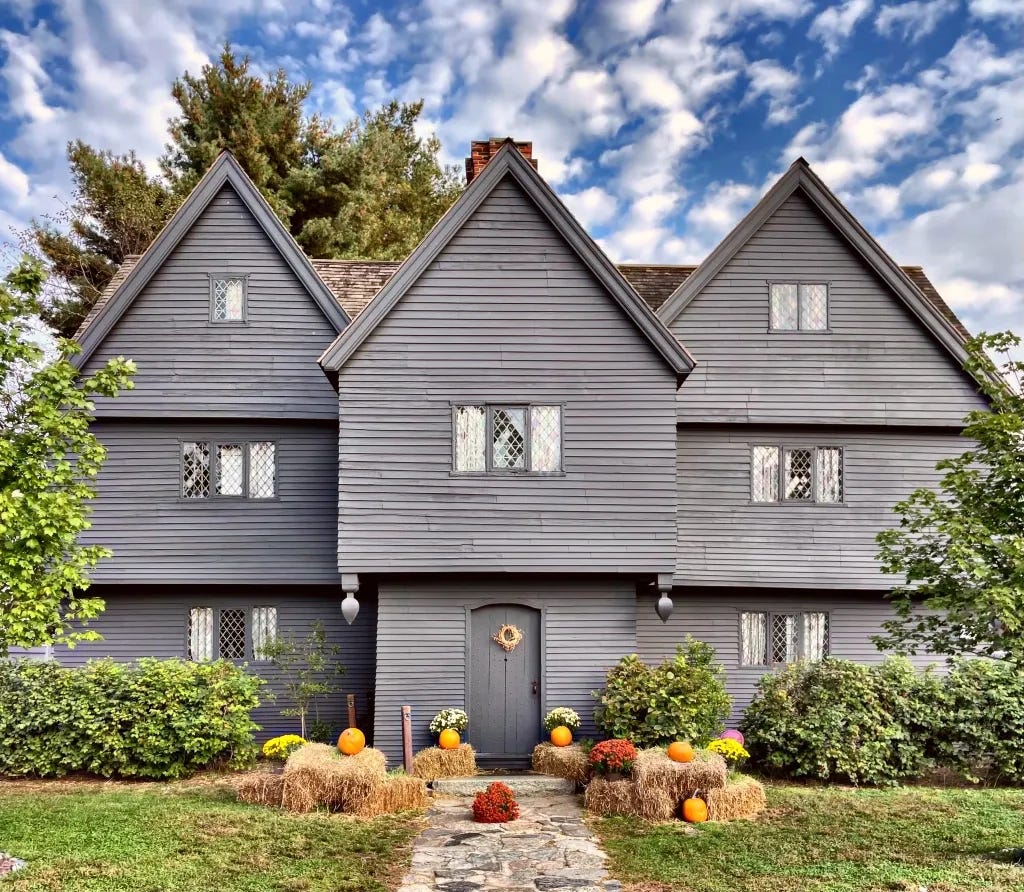
When Bewitched premiered its Salem episodes four years later, the moniker of “Witch City” became permanent, and Salem saw a massive increase in tourism. Once a struggling post-industrial city, Salem has been buoyed by “witch tourism,” complete with occult shops, ghost tours, psychic parlors, and of course, Haunted Happenings—the month-long extravaganza that takes flight every autumn. Last year, Salem received a record 1.2 million visitors during the month of October alone.3
I don’t blame the city for using its history, however morbid, to bring in revenue. I myself have always wanted to visit Salem during October, and if any of you have had the chance, just know that I am jealous. Today, the city does have a proper memorial at Proctor’s Ledge, the site beneath Gallows Hill where the actual executions took place. But it is important to remember the very real pain and human loss—not just in Salem, but all of the witch trials that tore communities apart during this turbulent period of history.
Over the next few weeks, we will get to know the judges, accusers, and victims who populate this tale. But first, let’s go back to 1692 and explore the events that launched the trials.
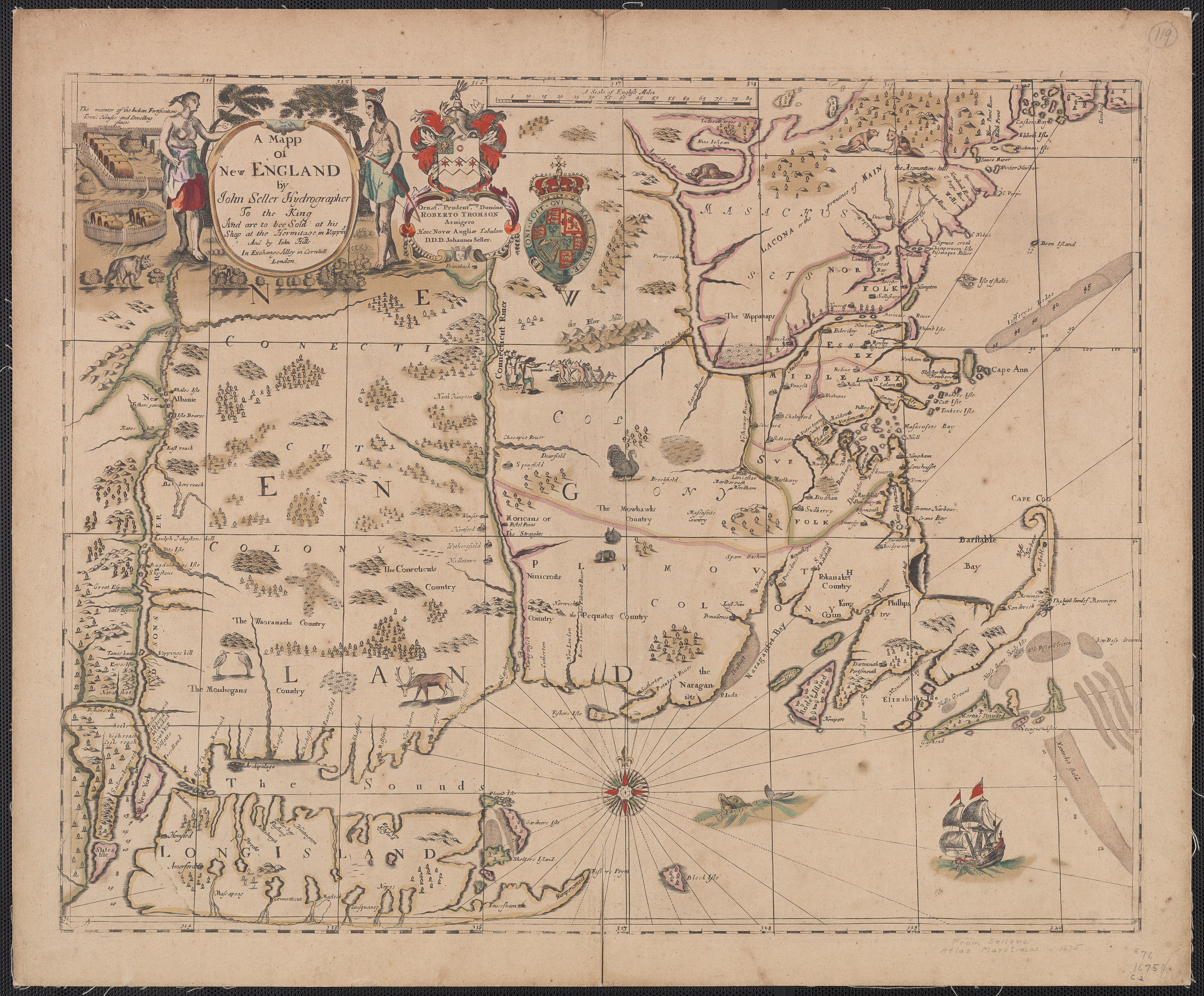
The trials and executions took place in the city of Salem, what was then known as Salem Town. What the costumed revelers in modern Salem might not know is that the the first accusers actually came from the nearby Salem Village—in 1752, it received the new name of Danvers. Salem Town was an affluent port city, an essential site of trade and commerce for the fledgling British colonies. Salem Village was poorer, and its occupants were mainly farmers.
The New England colonies were originally settled by the Puritans, a strict sect of English Protestants who wished to purify the Church of England from Catholic influence. While many Puritans felt they could accomplish this goal from within the Anglican Church (and subsequently, chose to stay in England), others felt that Anglicanism was beyond saving. These “separatists” came to the New World aboard the Mayflower in 1620 and settled in what is now Massachusetts. Those wretched Anglicans could keep Jamestown and the Chesapeake Bay—the Puritans would build a shining City Upon a Hill, and realize the Kingdom of God here on earth.
Or so they thought. As we’ll explore in future essays, the Puritan regime was short-lived. With more immigrants leaving England for economic opportunities in the New World, the English government took greater interest in managing her colonies, and it would soon wrestle control from Puritan leadership. In May of 1692, just a few months after the initial outbreak of the trials, Increase Mather would return to Massachusetts from England with the colony’s new royal charter—and the news that the Crown, not Puritan church leaders, would appoint future governors.4
It was in January of that year that Satan would make his presence known in Salem Village. Betty Parris (the daughter of Reverend Samuel Parris) and her cousin Abigail Williams were bewitched.
Arthur Miller’s The Crucible portrays the girls as sexually-repressed young women, and Abigail in particular as a vengeful manipulator who accuses her ex-lover’s wife of witchcraft. This is pure fiction. In reality, they were little girls—Betty was merely nine, and Abigail was eleven.
Reverend Parris and his wife Elizabeth were deeply concerned by the girls’ strange behavior. They seemed ill with fits, and their guardians feared it was one of the many diseases that plagued the early colonists. But after several weeks, Reverend Parris began to suspect that something sinister was afoot. The Puritan minister called upon trusted friends, including Reverend John Hale of Beverly, to see to the girls. Reverend Hale observed:
These children were bitten and pinched by invisible agents; their arms, necks, and backs turned this way and that way, and returned back again, so as it was impossible for them to do of themselves, and beyond the power of any epileptic fits, or natural disease to effect. Sometimes they were taken dumb, their mouths stopped, their throats choked, their limbs wracked and tormented so as might move a heart of stone, to sympathize with them, with bowels of compassion for them.5
On Thursday, February 25th, Reverend Parris and his wife Elizabeth went to a nearby village to attend a sermon. While they were gone, their neighbor Mary Sibley told Tituba and John Indian, an indigenous couple who were enslaved by the Parrises, to make a witch cake.
Here, we have some old folk magic—the kind of practice that straddled the line in prior centuries, but was deemed suspicious at best by the early modern period. How does one make a witch cake? Bake a loaf of rye bread mixed with the urine of the bewitched, and feed it to the family dog, who would lead them to the culprit.6 The girls suddenly cried out the name of their tormenter: Tituba.
Mary Sibley wasn’t safe, either. It didn’t matter that she was practicing benevolent magic—it was still magic. Reverend Parris would publicly reprimand her in front of his congregation, warning them: “By this means (it seems) the devil hath been raised amongst us, and his rage is vehement and terrible, and when he shall be silenced, the Lord only knows.”7
The same day that Tituba and John Indian made the witch cake, two other girls from the village were deemed bewitched: Ann Putnam Jr., the daughter of Thomas Putnam and Ann Putnam Sr. (strong supporters of Reverend Parris), and seventeen-year-old Elizabeth Hubbard, a maid for her aunt Rachel Griggs. Rachel’s husband, Dr. William Griggs, was likely the doctor who tended to Betty and Abigail.
While Betty and Abigail claimed that Tituba’s “specter” had attacked them, Ann and Elizabeth named different witches: the specters of Sarah Good and Sarah Osborne were the ones who tortured them. Good was a married but poor, elderly woman known for her foul temper; Osborne was a bedridden widow who had caused a scandal when she bought the contract of the indentured servant Alexander Osborne and promptly married him.
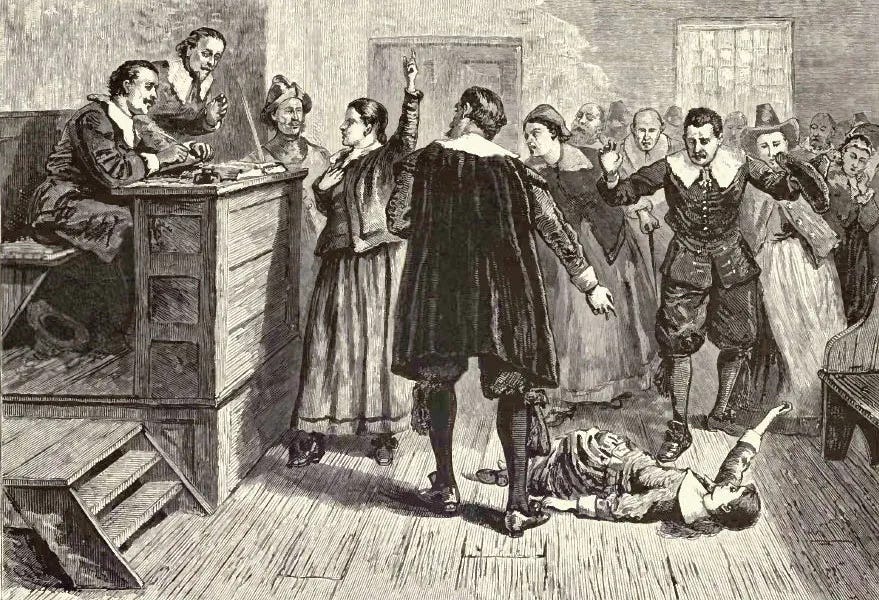
Legal proceedings began on February 29th in Salem Town, with local magistrates Jonathan Corwin and John Hathorne (the ancestor of Nathaniel Hawthorne) overseeing the trial. Good and Osborne denied their guilt. As they were questioned, the four bewitched girls writhed and cried, claiming that the witches’ specters were attacking them.
It was believed that a witch’s specter, or disembodied spirit, could leave her body and invisibly attack her victims. Just a decade before, Governor Simon Bradstreet of the Massachusetts Bay Colony had overturned a guilty witchcraft verdict with the Court of Assistants. That case also relied on “spectral evidence,” which Bradstreet knew to be a slippery slope.8 But the Salem magistrates were swept up in the hysteria.
It was Tituba’s confession that would rock the court. Over several sessions of questioning, Tituba’s testimony remained eerily consistent: first, the Devil appeared before her, alongside Good and Osborne, and three witches from Boston whom she did not know. They were the ones hurting the young girls. Satan said he would kill the girls if Tituba didn’t attack them with her specter. He sent various animals, diabolical minions, to coerce her. Then, Tituba was forced to ride “upon a stick of pole” with Osbourne and Good. The witches blinded her, used magic to keep her from speaking about their malevolence, and in the end, Tituba was compelled to sign the Devil’s book. Most ominously, she revealed that she saw nine names written within its pages.9
Nine witches. This meant that others were hiding in Salem, perhaps all over Massachusetts. In the feverish court room, the people of Salem were faced with a ghastly prospect: the witch trials were only just beginning.
Anthony Brooks, “Salem Residents Oppose Planned ‘Bewitched’ Statue,” NPR, May 5, 2005, https://www.npr.org/2005/05/05/4632488/salem-residents-oppose-planned-bewitched-statue.
“The Parker Brothers of Salem, Mass. Build a Game Empire,” New England Historical Society, https://newenglandhistoricalsociety.com/parker-brothers-of-salem-mass-build-game-empire/.
Scott Souza, “Salem Halloween 2023: Record 1.2 Million Visitors Invade Witch City In October,” Patch, November 1, 2023, https://patch.com/massachusetts/salem/salem-halloween-2023-record-1-2-million-visitors-invade-witch-city.
Michael P. Winship, Hot Protestants: A History of Puritanism in England and America (Yale University Press, 2018), 280.
Emerson W. Baker, A Storm of Witchcraft: The Salem Trials and the American Experience (Oxford University Press, 2015), 14-15.
Baker, A Storm of Witchcraft, 15.
Baker, A Storm of Witchcraft, 15.
Winship, Hot Protestants, 282-283.
Baker, A Storm of Witchcraft, 19-20.