

"Utter Ruin and Destruction of This Poor Country"
The Salem Witch Trials have reached a climax. This week, we investigate the judges: who were they, and why did the people of Massachusetts Bay increasingly turn against them?

This essay is part of a series on the Salem Witch Trials.
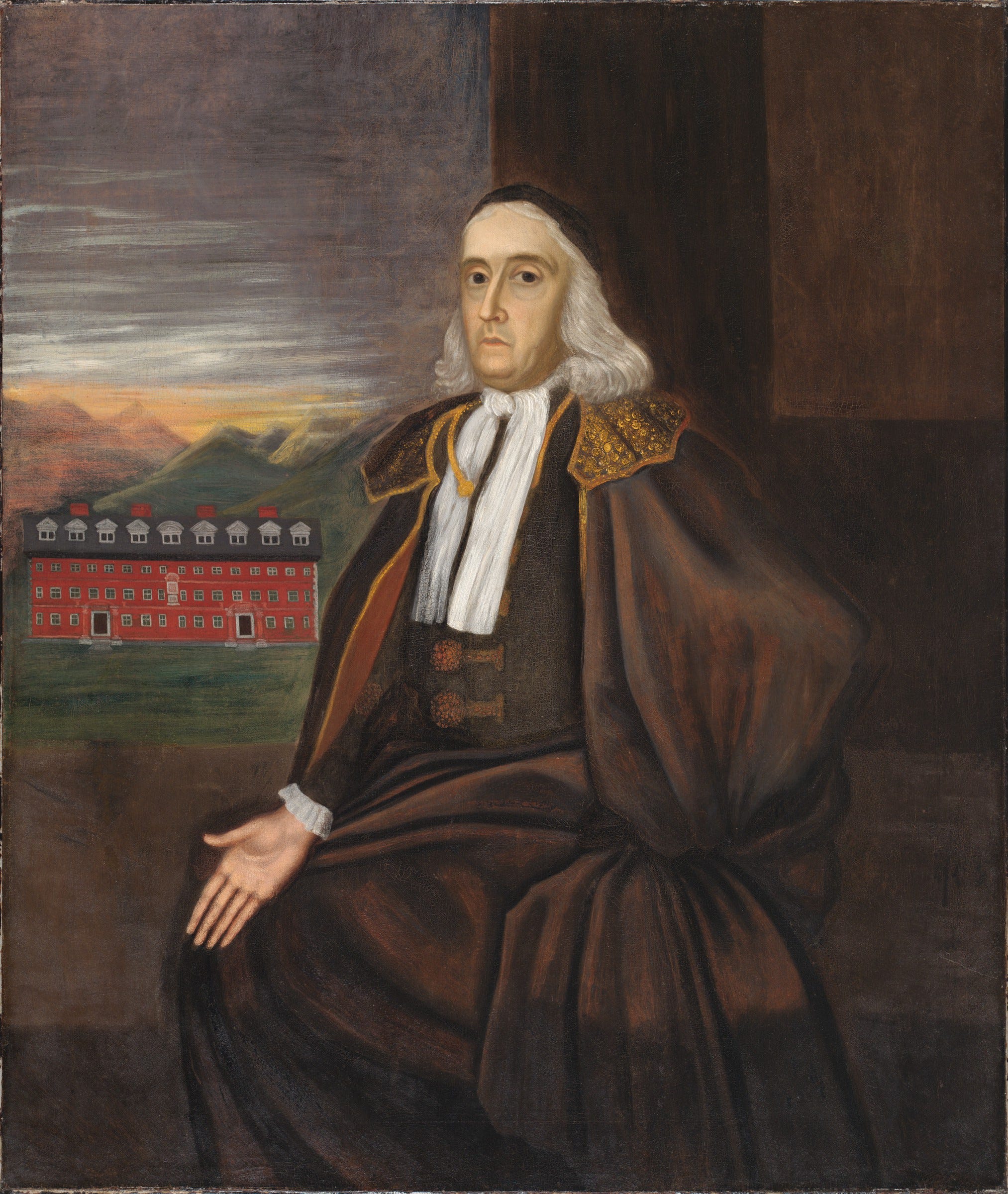
The final group of victims to be executed in the Salem Witch Trials met their end on September 22nd, 1692.
Among them was Martha Cory. Her husband Giles had died several weeks before; when he refused to respond to the Court of Oyer and Terminer’s questioning, they pressed him to death with stones.
One victim who narrowly escaped Martha Cory’s fate was Mary Bradbury, the seventy-year-old wife of Captain Thomas Bradbury. At her trial, her minister James Allen testified that her character was unimpeachable, her devotion to her faith unquestioning. In her defense was a petition signed by 118 friends and neighbors attesting to her virtue.1 Nevertheless, she only survived because loyal supporters helped her to flee from prison.
By now, rumblings of discontent were spreading throughout the Massachusetts Bay Colony. A clear pattern had emerged: those who were executed all denied the charges against them, while the confessed witches survived. Additionally, the accusations had now reached the upper-crust of society. (Surely Mary Bradbury couldn’t be a witch?) The judges’ acceptance of spectral evidence angered many people. The Devil was a well-known trickster—perhaps he was purposefully confusing members of the public?
One clergyman determined to end the madness was Increase Mather. Mather was the most influential Puritan minister in the colony, and the president of Harvard College. He had been in England when the witch trials began. He returned on May 14th, 1692, armed with the official documents for the colony’s royal charter, only to find that all hell had broken loose in his absence.2
Mather was extremely skeptical of spectral evidence. To be clear, he firmly believed in the existence of witches, as most people did in 1692. But he was aware of the dangers of relying on alleged specters for convictions, and he saw the need to intervene. Given the enormity of his influence, he was also the perfect person to do so. No one was going to execute Increase Mather on charges of witchcraft.
In early October, Mather presented Governor Phips with a manuscript called Cases of Conscience Concerning Evil Spirits.3 It had been signed by fourteen ministers, and many of them preached from the pulpit with its message of wariness toward spectral evidence. In Mather’s words, “It were better that ten-suspected witches should escape, than that one innocent person should be condemned.”4
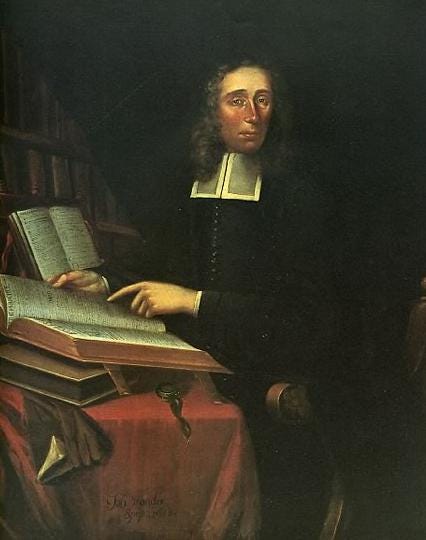
Despite a recent ban on publications regarding the trials (Governor Phips curtailed freedom of speech to control the chaos, with little success), more and more ministers added their voices in support of Mather. Ironically, one of the few voices who wrote in support of the judges was Increase Mather’s son, Cotton. At the age of twenty-nine, Cotton Mather published The Wonders of the Invisible World with the motivation to rescue the colony’s Puritan government. Admitting to the execution of nineteen innocent people, along with five dying in prison and one pressed to death, would destroy the legitimacy of Puritan leadership.
On October 26th, the General Court debated a bill that would essentially state a vote of no confidence regarding the Court of Oyer and Terminer. The bill warned that to continue with the trials (over one hundred people still waited in jail) would lead to “utter ruin and destruction of this poor country.” The bill passed, but barely: the margin was thirty-three to twenty-nine.5
While this was a formal rebuke of the Court of Oyer and Terminer, only Governor William Phips had the authority to disband it. He finally did so at the beginning of November.
What changed his mind?
Well, the fact that his wife had just been accused of witchcraft probably helped him to see the light.6
We are nearing the end of this series, and so far, we’ve met a whole host of characters. The accusers, the accused, colonial leaders, and crazed ministers have all populated our tale.
But there is one group of people who have hovered over these wicked proceedings—one group who held the fate of innocents in their hands, and crushed them under the weight of authoritarian fists. The judges.
We’ve learned this lesson time and time again: witch trials don’t happen in a vacuum. Everyone has a backstory. What was theirs?
To say that the men on the Court of Oyer and Terminer were “merchants” would be a vast understatement. They were the elite of the Massachusetts Bay Colony, the wealthiest cohort of society. They were powerful land owners, magistrates, military leaders, and businessmen. Crucially, their families were deeply connected.
Many scholars have ignored the importance of kinship ties among the judges. But as historian Emerson W. Baker points out:
In a time before banks and insurance, trade, credit, and risk operated on a very personal level. The most successful merchants were those with kinship connections in ports throughout the Atlantic world. Family members and business partners would pool resources to share in ownership of ships and overseas ventures, thus preventing a catastrophic loss by any one investor. Strategic marriages strengthened these business partnerships and solidified merchant networks.7
John Hathorne and Jonathan Corwin were both the sons of militia officers and magistrates; like their fathers, they would also become important political leaders. Chief Justice William Stoughton was the lieutenant governor of the colony, second only to William Phips. With the exception of Nathaniel Saltonstall, who left the court after a few weeks, the other judges were all either related through marriage or connected in business: members of the court included John Richards, Wait Winthrop, Samuel Sewall, Bartholomew Gedney, and Peter Sergeant.
Another significant similarity that they shared was an elite education geared towards ministry. Five of the judges attended Harvard, yet none of them became ministers. Other than Sergeant, they were all members of the second generation who only attained full church membership because of the looser (and controversial) Halfway Covenant. Therefore, like many in their generation, they had reason to feel anxious about their spiritual devotion. Sewall wrote in his diary of his “sinfulness and hypocrisy” for choosing the life of a businessman. Stoughton was repeatedly asked to become a minister for his hometown of Dorchester, but he refused on the grounds that he felt he wasn’t up to the task.8
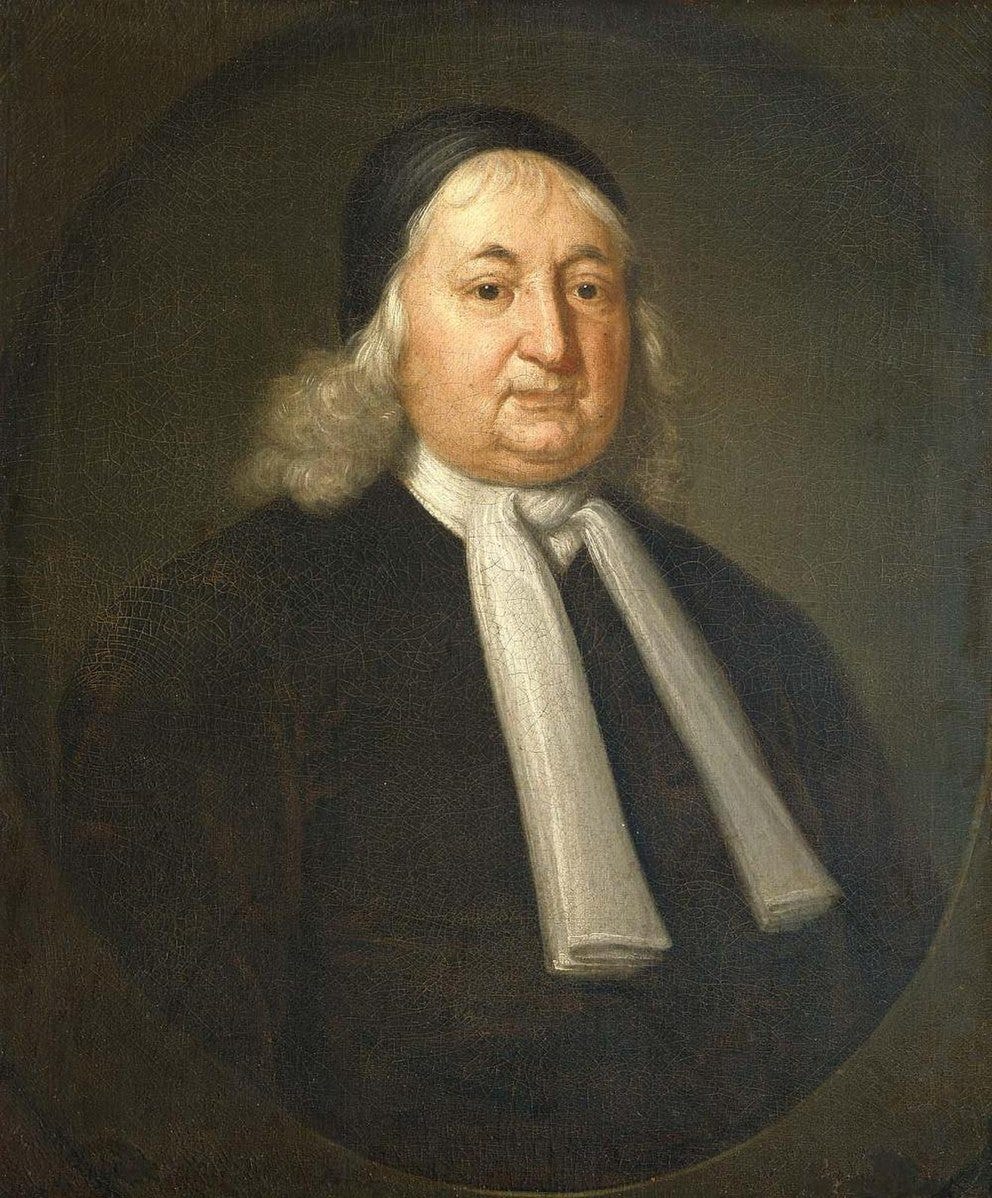
If these men worried about their religious purity, the colony’s woes didn’t help. As the leaders of Massachusetts Bay, they were up against an angry, battle-hardened electorate. Knowing that their constituents blamed them for military and economic setbacks likely motivated the judges to appease the public by any means possible.
And then, there were the pirates.
In January 1690, two years before the Salem Witch Trials, the Court of Assistants found ten men guilty of piracy. Thomas Pound’s crew had stolen several vessels, killed and wounded a few soldiers, and generally wreaked havoc on the New England coast during a time of war on the frontier, when local militias were already stretched thin. Several of the Salem judges, including Winthrop, oversaw the trials.
Only one pirate was executed, and the others got off with measly fines. Pound himself skated by with no charges. The colonists were outraged. How could violent criminals go free?
It helps to be a pirate with connections. Winthrop’s sister-in-law was the sibling of one of the pirates, and she begged Winthrop to intervene on the crew’s behalf. After her husband (Winthrop’s brother) died, she married John Richards—another Salem judge.9 These are the tangled familial bonds that Emerson referenced. Due to the debacle of the piracy case, the judges were eager to appear punitive when the Salem Witch Trials began. Not only that, but their web of family ties motivated their harsh decisions: if one judge went down, it was possible that he could take the others with him.
This desperation is palpable in how they carried out the trials. Rather than acting as neutral figures, they behaved as prosecutors, assuming the “witches” were guilty before they could be proven innocent.
Their actions were driven by the fear that their power—and by extension, Puritan rule in a rapidly-changing Massachusetts Bay—would come to an end. Instead, their overzealousness hastened Puritanism’s decline in Colonial America. Next week, just in time for Thanksgiving, we’ll see how the witch trials finally ended, and their broader impact on the future of the United States.
Related from The Crossroads Gazette:


Emerson W. Baker, A Storm of Witchcraft: The Salem Trials and the American Experience (Oxford University Press, 2015), 37-38.
Michael P. Winship, Hot Protestants: A History of Puritanism in England and America (Yale University Press, 2018), 280.
The full title was Cases of conscience concerning evil spirits personating men, witchcrafts, infallible proofs of guilt in such as are accused with that crime. All considered according to the scriptures, history, experience, and the judgment of many learned men.
Baker, A Storm of Witchcraft, 196.
Winship, Hot Protestants, 288-289.
Winship, Hot Protestants, 289.
Baker, A Storm of Witchcraft, 162.
Baker, A Storm of Witchcraft, 170-172.
Baker, A Storm of Witchcraft, 177.