

Gustav Klimt's Dance with Death
On the eve of world war, Klimt painted "Death and Life," a masterpiece whose themes still resonate today.

In case you missed it, Crossroads has received a small makeover, including new logos and a revised name. You can learn more about it here.
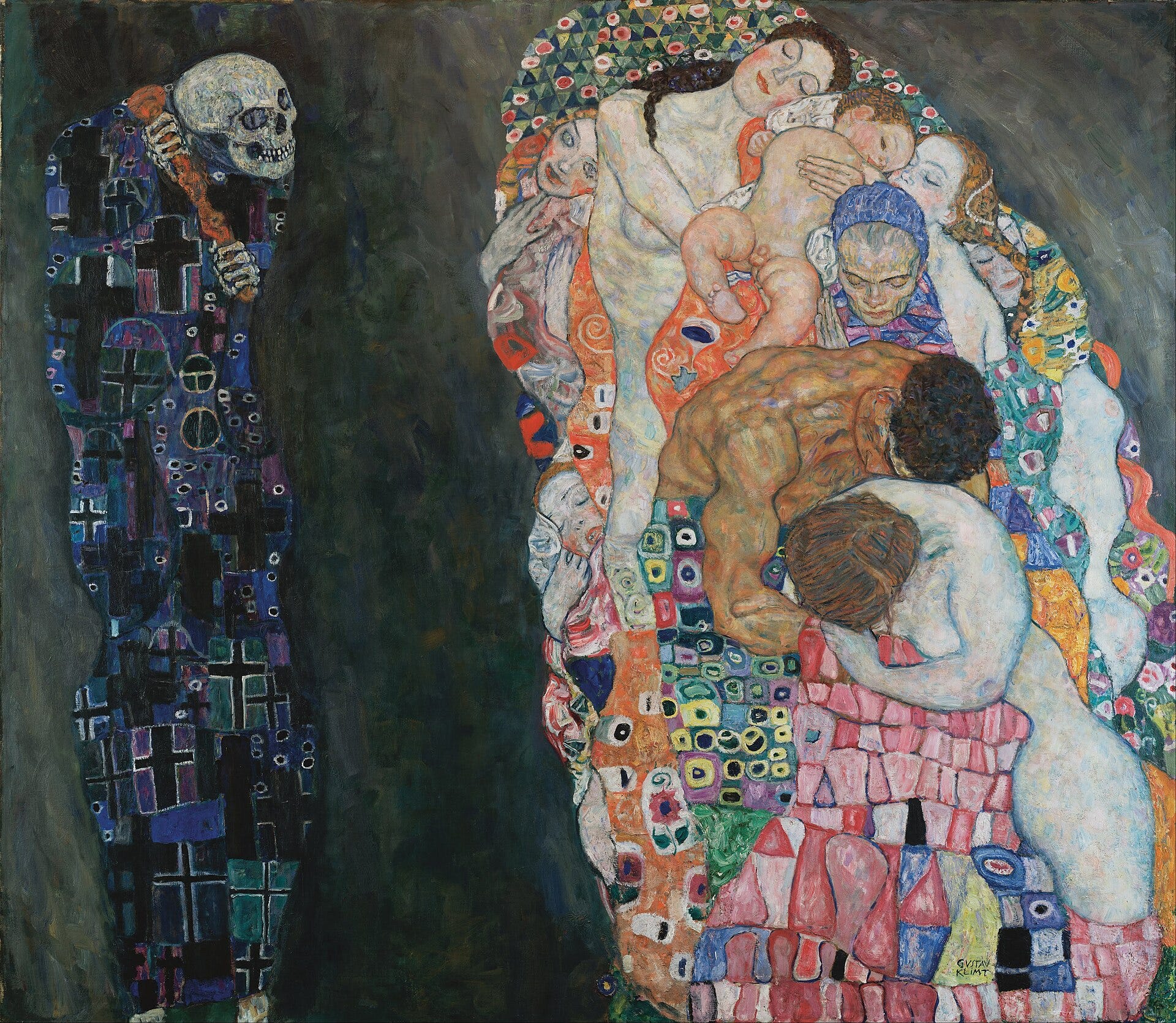

In 1911, Gustav Klimt debuted Death and Life at the International Art Exhibition in Rome. The painting won first prize, and to any outside observer, it appeared that Klimt had reached the peak of his career: the artist had navigated the rise and fall of the Vienna Secession, weathered the outrage surrounding his erotically-charged work, and could now take his place at the pinnacle of Art Nouveau.
Death and Life still resonates deeply with audiences. I would know—shortly before Christmas, I posted a Note featuring the painting on Substack, and it received thousands of interactions. Many of my newer readers discovered my newsletter thanks to Klimt’s painting.
But that version of Death and Life, which hangs in the Leopold Museum in Vienna, is not what viewers would have seen at the 1911 exhibition.
_-_1910-11.jpg)
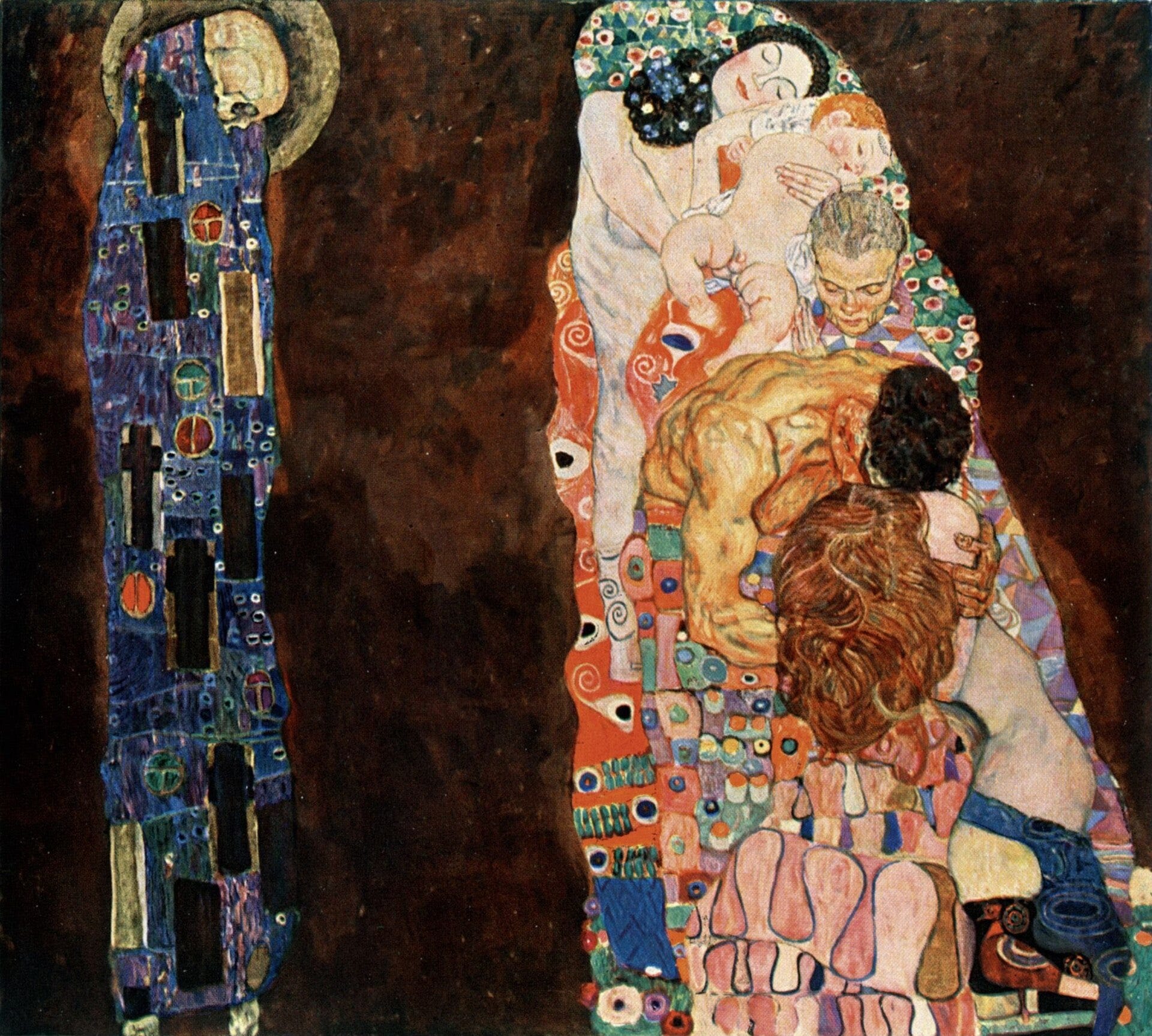
This painting exists now only as a faint memory, buried beneath layers of paint. It is thanks to a 1913 color reproduction in the magazine Kunst für Alle (“Art for All”) that we even know what the original looked like.
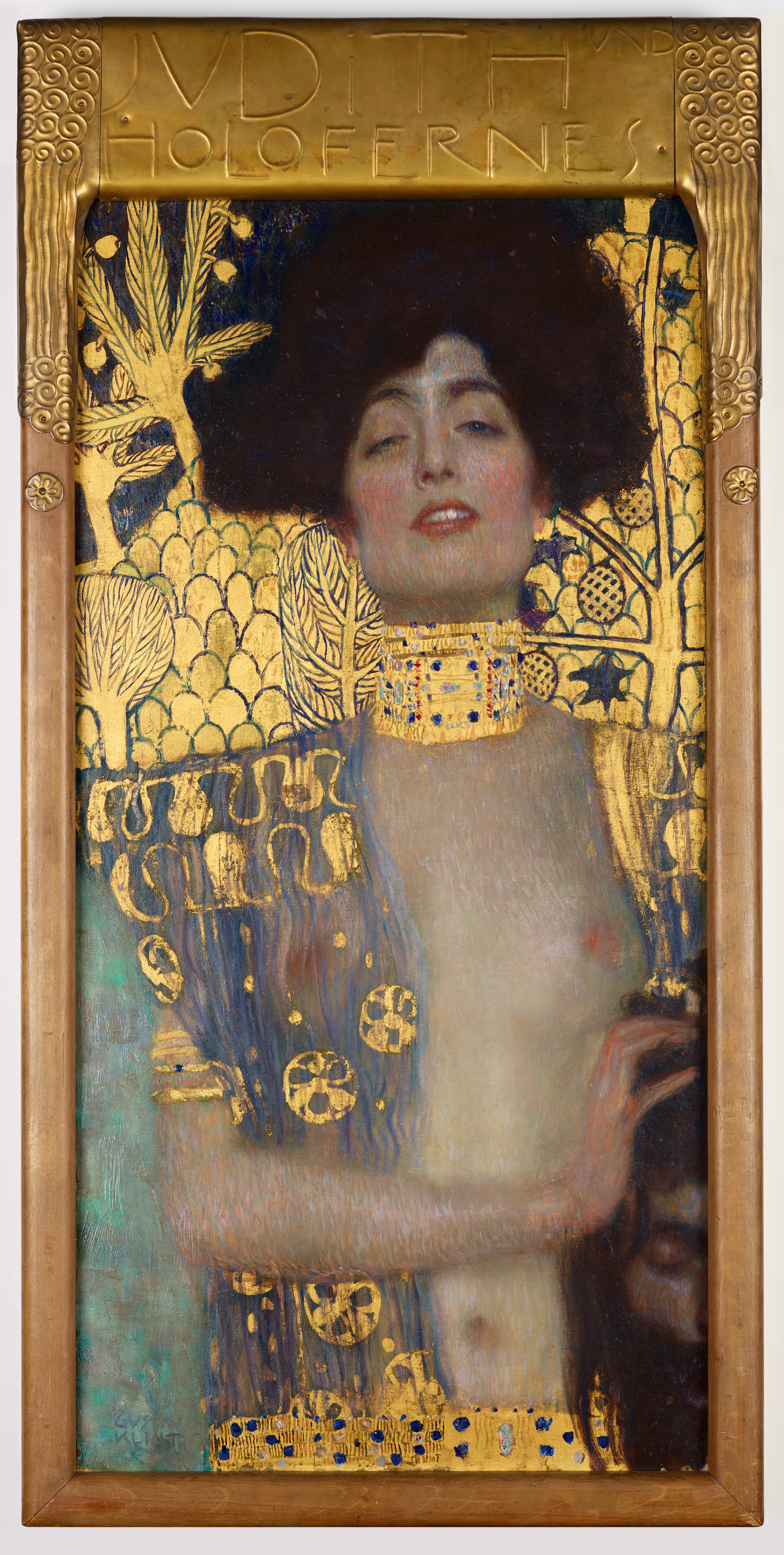
The first version of Death and Life emerged at the tail end of Klimt’s “Golden Period,” named for his use of gold leaf in some of his most famous works, including The Kiss (1907-1908), Portrait of Adele Bloch-Bauer I (1907), and Judith I (1901). Klimt’s father was a Bohemian gold engraver, and Klimt would have followed in his father’s footsteps were it not for his obvious talent as a draftsman—a skill that would motivate his decision to enroll in the Kunstgewerbeschule (School of Arts and Crafts) at fourteen. His use of gold leaf in his paintings was not only an homage to the early training he received from his father, but a nod to Byzantine and medieval artistic traditions.
Klimt’s portrayal of Death in the first version of Death and Life embodies this style; Death is a somber figure, head bowed, surrounded by a golden halo. Delicate gold flakes warm the background of the image, though already, Klimt was using far less gold when compared to many earlier works. On the right, a cascade of dreaming figures at various stages of life remain blissfully unaware of Death’s presence.
Despite the overwhelming acclaim Klimt received for this work, the artist was navigating a difficult period in his life. He was still reeling from the rupture of the Union of Austrian Artists, the group he had co-founded in 1897 as a radical stance against the stuffy, conservative Association of Austrian Artists.
Similar to the plight of the Impressionists in 1874, young Austrian artists found that the Association possessed little patience for Art Nouveau, and breaking through as up-and-coming talent was an uphill battle. But by 1905, the Union of Austrian Artists, otherwise known as the Vienna Secession, was falling apart. Divisions surfaced between those who felt that they should focus on painting, and those (like Klimt) who insisted on the equal elevation of decorative arts. That year, Klimt, along with graphic artist Koloman Moser and architects Josef Hoffman and Otto Wagner, left the Union.
Meanwhile, Klimt’s melancholy and existential dread mirrored the aura of impending doom pervasive in Vienna. With the imminent outbreak of the First World War, the fissures within the Austro-Hungarian Empire were growing beyond repair. A city once captivated by modernity, the mysteries of psychoanalysis, and expanding democratic sentiment would now have to see how well they could dance as the floor moved beneath their feet.
In 1914, the empire went to war, and the limp carcass of the Old World was smothered by mustard gas and strangled to death. As the foundations of the country he had once known crumbled around him, Klimt’s style evolved. Leading up to the war, Klimt began moving away from gold leaf, instead embracing elements of French Post-Impressionism and Fauvism, synthesized with his distinctly Viennese explorations of the human psyche. He started painting more landscapes, making ample use of his summer escapes to Attersee.
Then, in 1915, his mother died.
Klimt was extremely close to his mother, Anna. He lived with her until her death; it was a relationship he always treasured, particularly in light of the early deaths of his father and his brother, Ernst.
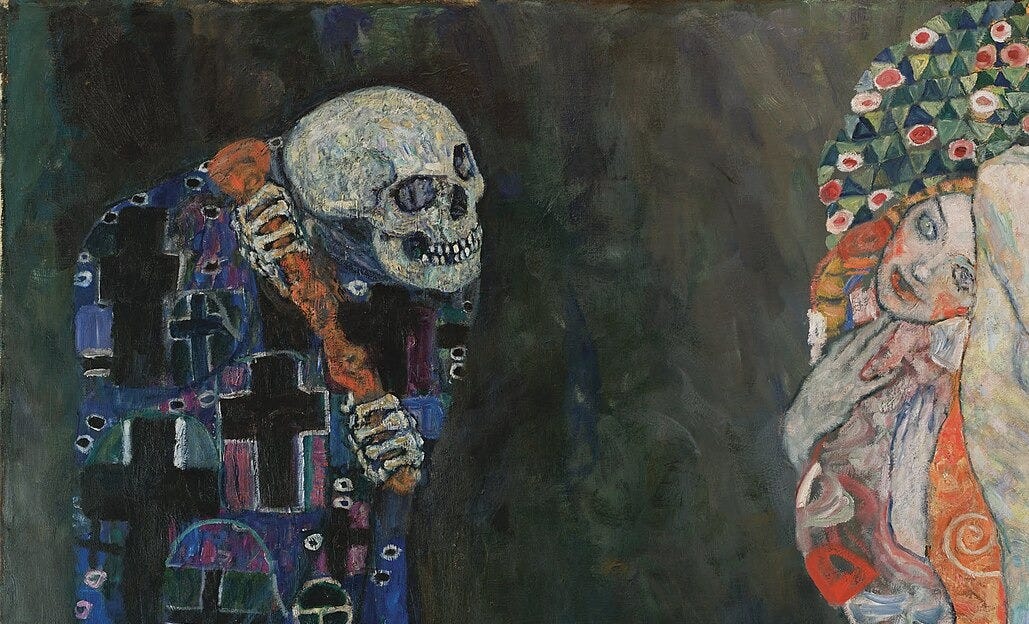
After Anna’s death, Klimt revisited Death and Life. Some of the changes he made were in keeping with the stylistic evolution we’ve explored: he painted over the gold and removed Death’s halo. Life grew in size and importance to the composition. More humans were added to a tapestry of riotous color. With a billowing, ovoid shape, Life became a fragile ecosystem rippling across the canvas.
All of the humans are asleep, each locked within their own subconscious—except for one. Only the woman on the left sees Death with wide eyes.
Though still covered in crosses, Death is no longer the somber saint, the simple eventuality of the original painting. Death stares back at the woman. (Curiously? Menacingly?) He wields not a scythe nor a sword, but a club.
Countless scholars have highlighted this reference to the Danse Macabre, a motif common in medieval art in which Death leads away princes as well as paupers. It was both a political message and a spiritual reminder that death comes for us all.
But what strikes me about Death and Life is the artist’s choice to depict Death holding a club, rather than the traditional scythe. It’s an instrument so primitive and barbaric in a painting that is otherwise modern in its style and psychoanalytical themes. Death’s wielded club seems to remind the viewer not just of the inevitability of dying, but of the underlying savageness from which modernity cannot escape. It’s a message that rings true especially today—the times change, the technology advances, and the world’s overwhelming brutality remains.
Klimt didn’t live to see the end of World War I. He died of pneumonia caused by the Spanish flu, a brutal pandemic that swept through Europe towards the end of the war and eventually killed about 50 million people worldwide. His own dance with death arrived on February 6th: exactly three years after his beloved mother, down to the final day.
Recently on Fireside Fables: The Mystery of Edinburgh’s Fairy Coffins
In the summer of 1836, a group of Scottish boys were hunting for rabbits on Arthur’s Seat, the extinct volcano that overlooks Edinburgh, when they encountered something they couldn’t explain: seventeen tiny coffins hidden in a small cave. Ever since, the coffins have mystified historians and the public.
Were these “fairy coffins” used in an obscure, magical ritual? Were they intended as mimicked burials for sailors lost at sea? Or, could they be related to something far more sinister?
Quite a few of you are new here, so for those who are unfamiliar, Fireside Fables is my new-ish show on YouTube all about folklore and weird history. If you enjoy learning about ghost stories, witches, historical mysteries, and eccentric characters throughout time, then Fireside is for you. I’d love for you to join me!
Thank you for this post sister,
Grace and peace to you!
Wonderful insight and history....