

The Idealism of William Morris
Before founding Morris & Co., William Morris dreamed of establishing a medieval-style artist community. How did he navigate the realities of being an artisan in an industrial age?

In case you missed it, Crossroads has received a small makeover, including new logos and a revised name. You can learn more about it here.
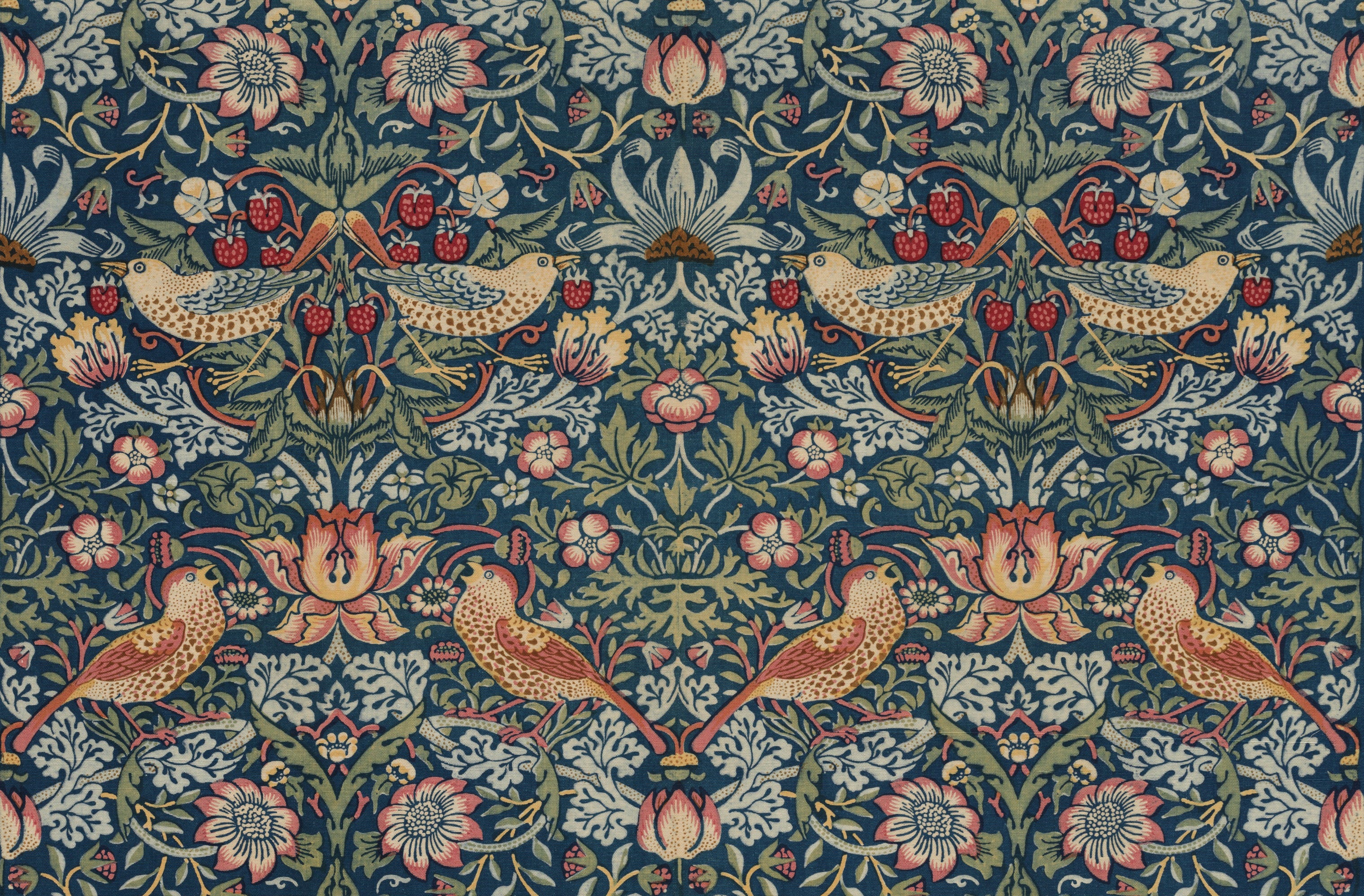
Red House stood in an orchard of apple trees. The land surrounding the estate was once wild, a fairytale setting of rolling hills and meandering streams. Long ago, pilgrims would have passed near the village of Upton on their journey to Canterbury. Peasant farmers would have led their flocks to its meadows.
When the first bricks of the house were laid in 1859, much had already changed. A railway station stood just three miles away. The city of London, ten miles southeast, was ever-expanding, its suburbs steadily encroaching on the countryside like a low-hanging fog.
The city would win in the end. Today, Red House is no longer in Kent but Bexleyheath, a suburb of Greater London. It’s an outcome that its original owner would have abhorred.
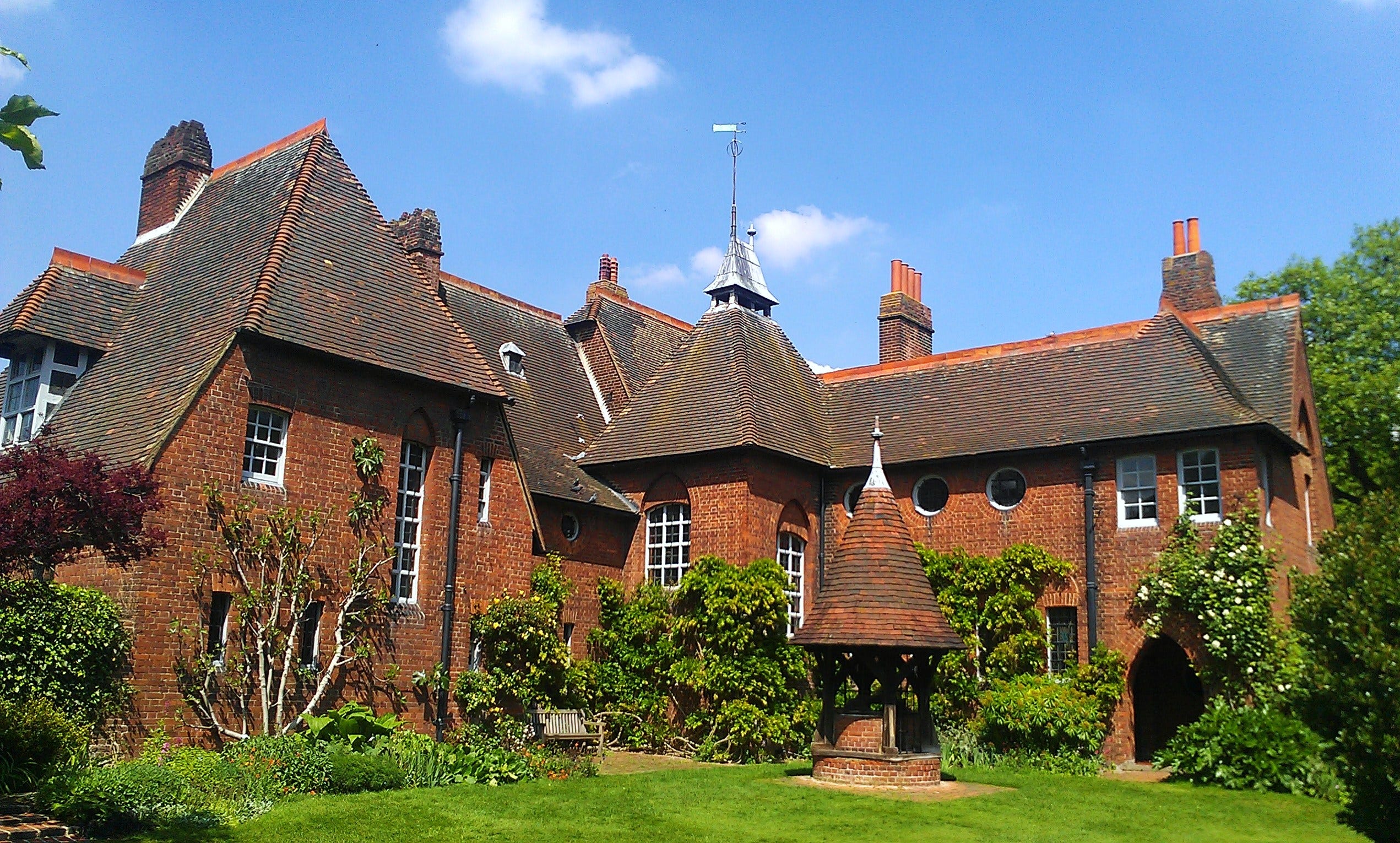

William Morris purchased the land in 1859 after marrying his wife, Jane “Janey” Burden. It was a controversial union; Morris came from a wealthy family (his father was a financier) and Burden was the working-class daughter of a stableman. Burden’s striking looks made her an ideal art model, so she met Morris through their mutual network of artist friends.
Morris, of course, would eventually become one of the most celebrated artists of the Victorian era. His textiles, prints, and illustrations would cement his legacy as the leading figure of the British Arts and Crafts Movement. But when construction began on Red House, Morris was still early in his career and full of idealism.
Morris commissioned his friend, the architect Philip Webb, to build a home that reflected the artistic sensibilities that Morris had developed at Oxford. As a first-year student, he had befriended Edward Burne-Jones, who would later become a prominent artist associated with the Pre-Raphaelite movement. Like many Victorians disillusioned by the rapaciousness of the Industrial Revolution, they had grown passionate about the craftsmanship of bygone eras, particularly the chivalric values, rural communities, and detailed aesthetics of the (highly romanticized) Middle Ages.
Over the years, Morris grew ensconced within a world of rebellious, eccentric artists who rejected the sterility of mass-produced items and elevated the imagery of Britain’s medieval past. The cohort included Dante Gabriel Rossetti, Ford Maddox Brown, Arthur Hughes, and other artists and writers of the Pre-Raphaelite movement.
Morris applied those ideals to the design of Red House: with its unique, asymmetrical structure, steeply pitched roof, and red-brick walls, the house both embraced the increasingly popular Neo-Gothic while using traditional methods of construction, something that Morris and his fellow artists and craftsmen valued a great deal. The final result was the very first building in the Arts and Crafts style. (Philip Webb is now considered the father of Arts and Crafts architecture.)
Morris had big dreams for what the house could represent. While decorating the home, Morris and his wife quickly discovered the challenges of achieving the Arts and Crafts-look in the age of industrialism. They commissioned friends like Rossetti to paint interior murals, and Morris designed most of the decor. Webb contributed his own furniture designs and created stained-glass windows. As a whole, the house was a revolutionary feat: the artists who made it were not just copying Gothic styles, but adapting historical building techniques for the Victorian world.
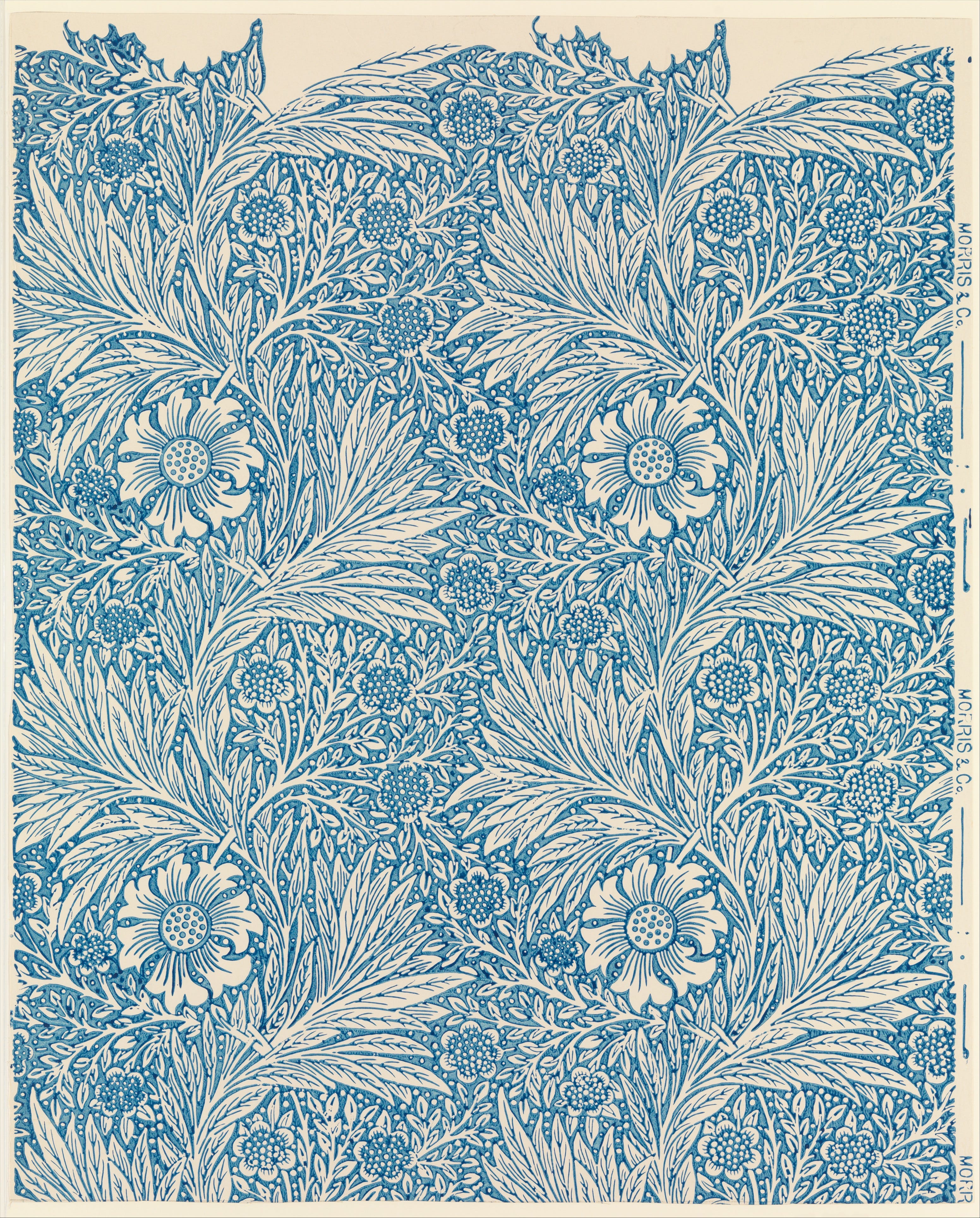
Having worked first as an architectural apprentice and then as a painter for several years, Morris decided that now was the time to take these principles beyond Red House. In 1861, he founded his own decorative arts firm: Morris, Marshall, Faulkner & Co., co-founded with the civil engineer P.P. Marshall and Oxford mathematician Charles Faulkner, who served as the firm’s financial manager. In partnerships with Morris’s Pre-Raphaelite friends, they resolved to produce everything from stained-glass windows to textiles and wallpapers with hand-crafted, traditional techniques.
Morris envisioned a future in which his country estate could serve as the site for an artists’ community, a romanticized take on a medieval village of craftsmen laboring together. With any luck, he and Janey (along with their young daughters, Jenny and May) would spend the rest of their lives surrounded by the warmth and tranquility of Red House.
It didn’t last. In 1865, the Morrises would relocate their family to London—a move that reveals much about the challenges of being an idealist in the age of industry.
I’m fascinated by Morris, not just because of his extraordinary talent as a designer, but because his own circumstances contain strong parallels to the difficult decisions that artists, designers, and craftspeople must make today in our “second” Industrial Revolution.
Red House only took a year to build, but shortly after moving in, Morris learned that his fantasy of medieval communitarianism quickly clashed with the realities of modern life. He was commuting two to three hours a day into London, taking time away from his wife and girls. (Not to mention that Janey, a favorite artist model for the Pre-Raphaelites, was growing a bit too close to Rossetti…) The idea of establishing the workshop in the countryside was soon abandoned. From a financial perspective—not to mention, the constraints on available labor and lack of exposure to potential clients—made it a difficult prospect at best.
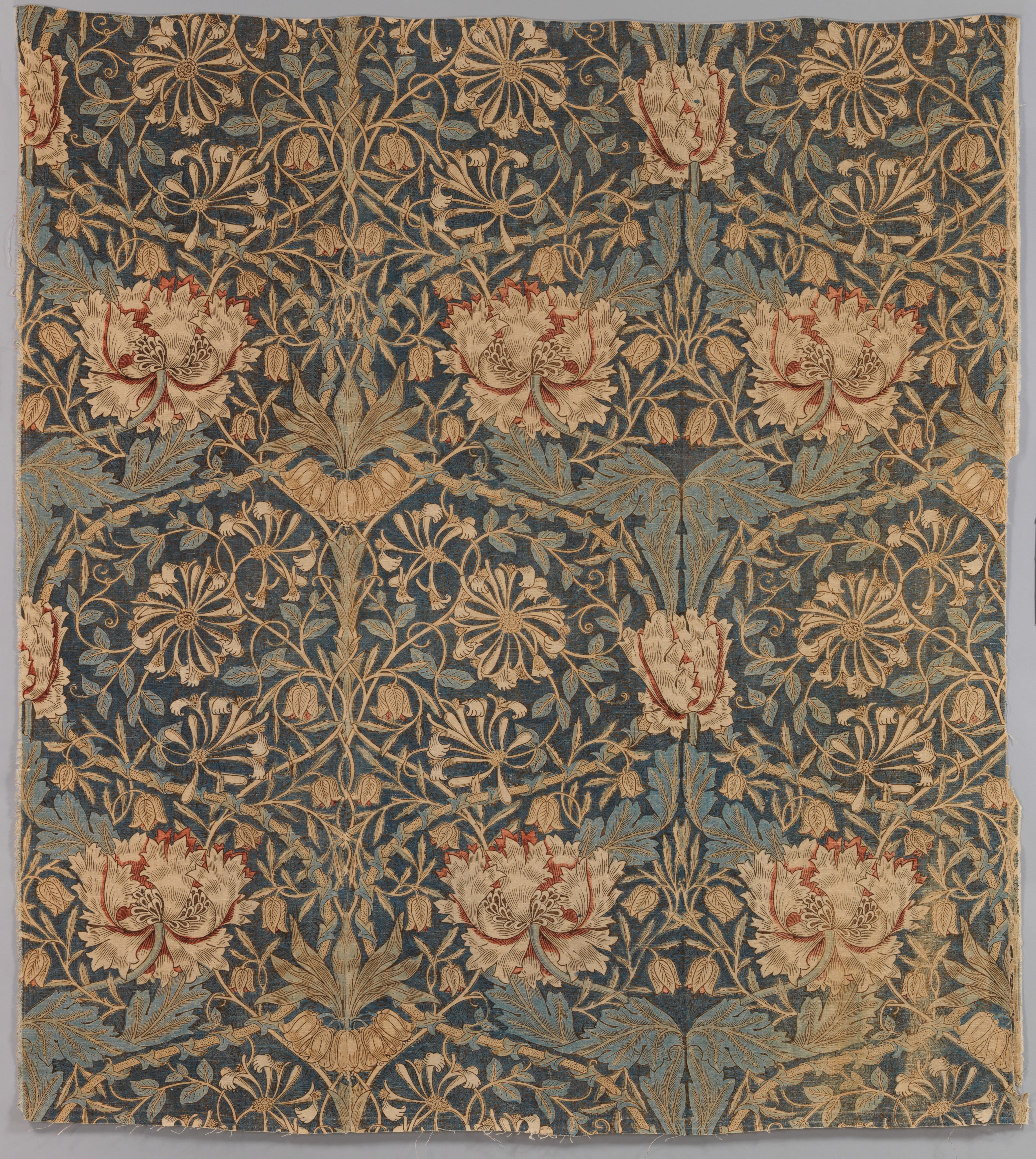
Morris was also facing some personal financial difficulties due to his declining income from his investments and the high costs of maintaining the estate. One has to wonder if some of his earlier naïveté was the result of his inherited wealth; it’s easy to romanticize medieval villages when one is safe in the assumption that they would not have been a serf. The great country estates of England’s past subsisted on land rents and peasant labor. Already by the mid-19th century, upkeep of these properties required great financial investment. Morris had no choice but to sell his home in 1865. He would never set foot in Red House again.
With his family now established in London, Morris and his colleagues faced a critical juncture in their business. Morris’s aspirations of running a rural, medievalist workshop would not come to fruition. But could he find a middle-ground between that ideal and the urban factories he loathed?
In the late 1860s, two major commissions bolstered the firm’s reputation—the dining room in what is now the Victoria & Albert Museum, and the wallpaper for several rooms in St. James’s Palace. These commissions helped to expose Morris’s beautifully designed, hand-printed wallpapers to an affluent London audience.
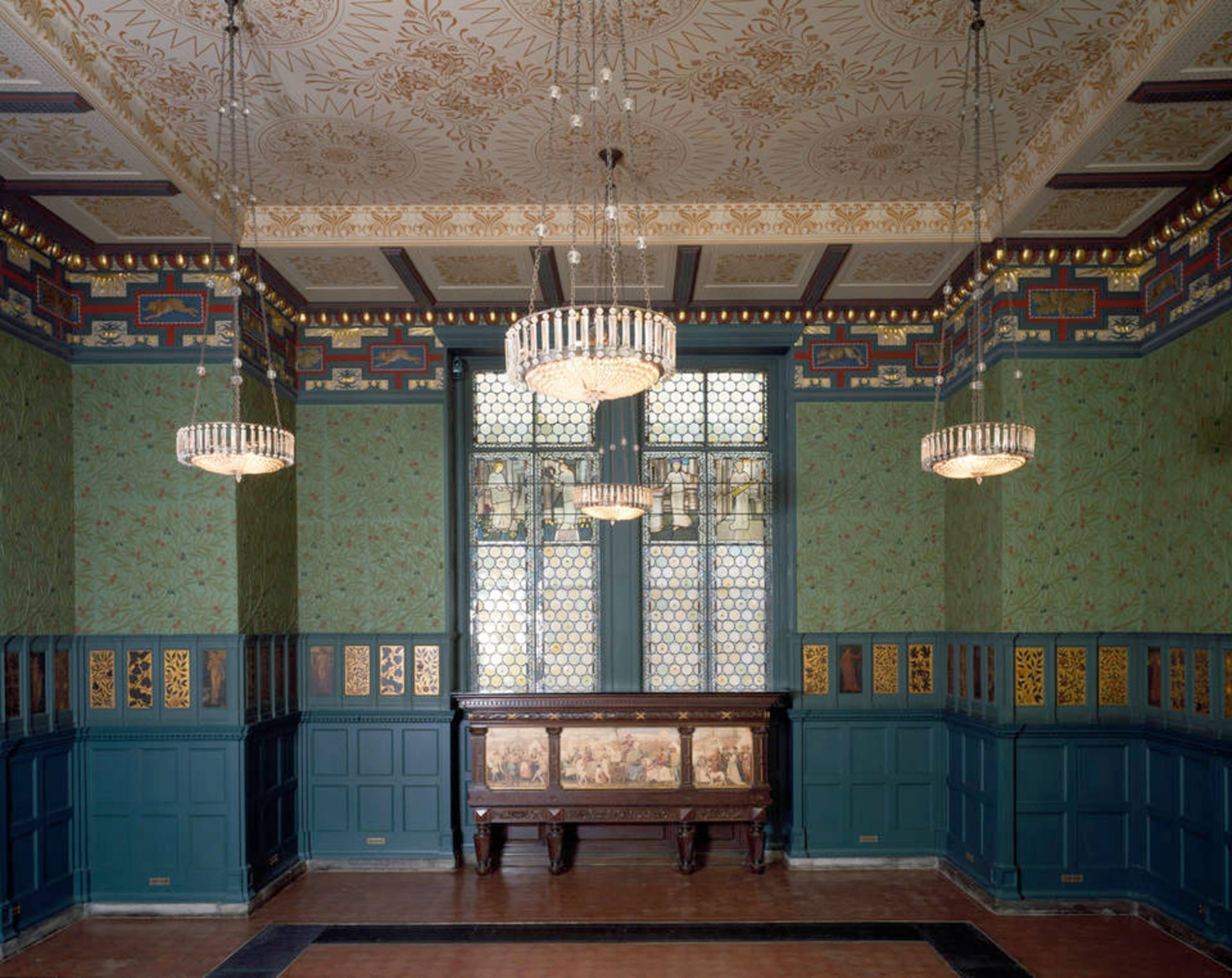
As the company grew, so did internal disputes over its structure and leadership, culminating in its dissolution in 1875 and reorganization under Morris’s sole ownership. The newly-dubbed Morris & Co. could move forward with centralized leadership, another practical reality further removed from the medieval workshop Morris had once envisioned.
By 1881, Morris & Co. was producing wallpaper, carpets, woven textiles, printed fabrics, and tapestries; the company now had enough capital to relocate to a textile factory in South London called Merton Abbey Mills. Despite the industrial setting, Morris & Co. continued to use hand-block printing and natural dyes. The firm provided employment for skilled weavers, embroiderers, glassworkers, and other artisans. Morris succeeded in preserving craftsmanship and dignity of labor while still maintaining a profitable commercial enterprise.
Of course, there was a catch, one that would brush up against his increasingly socialist politics: Morris & Co. products were prohibitively expensive, and the only people who could afford to purchase them were the same Victorian elite whom Morris critiqued in his political writing. Morris believed that beauty should belong to everyone, but not everyone could swallow the price.
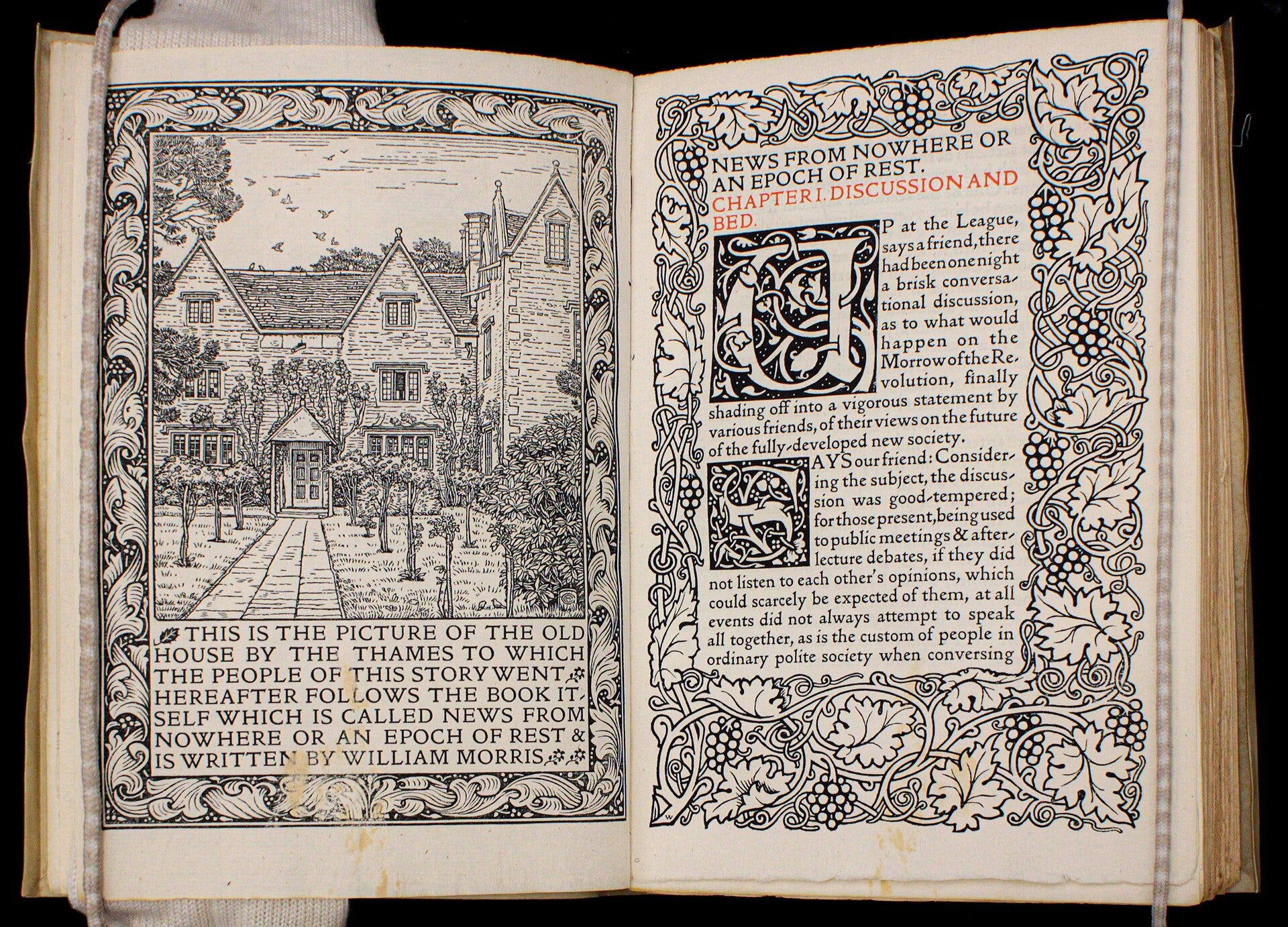

It’s this contradiction that lies at the heart of his work. The same could be said for the hand-printed, limited-edition books he created with Kelmscott Press, the imprint he co-founded towards the end of his life. Inevitably, these books were luxury items for affluent collectors.
Morris struggled a great deal over this. Ultimately, he believed that in a world of shoddy industrial products and horrific working conditions, maintaining high production standards and a positive environment for his employees was more important than producing affordable goods.
Over a century later, designers and consumers face similar issues. Clothing made ethically is often very expensive; fine pottery and knitwear and artworks made by hand are out of reach for most people. The makers of these pieces need to charge what their time and labor are worth, even when the price is more than what most can pay.
Even so, by clinging to his ideals in a hostile world, Morris had a long-lasting impact. Morris & Co. kept traditional crafts alive in the face of mounting industrial pressure, and its workers made an elegant case for slow production—a conversation we’re still having and still wrestling with to this day. Morris did not succeed in making his wares accessible to all, and he did not realize his vision of the artist’s village. But his legacy is in shifting the public’s perception of industry, and helping to highlight not just what we make, but how and why we make it.
Recently on Fireside Fables: The Voynich Manuscript
In the year 1912, a rare books dealer named Wilfrid Voynich came across a spectacular find: a manuscript, late medieval in appearance, written in an unknown language. Today, that text is known as the Voynich Manuscript, and no one has been able to decode it. What secrets might it contain?
Fireside Fables is a YouTube channel dedicated to exploring folklore, strange and forgotten history, supernatural creatures, and historical mysteries. From witch trials and ghost stories to cursed objects and strange legends, each video brings a new tale to mystify and inspire. Join us around the hearth for new episodes every week!
The challenge of being an idealist in an age of industry has echoes today when you replace the word 'industry' with AI
"There are no solutions , only compromises". Morris's compromise was to hire craftmen and artists and pay them a wage that would keep those arts alive. I think well played.